
A HAZOP (Hazard and Operability Study) is a critically important, systematic, and detailed approach to identify process deviations, their causes, and potential consequences within an established design.
The core objective of the HAZOP study is to strengthen and validate that the controls and operations of your facility are fully robust and inherently safe as far as possible.
Our Approach
Unlike HAZID, which provides a high-level overview of possible risks during the early phase of a project lifecycle, HAZOP studies delve deeper.
They focus on identifying operability issues and deviations from design intent, such as flow, pressure, or temperature variations.
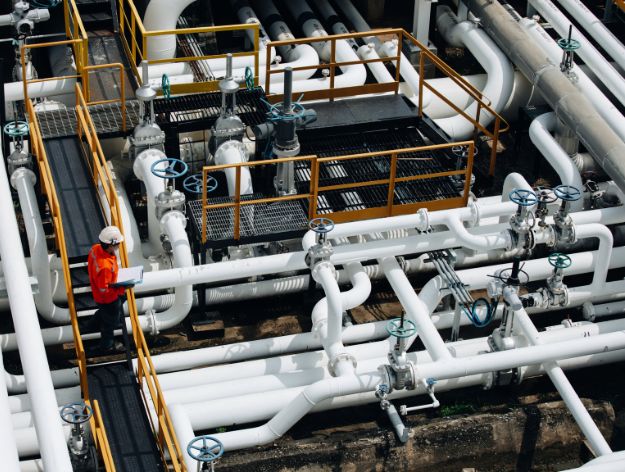
These studies follow a highly structured approach and often use guidewords to systematically explore potential risks and apply them to specific equipment or processes within a defined scope.
A HAZOP, crucially, relies on input from a team of multidisciplinary experts familiar with the facility or process, ensuring a comprehensive and detailed analysis.
Gexcon facilitates collaborative HAZOP studies, guiding your team through a structured process to systematically identify process deviations, assess their causes and consequences, and ensure that appropriate safeguards are recommended.
Contact usOur approach includes:
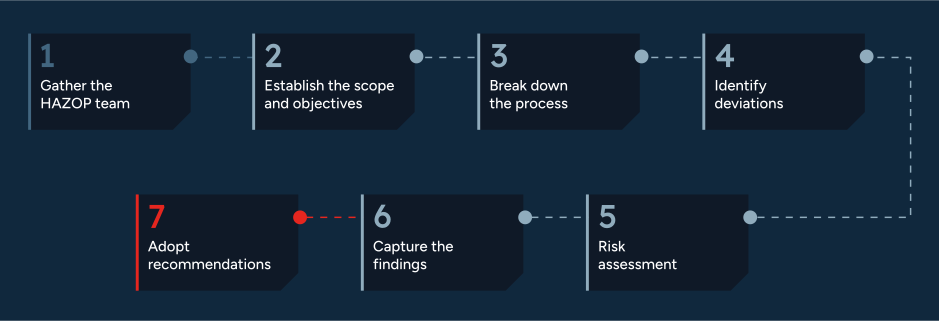
- Gather the team
- A HAZOP study’s success heavily relies on a multidisciplinary team’s expertise and collaboration. Each member, with their unique knowledge in all aspects of the project lifecycle, including design, operations, safety, and maintenance, makes them all integral to the success of the HAZOP.
- Establish the scope and objectives
- Clearly define the scope and objectives of the study, including the processes and systems to be reviewed by the team.
- Break down the process
- Divide the process into manageable sections or nodes, each representing a specific element such as equipment, controls systems or processes.
- Identify deviations
- For each node, identify deviations from the design objectives by using guide words like “more,” “less,” “reverse,” and “other than”.
- Risk assessment
- Analyse each deviation’s potential risks and associated consequences. For instance, a deviation that leads to a higher pressure than intended in a system could result in equipment failure or even a catastrophic event. It is crucial to identify existing safeguards and any additional risk reduction measures that may be needed to prevent such scenarios.
- Capture the findings
- Record the findings and recommendations clearly and well organised, ensuring all identified risks are addressed.
- Adopt recommendations
- Work with the project team to implement the recommended safety measures and operational improvements.

Value to your business
Our HAZOP service helps your business by:
- Systematically uncovering deviations from design intent that could impact safety, reliability, and efficiency
- Strengthening and validating existing controls to reduce the likelihood of hazardous scenarios
- Meeting industry safety standards and best practices by proactively addressing potential risks
- Identifying and resolving operability issues that could cause system inefficiencies or failures
- Providing a structured, expert-led assessment to strengthen operations and long-term safety management
Featured Insights
Explore relevant materials providing insights into our service.

HAZID vs. HAZOP: Choosing the right approach for risk assessment
Understand the key differences between HAZID and HAZOP to choose the right assessment method for your project.


The Importance of HAZOP: A comprehensive guide for engineers, project managers, and operatives
A practical guide on HAZOP, explaining its role in identifying risks, improving safety and supporting informed process decisions.

Working with the UK’s first ever multifunctional LNG Terminal
Learn how Gexcon supported safety assessments for the UK’s first multifunctional LNG terminal through advanced modelling and expertise.
Why choose Gexcon?
With a wealth of experience and a team of dedicated HAZOP leaders, scribes, and facilitators, Gexcon is a trusted partner in the field of HAZOP studies.
We support clients from various industries by identifying potential hazards and operability concerns and recommending risk reduction measures. The outcomes of the HAZOP study can help bring about suitable engineering solutions to ensure your facility remains fully functional and safe.
Need a partner to help drive your project forward?
Our experts are here to help.
Other Process Hazard Analysis Services
Explore our full range of PHA services to help you identify, assess, and manage risks throughout your operations.
Hazard Identification (HAZID)
Identify hazards early to reduce risk, improve safety, and support compliance from the start of your project.

Control Systems HAZOP (CHAZOP)
Identify and evaluate control system risks, from human factors to cyber threats, to ensure safety, reliability, and operability.

What-if Analysis
Identify hazards and failure scenarios early with What-If Analysis – a structured approach that supports proactive risk control and safer decision-making.

Failure Mode and Effects Analysis (FMEA)
Identify failure modes, assess their impact, and prioritise risk mitigation with FMEA to improve safety, reliability, and operational efficiency.

Fault Tree Analysis (FTA)
Identify root causes, evaluate failure scenarios, and apply focused risk controls to improve safety in complex operations.
