The Hot Storage Test in Wire Baskets determines the self-ignition temperature of a material and assesses its potential for self-heating under various storage conditions.
This test is critical for evaluating the fire risk associated with storing materials in bulk and for ensuring compliance with safety standards for hazardous materials. Conducted in three test volumes with extrapolation analysis to predict self-ignition behaviour in larger volumes.
Why Hot Storage Test Matters?
Identifies the temperature at which a material begins to self-heat and ignites without an external ignition source.
Evaluates self-ignition behaviour in small test volumes and extrapolates the results to predict risks in larger volumes commonly encountered in real-world storage scenarios. The extrapolation analysis is essential because the risk of self-heating increases with the size of the material volume. Larger volumes retain heat more effectively, reducing the temperature required for ignition.
Contact usTesting Methodology
- The test is carried out in accordance with the European standard EN 15188 “Determination of spontaneous ignition behaviour of dust accumulations”, 2020
The test measures spontaneous ignition temperatures of dust or granular materials as a function of volume. A sample is placed in stainless-steel wire mesh baskets (inner fine mesh ~0.05 mm; outer coarse mesh ~0.5 mm) of at least four sizes, typically from ~100 cm³ to ~1,000 cm³—to allow scaling-up analysis. Samples are loosely filled to a known bulk density and suspended within a mesh-lined oven heated steadily. During the test, if the sample-centre temperature rises more than ~60 °C above the oven or shows supercritical heating, self-ignition is noted. Tests are repeated at varying oven temperatures to establish the highest non-ignition and lowest ignition points for each volume. Results are plotted as ln (volume/surface area) versus 1/T, allowing extrapolation to predict ignition behaviour in large-scale deposits.
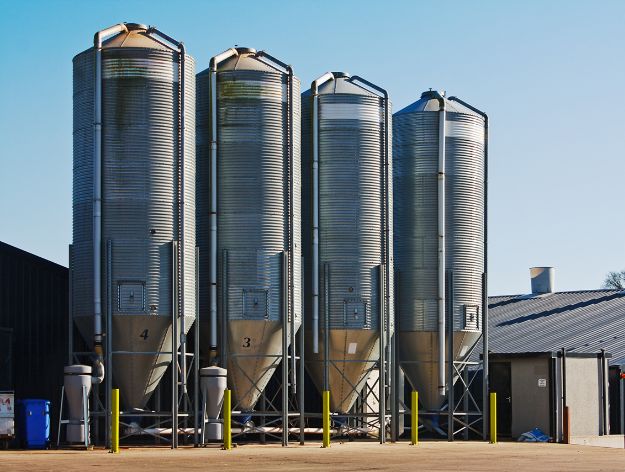
Value to Your Business
- Using self-ignition temperature data adjusted for volume helps you define safe storage temperatures and maximum quantities for bulk materials
- Identifying materials that self-heat in larger volumes helps you apply ventilation, temperature controls, or staggered loading to prevent ignition
- Aligning test results with UN classification for self-heating substances (Class 4.2) helps you correctly label and ship goods
- Understanding how self-ignition scales with volume helps you make layout decisions, such as silo size or bin placement, to reduce fire risk
- Providing clear evidence on self-heating thresholds helps you support audit readiness, insurance requirements, and internal fire safety assurance
Featured Insights
Explore relevant materials providing insights into our service.

Dust explosion: an introduction
Learn what causes dust explosions, why they’re dangerous, and how to reduce the risk in industrial environments.
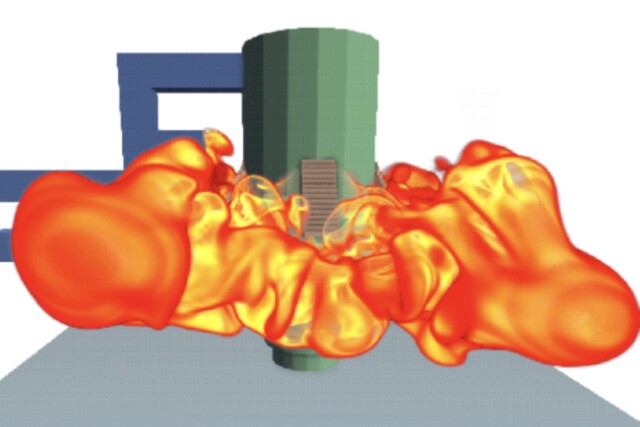
Investigation Findings And Lessons Learned In The 2014 Georgia Pacific Corrigan Facility Fire And Explosion
This paper discusses the proximate causes of the 2014 Georgia Pacific Corrigan Facility fire and explosion and its root causes.
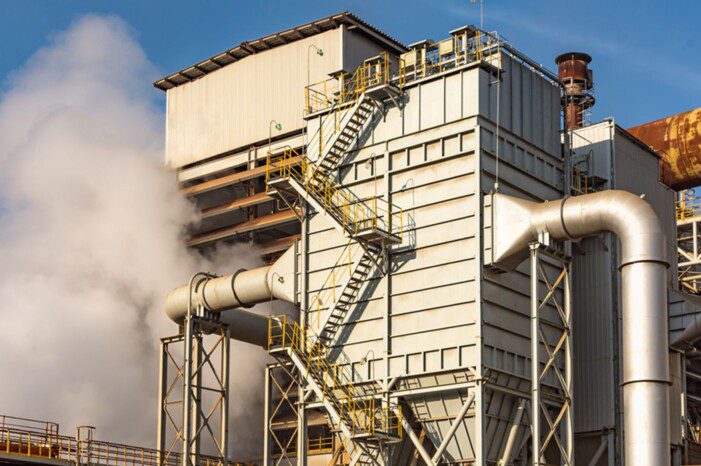
How to properly design your dust explosion protective systems
Learn how poor dust system design led to a major plant explosion and what steps to take to prevent similar combustible dust incidents.
Dust hazard analysis and prevention, the hierarchy of controls, and practical implementation
Learn the practical steps to assess fire and explosion risks from bulk solids and demonstrate ALARP for regulatory and standard compliance/

Fundamentals of fire and explosion from handling bulk solids
Learn how to assess and prevent fires and explosions from flammable bulk solids.
Validate your project with proven test data
Work with our specialists to get insights you need for smarter decisions.
Comprehensive combustible dust testing services
- Explosibility Screening Test (Yes/No) Read more
- Minimum Ignition Energy (MIE) of Dust Cloud Test Read more
- Minimum Ignition Temperature (MIT) of Dust Cloud Test Read more
- Minimum Ignition Temperature (MIT) of Dust Layer Test Read more
- Explosion Severity Test (Pmax, dP/dt, KST) Read more
- Lower Explosion Limit Test (LEL, MEC) Read more
- Limiting Oxygen Concentration (LOC) Test Read more
- Burning Behaviour Test Read more
- Dust / Powder Resistivity Test Read more
- Hot Storage Test in Wire Baskets (Self-Ignition Temperature) Read more
- Electrostatic Hazard Tests Read more
- UN Transportation Tests (UN Class 4) Read more
