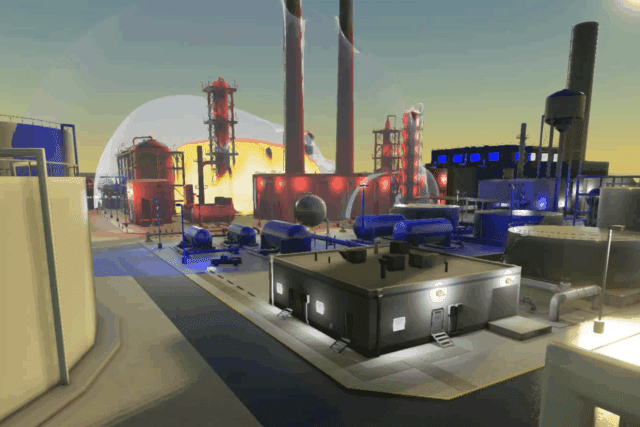
Does your process present an explosion hazard?
Regardless of legal requirements, companies handling flammable materials should carefully assess whether an explosion hazard exists.
The characteristics of the material, its potential to mix with air, and the surrounding environment all influence the destructive potential of an explosion.
In some cases, it’s easy to determine if a process presents an explosion risk. In others, more detailed load calculations may be needed to assess whether damage to equipment or nearby structures could occur.
The value of using advanced modelling tools
Due to the complexity of explosion events, predicting pressure loads using simple formulas may not always provide the accuracy needed for informed decisions. Depending on project requirements, an integral or CFD-based modelling approach can be used.
This enables critical safety decisions, such as establishing safety distances for personnel and facilities, to be based on accurate calculations rather than overly conservative or simplified approaches, ultimately delivering cost-saving benefits for clients.
Many of our explosion modelling studies are carried out in a design context, where we focus on determining strength requirements or identifying ways to reduce blast loads.
The results often inform engineering decisions about structural damage and related hazards. Our simulations can also be used to create detailed blast load maps to support structural response assessments.

X-Suite: Advanced Tools for Hazard Modelling
- Gexcon’s engineers are experts in modelling and are uniquely familiar with the X-Suite tools–EFFECTS, RISKCURVES and FLACS
- These tools support explosion, fire, and dispersion consequence modelling and quantitative risk analysis
- Validated on highly respected research, our tools are capable of modelling a wide range of explosion scenarios
Services we offer
- Gas explosion consequence modelling
- Deflagration and detonation modelling for hydrogen/energy transition facilities
- Dust explosion modelling for bulk powder handling across food and drink, biomass
- Blast modelling for explosive material (e.g. TNT, RDX or equivalent)
- Bespoke modelling for design support
- Explosion venting studies
- Explosion risk analysis (ERA)
- Quantitative Risk Assessments
Project Examples
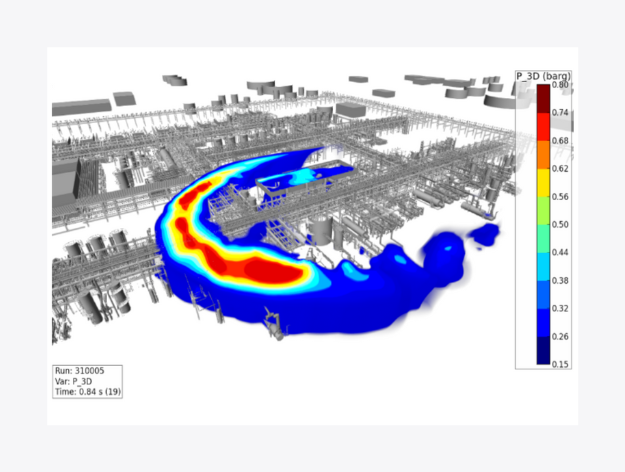 Explosion analysis assessing blast loads on critical equipment
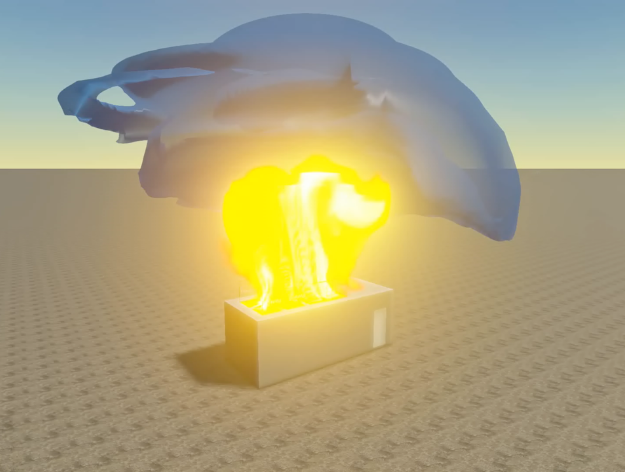 Explosion modelling from BESS thermal runaway
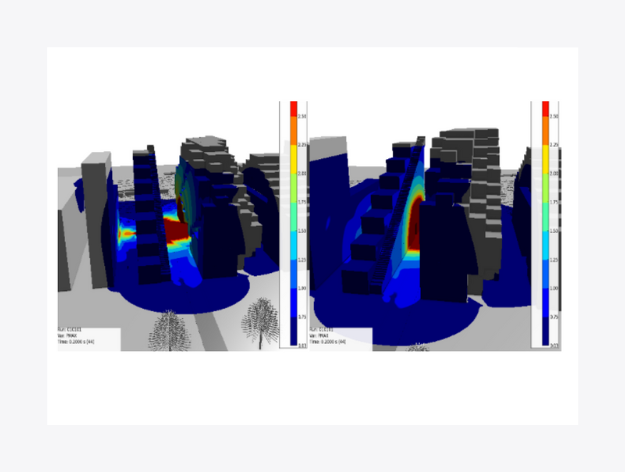 Car bomb scenario simulation
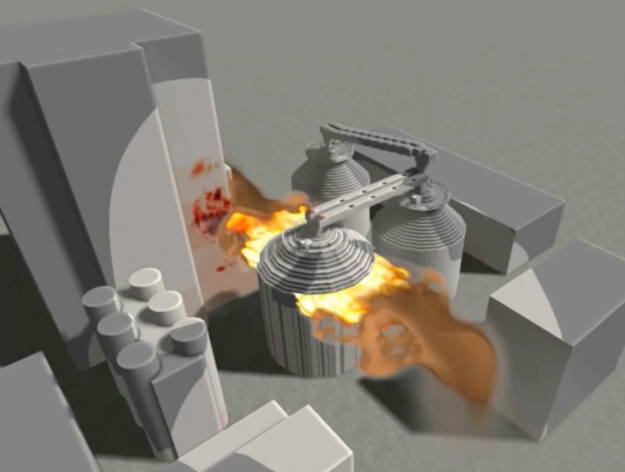 Dust explosion scenario in a grain silo
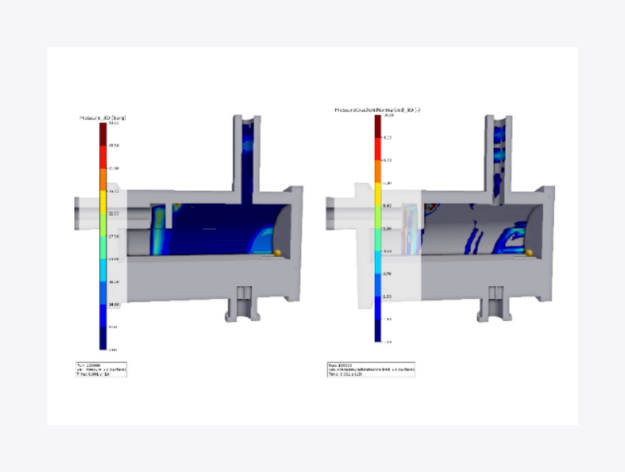 Detonation analysis inside an electrolyser unit
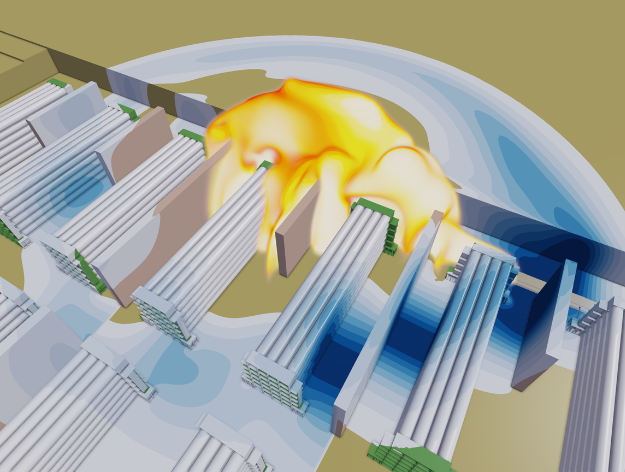 Hydrogen explosion simulation in a bulk storage area
Featured Insights
Explore relevant materials providing insights into our service.
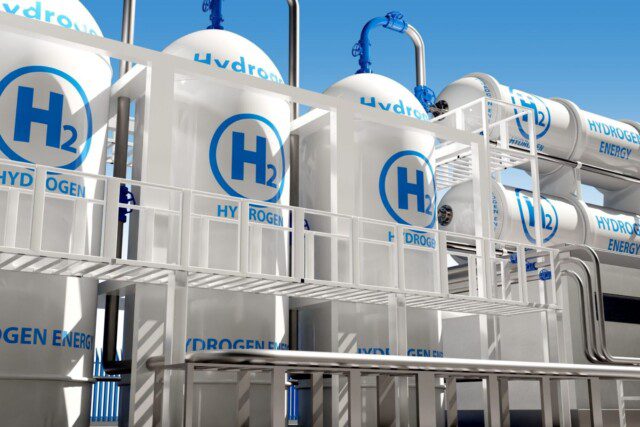
Hydrogen Fireball in a storage area using EFFECTS
Learn about the efficacy of the Gas Fireball model in EFFECTS through two hydrogen release scenarios.
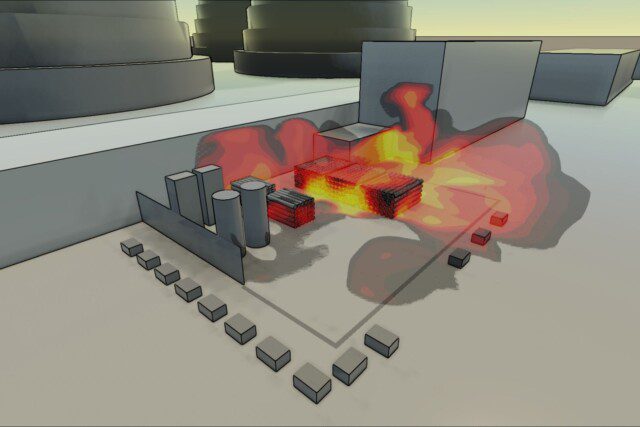
Hydrogen bulk storage areas: How advanced consequence modelling can inform a safer design and help reduce the risks from explosions
Advanced modelling tools can analyse the consequence of explosions in hydrogen bulk storage areas hence assisting in creating a safer design.
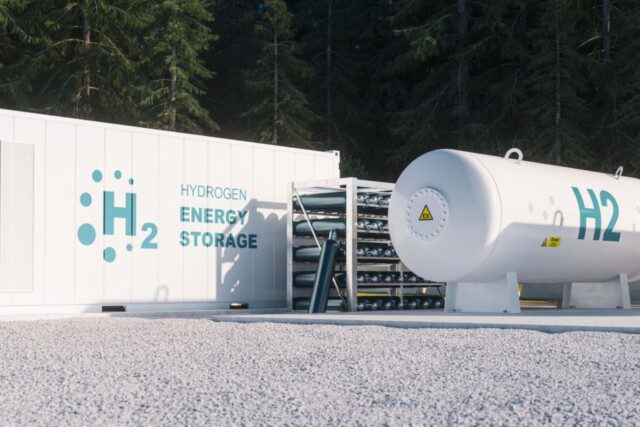
Designing bulk hydrogen storage using CFD – Why it is important
Learn why CFD is important in designing bulk hydrogen storage, helping to predict release behaviour, dispersion, and explosion risks.

How to prevent and mitigate against ammonium nitrate explosions?
Learn how to reduce the risk of ammonium nitrate explosions through safer storage, fire prevention measures, and risk awareness.
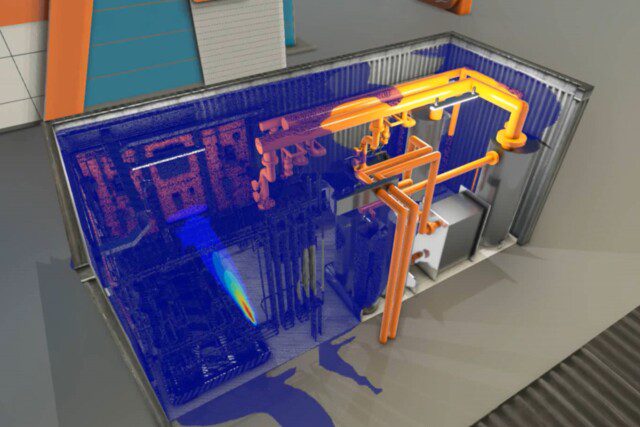

Risk assessment of hydrogen in nuclear facilities
See how FLACS CFD tool helps simulate hydrogen hazards in nuclear facilities and support safer design through detailed consequence analysis.
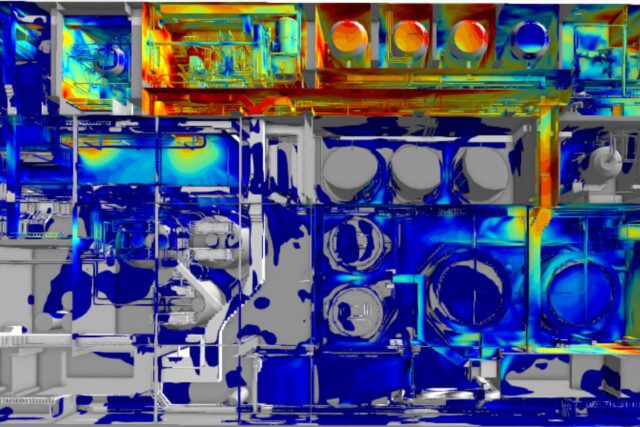
The practical use of FLACS for EDF nuclear safety demonstration – User perspective
Get practical tips on combining consequence and structural response studies, including how to map blast loads to FEM models.

Consequence modelling of hazardous chemicals in polymer industries
See how FLACS models hazards from chemicals like styrene and VCM in polymer industries to support process safety decisions.
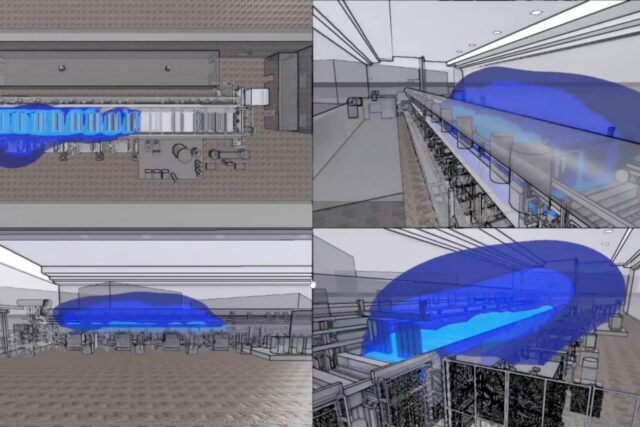
Advanced dispersion modelling of hydrogen cyanide in a closed environment
This presentation shows how detailed dispersion and ventilation modelling of hydrogen cyanide (HCN) in a closed space can support safer decision-making.
Why choose Gexcon?
We have over 40 years of experience helping clients manage explosion risks and improve process safety across a wide range of industries.
- Highly qualified team with expertise in oil and gas, renewables, petrochemicals, pharmaceuticals, and more
- Proven track record in delivering tailored safety solutions
- Use of advanced consequence modelling and risk analysis tools
- Support to assess risks, strengthen safety measures, and protect people, assets, and the environment
- Focus on delivering practical outcomes to support both compliance and operational efficiency
Need a partner to help drive your project forward?
Our experts are here to help.
Other Consequence and Impact Modelling Services
Explore more services we offer to help assess, predict, and manage the effects of hazardous events on people, assets, and the environment.

Release of Flammable Gas and Liquids
Evaluate flammable substance dispersion to help ensure safe containment, prevent fires and explosions, and improve emergency planning.
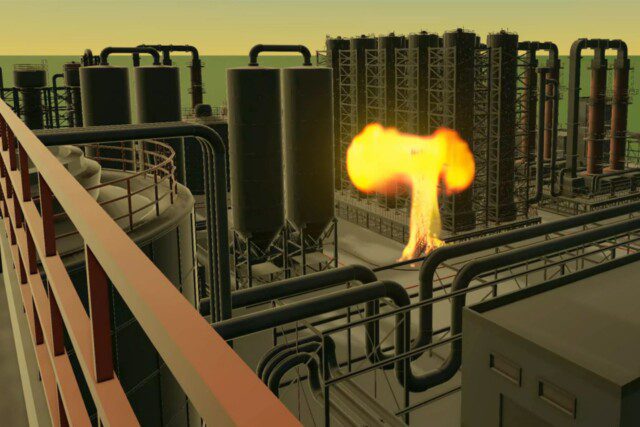
Fire, Smoke, and Heat Loading
Analyse fire spread, smoke movement, and thermal loads to improve fire protection measures, evacuation planning, and structural safety.
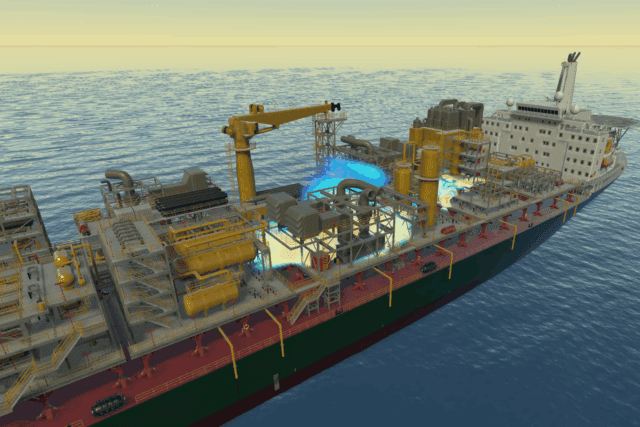
Toxic Gases, Pollution, and Working Environment
Assess toxic gas dispersion to understand exposure risks, protect worker health, and support effective prevention and mitigation strategies.

Air Quality Impact Assessment
Evaluate emissions, comply with environmental regulations, and maintain healthy air quality for workers and communities.
