Verify Material Resistance under extreme conditions
In high-hazard industries, it’s essential to ensure that the materials, systems, and structures you use, or plan to use, can withstand the severe conditions caused by explosions and jet fires.
We carry out tests on Passive Fire Protection (PFP) equipment and systems to help protect operations, keep people safe, and support compliance with strict safety standards. These tests assess how well a material, product, equipment, or structure can withstand the high heat of a jet fire and the pressure/forces from an explosion.
Gexcon offers testing solutions tailored to your needs. Whether you need to assess the fire resistance of PFP systems or the structural performance of components under explosion conditions, we provide clear, accurate results you can trust.
Services we offer
We offer a range of standardised and customised test scenarios.
These tests evaluate how well your materials, products, or systems perform under fire, blast, and cryogenic conditions.
Explosion Before Fire Scenario (Blast Testing)
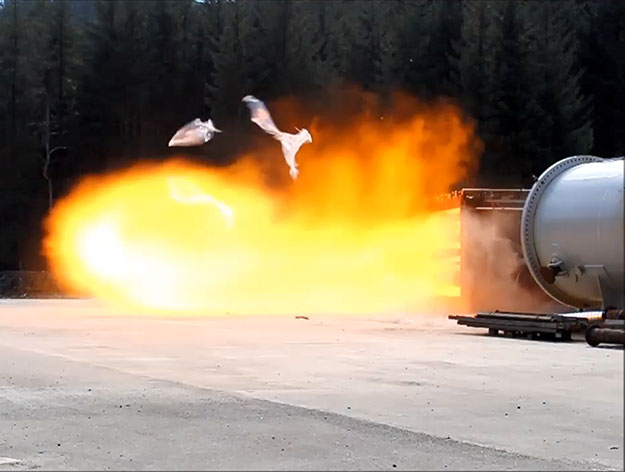
This test simulates an explosion that can occur, often just before a jet fire event. An explosion can cause damage to your PFP therefore can reduce its durability against an ensuing fire.
We usually perform our blast testing using a 55 m3 vented explosion vessel. The facility uses ignited flammable gas, usually chosen to be propane, to achieve the required explosion test overpressure.
The test follows the international standards ISO 23693-1, ISO/DIS 23693-2 & ISO/DIS 23693-3.
Standard Jet Fire Scenario
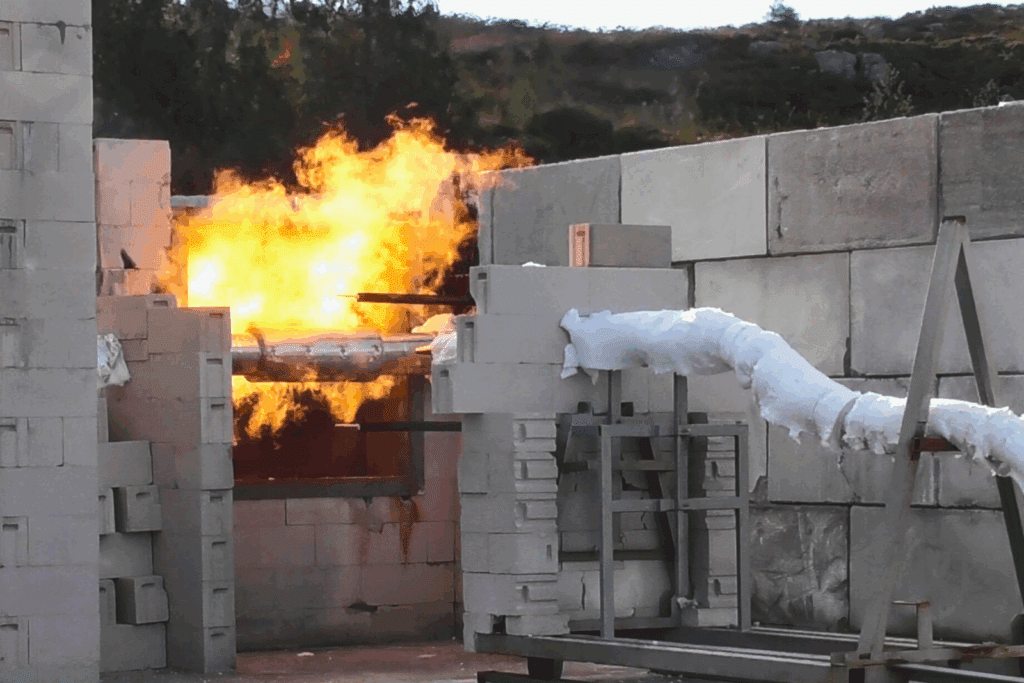
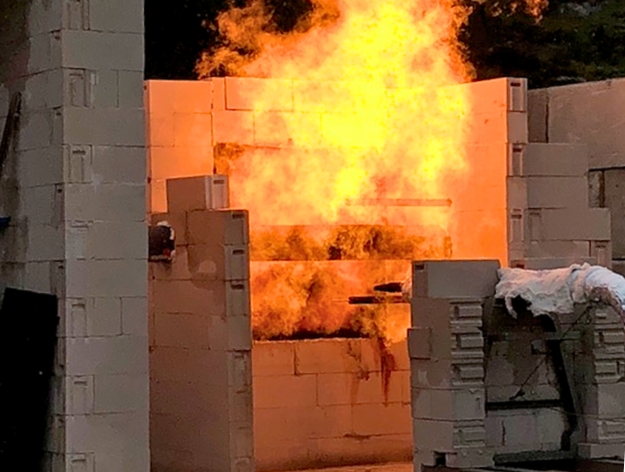
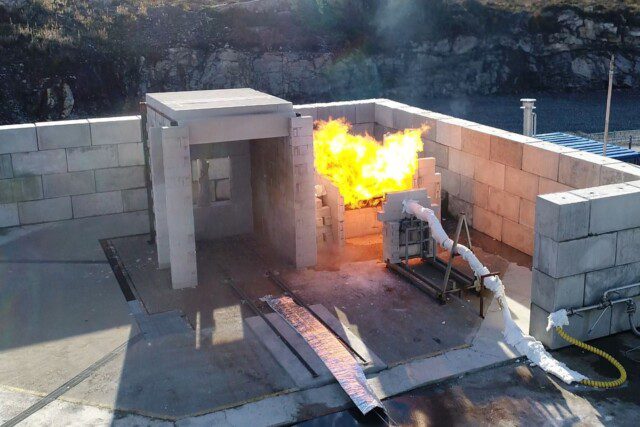
The objective of this test is to assess the fire resistance of PFP products to be used on pipes, valves, wall penetrations, structural elements, (beams, wall-panels etc.). This test simulates a jet fire caused by a leak in a pipe that contains flammable fuel at a high pressure.
During the test, we will expose the test sample to a continuous jet fire as specified in the standard ISO 22899-1. The gas temperature during the test can reach 1200 °C and the radiation level can reach 250 kW/m2.
High Heat Flux Jet Fire Scenario
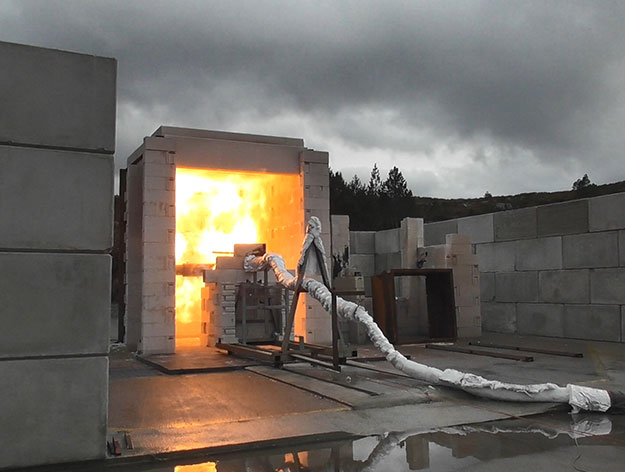
In this test, the sample will be exposed to a continuous jet fire with higher heat fluxes as specified in the standard ISO 22899-3. In this test, heat flux reaching the level of 350 kW/m2 and gas temperature exceeding 1300 °C are typical.
High heat flux jet fire tests have been shown to be more realistic and have evolved from the results of large-scale fire tests and are often therefore necessary.
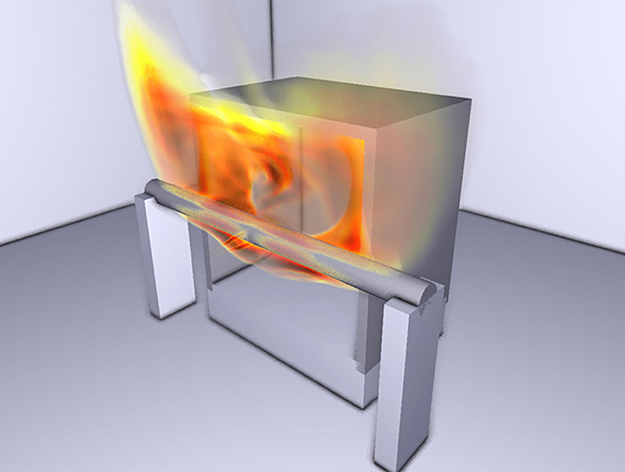
Test Condition Optimization with CFD (Computational Fluid Dynamics) Calculation
FLACS-Fire is an extension of the existing FLACS capabilities to include the required physics for accurate simulation of fires.
FLACS-Fire module adds jet and pool fire modelling capability to the industry standard 3D CFD (Computational Fluid Dynamics) explosion and dispersion modelling software FLACS.
FLACS-Fire can be used to perform CFD calculations to determine suitable test conditions before performing a real jet fire test for a specific project.

Value to your business
Our PFP testing services help your business by:
- Understanding how materials and systems respond to extreme conditions before putting them into use
- Identifying weaknesses early to reduce the risk of damage, downtime, or replacement
- Strengthening the safety of people and assets in high-hazard environments
- Demonstrating compliance with recognised test methods and safety requirements
- Using accurate test data to guide design, procurement, and installation choices
Featured Insights
Explore relevant materials providing insights into our service.
Passive Fire Protection (PFP): a brief guide
Understand the role of passive fire protection in reducing fire impact, protecting assets, and supporting safe facility design.
Validate your project with proven test data
Work with our specialists to get insights you need for smarter decisions.
