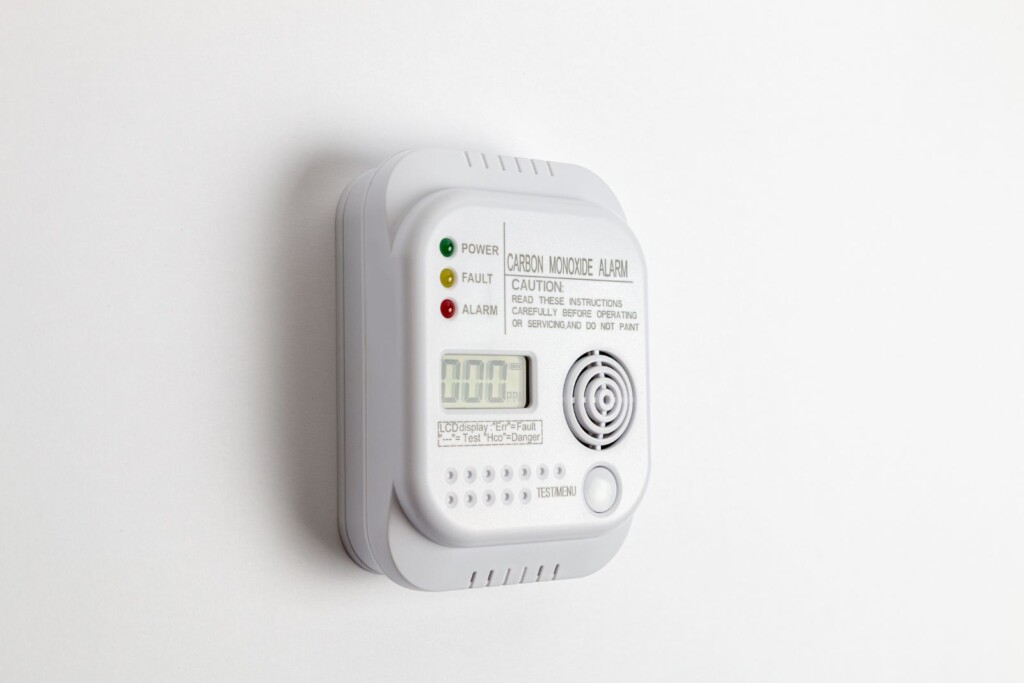
Protect Lives and the Environment from Carbon Monoxide Exposure
To prevent future CO incidents, we first need to know exactly where and why they happen.
We have a proven record in finding the source of carbon monoxide (CO) exposure, potentially linked to faulty combustion in appliances such as furnaces, boilers, portable heaters, generators, and vehicles.
Our expertise covers carbon monoxide formation, migration, detection, exposure, and effective mitigation.
One of our engineers is a principal member of the NFPA 720 technical committee (Standard for the Installation of Carbon Monoxide Detection and Warning Equipment).
We also have experience in assessing carbon monoxide detectors against UL 2034 standards, and in analysing both carbon monoxide uptake and the sensor technologies used in these devices.
Contact us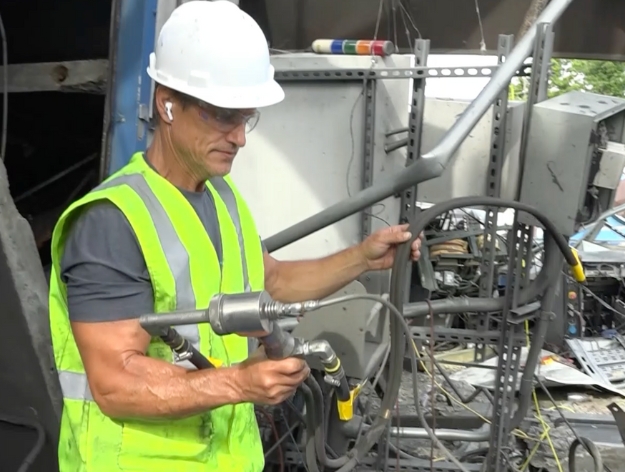
Trusted Carbon Monoxide Experts
Gexcon’s experts have successfully pinpointed the origins of numerous carbon monoxide leaks, originating from various factors including equipment damage, design flaws, improper installation, and even natural occurrences such as animals nesting in vent pipes.
Equipped with portable combustion gas analysers and detectors, our engineers possess the capability to assess and quantify carbon monoxide emissions and their movement.
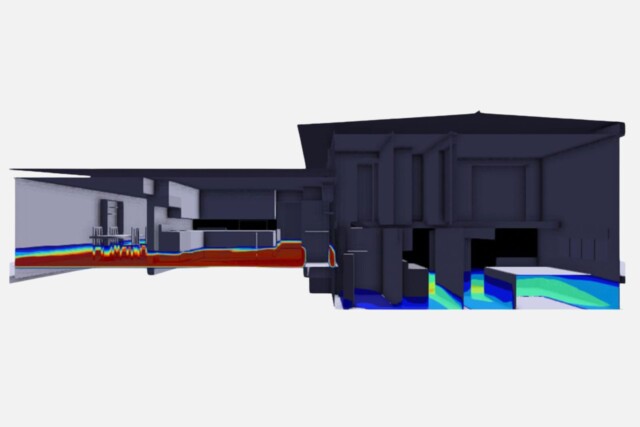
Furthermore, we leverage advanced tools, such as the CFD model FLACS, to analyse carbon monoxide emissions and their subsequent dispersion within a variety of structures, including residential, commercial, and industrial facilities.
Utilising CFD calculation in carbon monoxide dispersion analysis allows a more realistic representation of the release and dispersion scenarios.
This leads to a more precise understanding of potential hazards and a more efficient deployment of mitigation techniques, including the optimisation of detector placement.
Carbon Monoxide Modelling with FLACS
The video below shows a gas detector layout optimisation study using FLACS, one of the advanced tools we use for tasks such as accident reconstruction and safety improvement.
Using validated modelling like this helps us understand how an incident happened, identify contributing factors, and provide evidence that can guide safety improvements or support legal cases.
Types of Investigations
- Carbon monoxide leaks, exhaust flow, and ventilation
- Carbon monoxide formation, migration, diffusion, and accumulation
- Carbon monoxide leaks in various environments, including indoor confined spaces, vehicle cabins, transport vehicles, residential buildings, commercial assets, job site enclosures, and industrial facilities
- Carbon monoxide detection and other mitigation measures
- Carbon monoxide sources, such as furnaces, boilers, portable heaters, ovens, heaters, generators, and internal combustion engines
- Carbon monoxide modelling and reconstruction using advanced tools, including FLACS, photogrammetry, video and image analysis, and three-dimensional computer animation
- Carbon monoxide expert witness
Carbon Monoxide Experts
Our team have extensive experience in investigating incident root causes, creating practical prevention strategies, and testifying as an expert witness.

Scott G. Davis, Ph.D., P.E., CFEI
Expert in mechanical and aerospace engineering, and the engineering analysis and testing of combustion, thermal, and fluid processes.

John Pagliaro, Ph.D., P.E., CFEI
Expert in combustion, fire dynamics, heat transfer, thermodynamics, fluid mechanics, and experimental design.

Tom DeBold, P.E., IAAI-CFI, CFEI
Expert in fire protection, mechanical, thermal and fluid engineering.
Featured Insights
Combustible Gas Dispersion in Residential Occupancies and Detector Location Analysis
Gexcon has been involved in an NFPA research project supporting the development of NFPA 715.
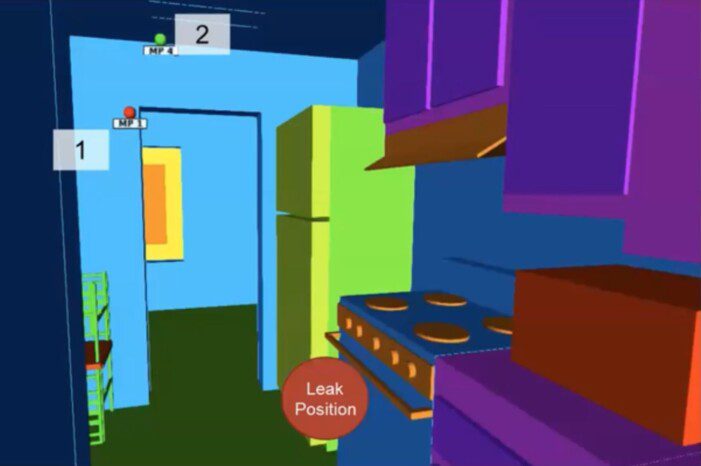
Combustible gas dispersion and detector location analysis in residential occupancies
This webinar presents the research on combustible gas dispersion and detector location analysis in residential occupancies by Gexcon US for the Fire Protection Research Foundation.
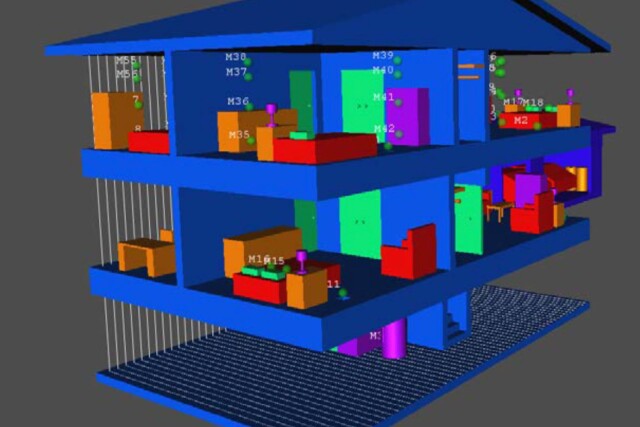
Optimization of carbon monoxide detector layout in residential structures
Using the CFD software FLACS, a study was performed to evaluate how CO would disperse and migrate in various residential structures.
Our Expertise
Our cross-industry experience gives us insight into established practices and new trends.











Faced an unexpected incident?
We can identify the cause and recommend practical steps to reduce future risks.
