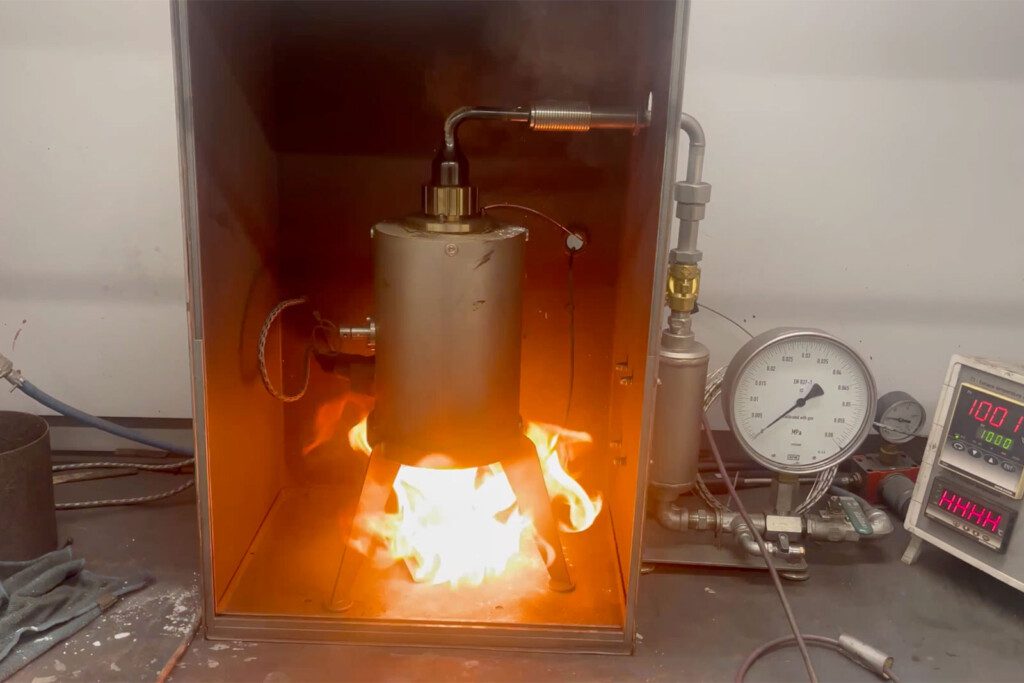
Identify and Evaluate Combustible Dust Hazards
Many industries handle materials that can produce combustible dust, including food, agriculture, metals, chemicals, and wood products. Even small amounts of dust can pose a serious risk if they ignite, leading to fires or explosions that can cause damage, injuries, or downtime.
Combustible dust testing helps you determine how your material behaves under specific conditions – whether it can catch fire, how easily it ignites, and how severe an explosion could be. These results are essential for assessing risks in your facility and deciding what safety measures are required.
At Gexcon, we carry out a range of standardised tests to identify ignition and explosion risks linked to dust. Our laboratory testing supports process safety, regulatory compliance (e.g. ATEX, DSEAR, GHS), and transport classification (e.g. UN, IMDG, IMSBC).
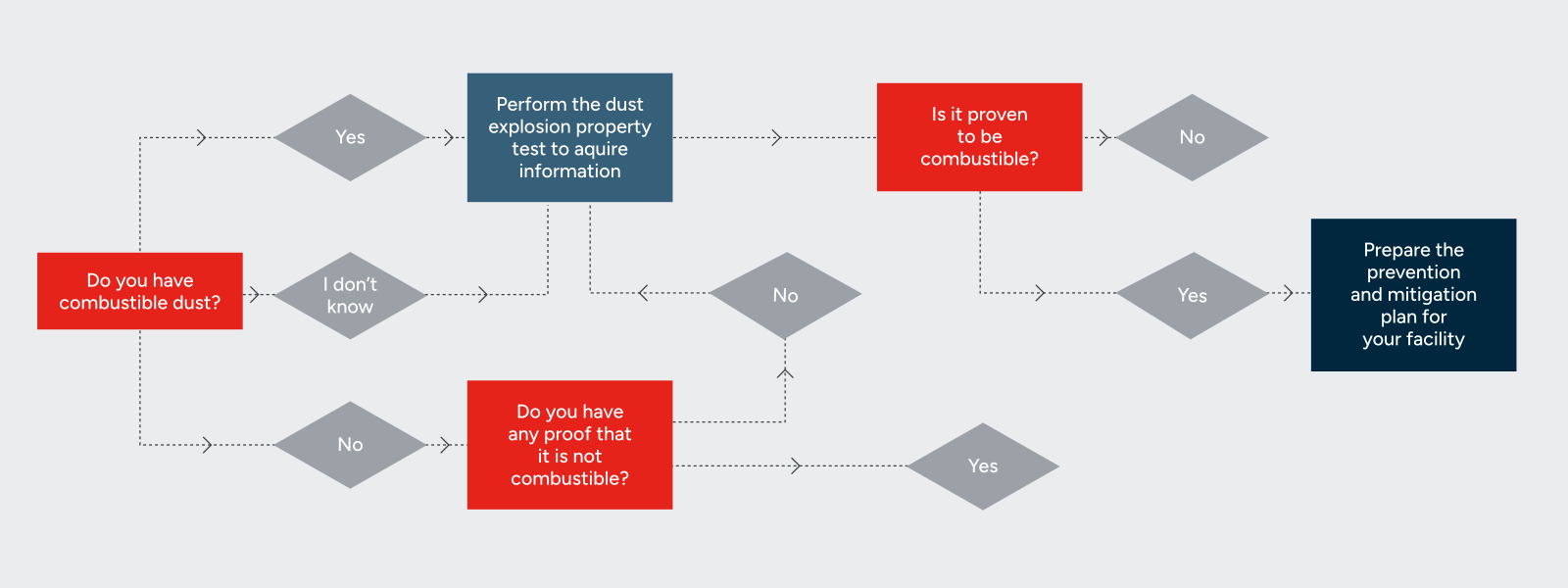
Use the diagram below to help decide whether testing is necessary for your material or process. If you’re unsure, our team is here to provide guidance.
Why Combustible Dust Testing is Important
Combustible dust can pose serious safety risks if not properly understood and managed.
Testing your dust is a key step in identifying potential hazards and preventing fires or explosions in the workplace. Even dusts that seem harmless can ignite under certain conditions, especially when dispersed in the air or settled on hot surfaces.
Through standardised testing, you can:
- Confirm if the material is combustible or explosive under controlled conditions
- Identify key ignition properties such as minimum ignition energy, temperature, and explosion severity
- Determine how your material behaves in different forms – whether as a cloud or a layer
Understanding the characteristics of your dust lays the foundation for safe plant operation, effective risk assessments, and regulatory compliance.
The Testing Process

1. Send Sample
Provide a sample of the material you would like tested. Most tests require between 500 g and 2 kg of material.

3. Analysis
Your sample is analysed in our laboratory. Turnaround time is usually 1 to 4 weeks, depending on the type and number of tests required.

2. Sample Preparation
The sample is prepared to ensure it is consistent and representative of what is handled on site. Samples are typically tested ‘as received’. If needed, sieving to 500 μm may be done to remove large particles – this will be noted in the test report.

4. Test Results
You receive a detailed report with the test results, which can be used to support risk assessments, safety measures, and compliance documentation.
Services We Offer
Our combustible dust testing services provide critical data to help you identify, assess, and manage dust-related hazards in your facility.
By evaluating various ignition and explosion scenarios, we help you understand the risks of dust explosions and fires, and support the implementation of effective safety measures.
Contact us- Explosibility Screening Test (Yes/No)
Find out if your dust is combustible with this basic screening test before carrying out more detailed combustible dust testing.
- Minimum Ignition Energy (MIE) of Dust Cloud Test
Measure the ignition sensitivity of your dust cloud and use the results to improve your explosion prevention strategy.
- Minimum Ignition Temperature (MIT) of Dust Cloud Test
Find out the lowest surface temperature that can ignite your dust cloud to set safe operating limits for equipment and avoid ignition risks.
- Minimum Ignition Temperature (MIT) of Dust Layer Test
Determine the lowest surface temperature that can ignite a dust layer to set safe maximum surface temperature limits for equipment and reduce the risk of smouldering or fire in dusty environments.
- Explosion Severity Test (Pmax, dP/dt, KST)
Assess the severity of potential dust explosions to design safer processes and minimise explosion risks.
- Lower Explosion Limit Test (LEL, MEC)
Determine the minimum dust concentration that can cause an explosion to improve safety and control ignition risks.
- Limiting Oxygen Concentration (LOC) Test
Identify the minimum oxygen level needed for dust explosions to design safer inerting systems and better manage explosion risks.
- Burning Behaviour Test
Understand how dust behaves after ignition to assess fire risk and improve material handling safety.
- Dust / Powder Resistivity Test
Measure the electrical resistivity of powders to reduce electrostatic ignition risks in handling processes.
- Hot Storage Test in Wire Baskets (Self-Ignition Temperature)
Identify the temperature at which materials may self-ignite during storage to reduce fire risks and improve safety.
- Electrostatic Hazard Tests
Test materials for electrostatic risk to prevent ignition hazards and ensure safe use in explosive atmospheres.
- UN Transportation Tests (UN Class 4)
Test solid substances for flammability, self-heating, or gas release to ensure safe transport and meet UN hazard classifications.
Value to Your Business
- Improve workplace safety by identifying and managing dust-related fire and explosion risks before incidents occur
- Make informed decisions on equipment design, zoning, and ignition source control using test data specific to your materials
- Support compliance efforts with regulations such as ATEX, DSEAR, GHS, and transport classification systems
- Reduce operational disruptions by preventing fires, equipment damage, and unplanned downtime caused by dust explosions
- Strengthen your risk assessments with reliable, standardised test data that can be shared across safety, engineering, and compliance teams
- Access expert insight to help interpret your test results and apply practical, site-specific safety measures
Featured Insights
Explore relevant materials providing insights into our service.

Dust explosion: an introduction
Learn what causes dust explosions, why they’re dangerous, and how to reduce the risk in industrial environments.
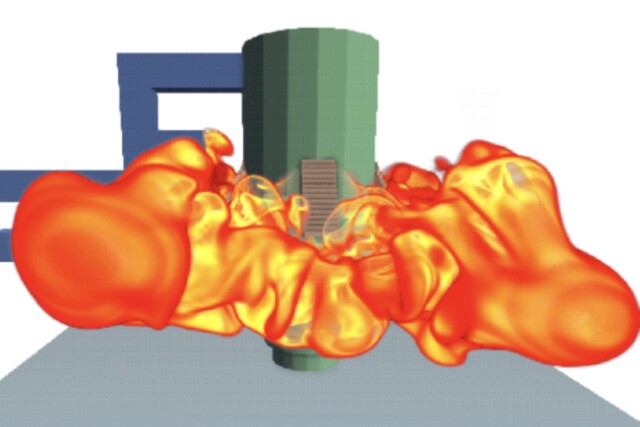
Investigation Findings And Lessons Learned In The 2014 Georgia Pacific Corrigan Facility Fire And Explosion
This paper discusses the proximate causes of the 2014 Georgia Pacific Corrigan Facility fire and explosion and its root causes.
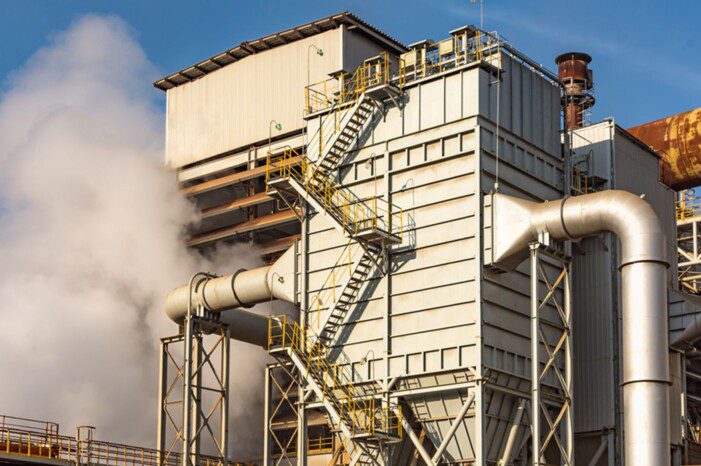
How to properly design your dust explosion protective systems
Learn how poor dust system design led to a major plant explosion and what steps to take to prevent similar combustible dust incidents.
Dust hazard analysis and prevention, the hierarchy of controls, and practical implementation
Learn the practical steps to assess fire and explosion risks from bulk solids and demonstrate ALARP for regulatory and standard compliance/

Fundamentals of fire and explosion from handling bulk solids
Learn how to assess and prevent fires and explosions from flammable bulk solids.
Validate your project with proven test data
Work with our specialists to get insights you need for smarter decisions.
