
Any facility handling flammable fluids has an inherent risk due to potential fires.
Without proper risk quantification and subsequent management, loss of containment scenarios can lead to fires with serious consequences to people, facilities and the surrounding areas.
Gexcon provides comprehensive support to facilities ranging from oil and gas, and alternative energy to food and drink to identify, assess and mitigate against fire risks.
We can deliver a Fire Risk Analysis to quantify the risk due to fires and determine high-risk processes, pieces of equipment or areas across facilities that handle flammable materials and ultimately, avoid negative consequences.
Although fire events may be less catastrophic than explosions, they may be somewhat more challenging to assess as the destructive potential depends on both fire intensity and duration. Jet, pool, and flash fires have a significant effect on overall risk levels.
Our Approach
The results of a Fire Risk Analysis study can determine whether a site can safely operate within tolerable risk levels and if escalation is credible.
They can also identify whether additional safety measures, such as passive or active fire protection, are needed.
This enables designers and operators to identify proper mitigation measures and prioritise resource allocation.
As part of a fire risk analysis Gexcon supports you with:
- Conducting a parts count and frequency analysis
- Determining release frequencies
- Determining ignition probabilities
- Identifying suitable release scenarios for modelling
- Conducting fire modelling utilising empirical tools or CFD modelling, as required
Value to your business
Our Fire Risk Analysis service helps your business by:
- Identifying and assessing fire hazards to prevent potential loss of containment incidents
- Quantifying fire risks to understand their impact on people, assets, and surrounding areas
- Supporting compliance with safety regulations and industry best practices
- Optimising fire protection strategies by evaluating passive and active mitigation measures
- Improving resource allocation by prioritising high-risk areas and processes
Why choose Gexcon?
We have extensive experience in conducting Fire Risk Analysis (FRA) for facilities handling flammable materials, helping clients improve fire safety and meet regulatory standards.
- Expertise in identifying and quantifying fire hazards across a range of industries and facility types.
- Use of advanced modelling tools and proven methodologies to provide accurate fire risk assessments.
- Support in developing practical, effective fire prevention and mitigation strategies.
- Experience delivering actionable insights that help safeguard people, assets, operations, and the environment.
Need a partner to help drive your project forward?
Our experts are here to help.
Other Risk Evaluation and Quantification Services
Explore more services to help you assess risks, prioritise resources, and strengthen safety in your operations.

BowTie Analysis
BowTie Analysis maps accident scenarios, barriers, and outcomes to give a clear view of risks and improve safety communication.

Layer of Protection Analysis (LOPA)
Assess high-consequence scenarios and verify safety layers to ensure risks are reduced to an acceptable level.

Quantitative Risk Assessment (QRA)
Quantify risks by assessing event likelihood and impact to support informed safety decisions and effective risk mitigation.

Explosion Risk Analysis (ERA)
Evaluate explosion hazards, overpressure, and escalation risks to design safer facilities and meet regulatory compliance.
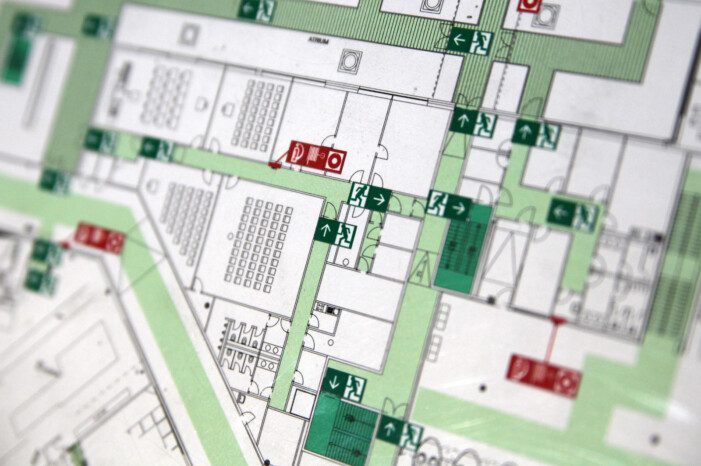
Emergency and Escape Route Impairment
Assess and mitigate risks from impaired emergency routes to ensure safe evacuations, protect people, and meet regulatory compliance.
