
FLACS 25.2 is now live
FLACS 25.2 expands the modelling capabilities engineers rely on, introducing new tools for assessing mitigation systems and explosion risks more accurately and efficiently.
This release includes major new features and usability improvements that reflect current industry challenges and needs.

Dynamic Water Spray Model
Water-curtain systems are widely recognised as effective mitigation tools for gas releases, significantly reducing dispersion and concentration of heavy and toxic vapours.
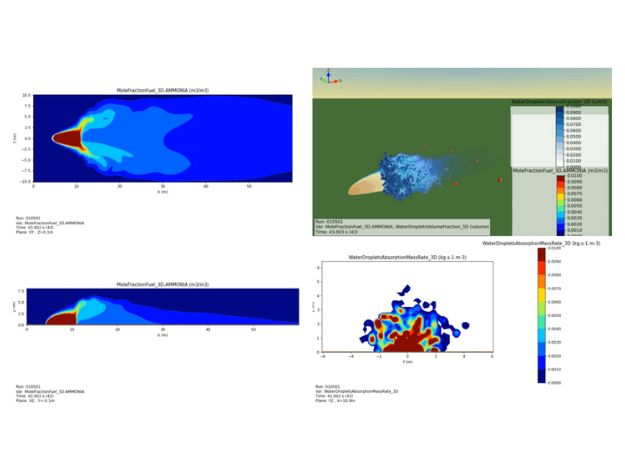
FLACS 25.2 introduces a new dynamic water spray model that simulates sprays using Lagrangian particle methods, fully coupled with the gas flow. This allows the model to capture how water droplets influence gas dispersion in real-time. It also includes the ability to simulate ammonia absorption into the water stream, enabling more accurate assessments of toxic gas releases.
The feature supports direct analysis of water curtain systems as a mitigation measure, making it possible to test their effectiveness in realistic conditions – including site geometry, wind patterns, and release scenarios. This function also supports safety case development and helps verify the design of mitigation systems.
With this new capability, users can evaluate and optimise water spray systems in greater detail, rather than relying on broad assumptions. It allows better support for meeting mitigation requirements in risk assessments, reduces the need for conservative estimates, and improves the credibility and clarity of safety studies.
Inert Stream Support
Inert gas injection is a proven method to prevent explosions by reducing the oxygen concentration below combustion limits.
FLACS 25.2 reintroduces the ability to model an inert gas stream alongside air and fuel, allowing users to simulate how inerting systems affect gas cloud behaviour. This applies to both leak and cloud scenarios, making it possible to study how the introduction of an inert gas can suppress explosions or limit the formation of flammable clouds. The feature also enables users to assess dilution effectiveness under real site conditions, taking into account specific layout and environmental factors.
This functionality helps users evaluate the role of inerting in reducing explosion risk, supporting more realistic and less conservative design options. It also provides a solid basis for justifying mitigation measures to regulators, clients, and other stakeholders through credible, scenario-specific analysis.
Additional Enhancements
In addition to the new dynamic water spray model and inert stream support, FLACS 25.2 includes several improvements that enhance performance, reliability, and ease of use. These updates help users handle more complex models, reduce simulation time, and streamline the overall modelling process.
Performance Improvements
- Reduced memory usage and faster execution for simulations with large meshes or more than one million control volumes
- Optimised restart dump writing to minimise simulation overhead
These improvements allow users to run larger, more detailed models without hitting hardware limitations. They also help reduce the time and cost of running multiple scenarios or high-resolution grids, supporting more efficient project delivery.
FLACS Geometry Calculator (FGC) Improvements
- Lower memory consumption for geometries containing many small meshes
- Improved porosity calculator accuracy
- Resolved blockage errors in intricate structures such as tunnels and caves
These updates make it easier to model complex industrial layouts more reliably. They help reduce the need for manual corrections, improve data quality for explosion analysis, and save time in geometry preparation and validation.
CASD Improvements
- Minor usability refinements, including ongoing multi-scenario workflow enhancements
- Incremental changes to support easier and more efficient model setup
These changes make it easier to build and manage models within FLACS, particularly for users handling multiple scenarios. They support a smoother workflow and contribute to overall modelling efficiency.
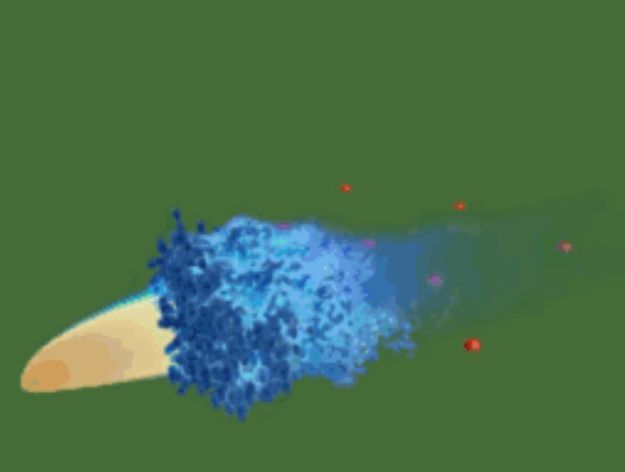
Webinar: New in FLACS 25.2 – Modelling water spray and inerting systems
Register for a webinar where you will be presented with the latest updates in version 25.2 of FLACS.
Register
Get access to FLACS 25.2
Existing users will be able to download the new software update by clicking on the button below.
