
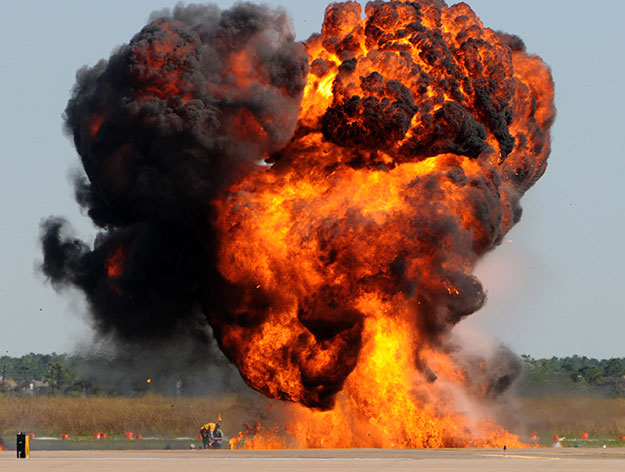
An Explosion Risk Analysis (ERA) is a risk-based approach to determine explosion overpressures and their destructive potential.
It also assesses the chance of escalation and the overall explosion risk level following the ignition of flammable clouds.
A probabilistic explosion analysis is performed by combining leak frequencies, statistical weather data and ignition probabilities and calculating the resulting risk.
The result may be presented risk to people, equipment and the environment and measured up against the company’s or legislative body’s criteria for tolerable risk.
When should I conduct an ERA?
In large projects, ERAs are used to determine Design Accidental Loads (DAL) which will have substantial cost implications. ERAs are performed at all stages of the project life cycle: for projects involving novel designs or otherwise involving technical or hazard-related challenges, an ERA is often performed at the Concept stage – even if information is scarce.
Additionally, ERA should always be performed at the FEED stage where blast design requirements are fixed for subsequent contractual stages. To assure that the as-built plant meets the safety requirements, an ERA is commonly performed also at the EPC (Engineering, Procurement and Construction) stage but more so as a verification exercise.
Many projects start with simplified ERAs and increase the level of sophistication as the design matures. The drawback of this approach is that means, and method change during the course of the project which can lead to great problems when high blast loads become apparent at a late design stage.
An alternative approach is to perform the initial studies also with a sophisticated modelling approach and where subsequent stages simply become updates of the original analysis. This assures that the approach for risk and DAL remain the same during the course of the project.
Does my facility need an ERA?
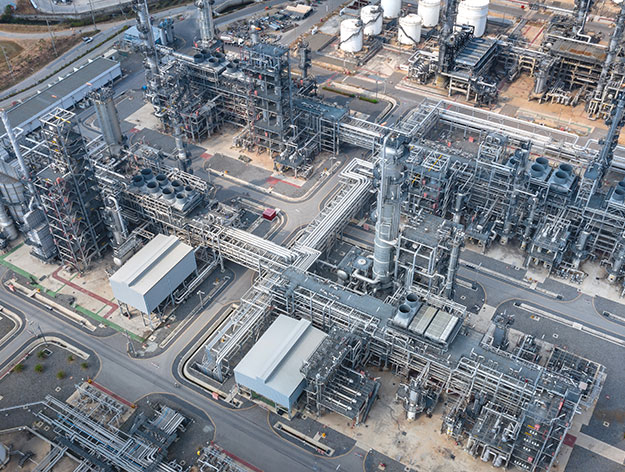
ERAs are conventionally done for large industrial projects but can also be useful for smaller installations in the public domain. In the latter event, the ERA will often be an integrated part of a QRA focusing on risk to neighbours and legislative requirements. ERAs can also be conducted for both onshore and offshore facilities.
Depending on your facility, an ERA can form a significant input to design or part of demonstrating safety or compliance to regulators and stakeholders for example as part of a Land Use Planning (LUP) application, a COMAH safety report, a facility siting study or layout design review.
Contact us
In what industries or types of facilities is an ERA useful?
Gexcon has extensive experience in conducting Explosion Risk Analyses for Oil & Gas, Power production and new energy carriers. In many circumstances, an ERA would be an implicit requirement to document tolerable risk to neighbours and society at large. For all projects where measures are needed to manage explosion risk, and ERA represent an opportunity for design or cost improvements.
Through these studies we have helped our clients to improve the safety of their facilities and demonstrate safety to regulators through quantifying risk levels, identifying high-risk areas and providing recommendations on how to reduce the explosion risks across complex facilities.
Our Approach
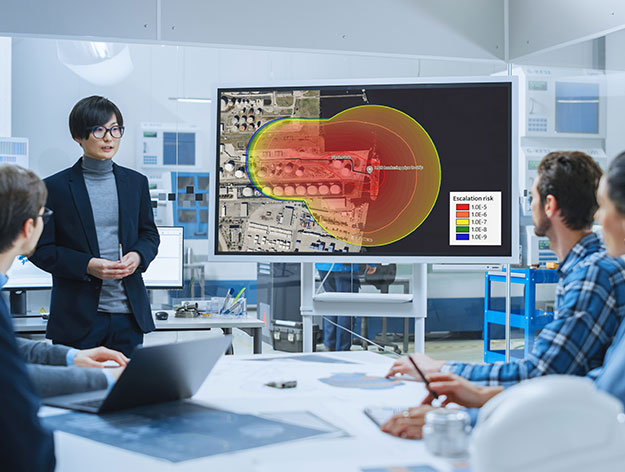
An ERA will typically consist of modelling a set of release, dispersion and explosion scenarios based on a number of failure scenarios which have been selected as a representative subset to limit the number of simulations or calculations required.
The set of dispersion simulations will consider an appropriate range of failure scenarios, gas detection philosophy, and wind and meteorological conditions to determine flammable cloud volumes for the explosion analysis.
The modelling results will be combined with frequency data such as leak frequencies, ignition probability and timing to then calculate the risk level.
Although results are typically presented as exceedance curves for overpressure levels, our ERA reporting and outputs can be tailored according to the project requirements and communicate the required information such as highlighting areas of concern, assessing loads exceeding target frequencies, and highlighting the driving factors for explosion risks.
Value to your business
Our Explosion Risk Analysis service helps your business by:
- Assessing explosion risks early to prevent costly design changes and improve facility safety
- Quantifying explosion overpressures, ignition probabilities, and escalation potential to support risk-based decision-making
- Ensuring regulatory compliance by demonstrating tolerable risk levels for both on-site and off-site
- Optimising facility layout and protection measures by identifying high-risk areas and evaluating mitigation strategies
- Supporting cost-effective design by determining Design Accidental Loads (DAL) at various project stages
Why choose Gexcon?
We provide flexible support for ERAs at any stage of a project, adapting our approach to suit the level of detail available and the specific needs of your design phase.
- Use EFFECTS and RISKCURVES for early-stage studies where detailed geometry is not yet defined or layouts may change.
- Apply advanced FLACS CFD modelling for later phases when greater detail is available and high accuracy is required.
- Guide the study by selecting realistic release scenarios, modelling complex cases, and sourcing reliable frequency data.
- Deliver clear, actionable results to help you design safer facilities and demonstrate compliance with regulatory requirements.
Need a partner to help drive your project forward?
Our experts are here to help.
Other Risk Evaluation and Quantification Services
Explore more services to help you assess risks, prioritise resources, and strengthen safety in your operations.

BowTie Analysis
BowTie Analysis maps accident scenarios, barriers, and outcomes to give a clear view of risks and improve safety communication.

Layer of Protection Analysis (LOPA)
Assess high-consequence scenarios and verify safety layers to ensure risks are reduced to an acceptable level.

Quantitative Risk Assessment (QRA)
Quantify risks by assessing event likelihood and impact to support informed safety decisions and effective risk mitigation.

Fire Risk Analysis
Identify, assess, and quantify fire hazards to reduce risks, improve safety measures, and protect people, assets, and the environment.
Emergency and Escape Route Impairment
Assess and mitigate risks from impaired emergency routes to ensure safe evacuations, protect people, and meet regulatory compliance.
