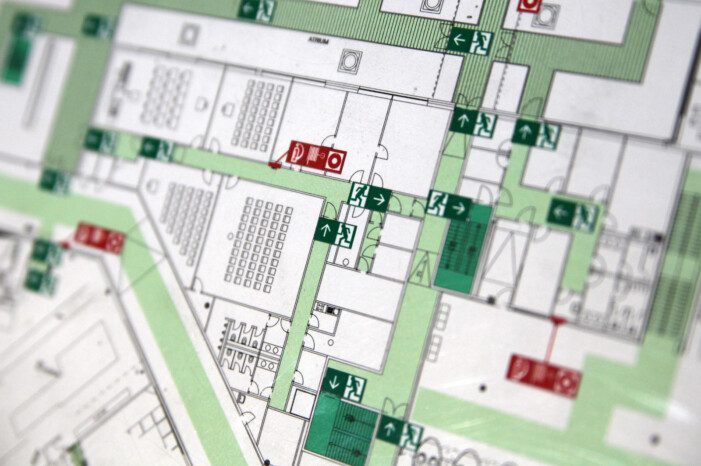
Clear emergency and escape routes are crucial for protecting people and reducing potential hazards when working in high-risk industries.
However, sometimes, these routes can be disrupted by changes in operations, construction, or unexpected events. This is why robust strategies to mitigate these risks are essential.
At Gexcon, we offer thorough Emergency and Escape Route Impairment Services designed to help organisations evaluate, manage, and lessen the risks associated with interruptions to escape routes.
Our Approach
We offer a comprehensive range of assessments and solutions to evaluate, manage, and mitigate risks associated with emergency and escape route impairments.
These services help ensure safe evacuations and regulatory compliance in high-risk environments.
- Process Hazard Analysis
- Leveraging proven techniques such as Hazard Identification (HAZID), What-If Analysis, and Failure Mode and Effects Analysis (FMEA), we assess any additional risks likely to arise from the impairment, including scenarios like fire, gas leaks, or containment breaches.
- Risk Assessment
- To understand the extent of the impairment, we perform a comprehensive risk assessment to identify affected and hazards that could threaten safe evacuations.
- This includes a review of existing safety documents and emergency response plans.
- Emergency Response Plan Review and Updates
- Working in collaboration, we will review and revise your emergency response plans to reflect the current impairment situations.
- This ensures that everyone is well-informed about alternative evacuation routes and procedures in an emergency.
- Scenario-Based Risk Evaluation
- Using our suite of comprehensive state-of-the-art explosion, fire, and dispersion consequence modelling tools, the X-Suite, we apply different scenarios to understand how impairment might influence evacuation times and safety.
- This analysis includes dispersion modelling, fire and smoke spread assessments, and dynamic evacuation simulations.
- Mitigation Strategy Development
- We create tailored mitigation strategies to minimise risks to personnel.
- Possible solutions may include temporary alternative escape routes, additional safety barriers, improved ventilation systems, emergency lighting and directional signage.

Value to your business
Our Emergency and Escape Route Impairment service helps your business by:
- Ensuring safe and effective emergency evacuations by assessing and mitigating escape route impairments
- Identifying and managing risks caused by operational changes, construction, or unexpected disruptions
- Improving compliance with safety regulations and industry standards through expert risk assessments
- Enhancing preparedness with scenario-based modelling, evaluating fire, smoke, and gas dispersion impacts
- Developing tailored mitigation strategies, including alternative escape routes and improved emergency response planning
Why choose Gexcon?
We have extensive experience in assessing and mitigating risks to emergency and escape routes in high-risk environments.
- Expertise in identifying hazards that could block or compromise escape routes.
- Use of advanced modelling tools to evaluate fire, smoke, and toxic gas impacts on evacuation safety.
- Practical recommendations to improve evacuation planning and emergency response strategies.
- Proven track record of helping clients ensure regulatory compliance and protect personnel during emergencies.
Need a partner to help drive your project forward?
Our experts are here to help.
Other Risk Evaluation and Quantification Services
Explore more services to help you assess risks, prioritise resources, and strengthen safety in your operations.

BowTie Analysis
BowTie Analysis maps accident scenarios, barriers, and outcomes to give a clear view of risks and improve safety communication.

Layer of Protection Analysis (LOPA)
Assess high-consequence scenarios and verify safety layers to ensure risks are reduced to an acceptable level.

Quantitative Risk Assessment (QRA)
Quantify risks by assessing event likelihood and impact to support informed safety decisions and effective risk mitigation.

Explosion Risk Analysis (ERA)
Evaluate explosion hazards, overpressure, and escalation risks to design safer facilities and meet regulatory compliance.

Fire Risk Analysis
Identify, assess, and quantify fire hazards to reduce risks, improve safety measures, and protect people, assets, and the environment.
