Under the COMAH Regulations, upper-tier establishments are required to submit a Safety Report. The initial Safety Report should be either a Pre-Construction Safety Report (PCSR), or Pre-Operations Safety Report (POSR) depending on whether the application pertains to a new facility, or a modification to an existing facility. A PCSR should be prepared for new establishments which are currently at design stage, this should be submitted within a ‘reasonable timeframe’ before construction begins (generally around 6 months before is advised).
The PCSR, and subsequent revisions of the Safety Report, should be regarded as an important site document. The report is not simply a regulatory compliance exercise, a well written Safety Report documents all aspects of a facility’s basis of safety, which can provide valuable input and reference for future studies during the facility’s lifetime.
By following the framework and content outlined in the Competent Authority’s (CA) Safety Report Assessment Manual (SRAM), it is ensured that a comprehensive evaluation of the facility design is undertaken and documented. It is often possible to identify potential areas for improvement whilst developing the PCSR however, it is important to consider what may be noted as an area of improvement and what may constitute a ‘significant omission’. The PCSR should not be submitted until the design is sufficiently progressed to ensure that the minimum information requirements for the PCSR are met.
Competent Authority Assessment: SRAM Document
The SRAM describes the framework within which the CA undertakes the assessment of safety reports. The SRAM framework comprises several documents detailing the requirements for each technical aspect of the criteria, including:
- Descriptive criteria
- Process safety criteria
- Predictive criteria
- Human factor criteria
- MAPP (Major Accident Prevention Policy) – SMS (Safety Management System) criteria
- Environmental criteria
- Mechanical engineering criteria
- Emergency response criteria
- Electrical control and instrumentation criteria
The SRAM is a publicly available document and should be used in the development of a Safety Report. The criteria and supporting assessment guidance provides a clear and detailed description of the CA’s expectations for each technical aspect.
Before commencing work on the PCSR, a pre-receipt meeting should be arranged. The pre-receipt meeting is an important step to set expectations both for the operator and the CA. The CA will outline their expectations in terms of a good-quality safety report, with reference to the SRAM, and the operator has the opportunity to provide an overview of the facility and discuss any queries relating to the Safety Report in the context of the facility.
Structure of the Safety Report
There is no set requirement on the structure of the PCSR, however, it is highly beneficial and advisable to utilise the SRAM structure. Following this structure allows you to systematically address all criteria within the SRAM, as well as providing the CA with a clear link between the assessment criteria and the content of the PCSR.
Two of the most avoidable issues with PCSRs are;
- A PCSR which does not meet the minimum information requirements specified in the SRAM.
- A PCSR which contains contradictory information.
The first point is often a result of failure to properly apply the SRAM due to misunderstanding of the criteria, as well as perhaps attempting to prepare the PCSR too early, i.e. before the design is sufficiently developed. The second point often stems from the structure of the PCSR, the SRAM does contain some overlap, and thus the structure should consider where certain criteria should be addressed to avoid repetition. Where similar information is contained in multiple Sections of the Report, this information must be consistent.
Both of these issues lead to a poor assessment of the PCSR. Although this can be resolved at the Pre-Operations stage, this puts greater onus on the demonstration within the POSR to ensure the CA are satisfied.
PCSR Content
In the case of the PCSR, it is expected that certain details of the facility design, as well as the specifics of the facility operation will not yet be established. The SRAM accounts for this by specifying certain criteria which are not applicable to PCSRs, for example, details of maintenance schemes, operating procedures and the full emergency response plan are not likely to be established.
Whether it relates to criteria which is highlighted as not applicable, or where complete information is not yet available, the PCSR should include any details which are known, or at least a high level philosophy, if possible. If it is not possible to provide any indicative information, a holding statement should be included to defer to the Pre-Operations Safety Report (POSR) to provide clear acknowledgment of the gap against the criteria.
Though it is acceptable to have gaps in information for certain aspects of the design at PCSR stage, there are other aspects which are extremely important at this stage and it is important to provide a thorough discussion in line with the SRAM guidance. For example, facility layout is particularly relevant to PCSRs. Failure to adequately address these aspects will be considered a significant omission and could result in delays in project timescales. Note that updates to certain aspects of the Safety Report are expected from pre-construction to pre-operation, but changes to the activities on site, plant layout, basis of design or other fundamental aspects of the facility design or operation should be avoided.
Don’t forget the Objective!
The Safety Report is the key tool in forming the demonstration that ‘all measures necessary have been taken to prevent major accidents and to limit the consequences to people and the environment of any that do occur’.
The key to a Safety Report is to demonstrate, not state. The content should not only describe the facility and the safety measures, but should also justify their selection and demonstrate their suitability for the facility in question.
Have questions or concerns about COMAH or Seveso requirements for your facility??
Gexcon has extensive experience in supporting a wide range of industries with the complexities of COMAH/Seveso. Our proven capabilities and depth of expertise allows us to provide comprehensive tailored support to our clients. Whatever the scope of support, Gexcon consider COMAH/Seveso compliance a collaborative process, a successful Safety Report requires the detailed site knowledge from the client as well as the expert input from our consultants.
If you require any support in relation to COMAH/Seveso compliance, please contact us via info@gexcon.com.
Authors

Louise Black
Principal Engineer at Gexcon
Related insights
Browse additional insights to deepen your understanding and stay informed on related topics.

The Preparation of a Pre-Construction Safety Report
What a Pre-Construction Safety Report (PCSR) includes and how it helps identify and manage major risks before construction starts.

Is Your Facility Compliant? A Guide to Seveso / COMAH Regulations and Land Use Planning
Understand if your site falls under Seveso / COMAH and know the key steps to compliance, including land use planning considerations.

Identification of Major Accident Hazards under COMAH / SEVESO
How to identify major accident hazards at COMAH and Seveso sites using HAZID to meet safety requirements and reduce risks.
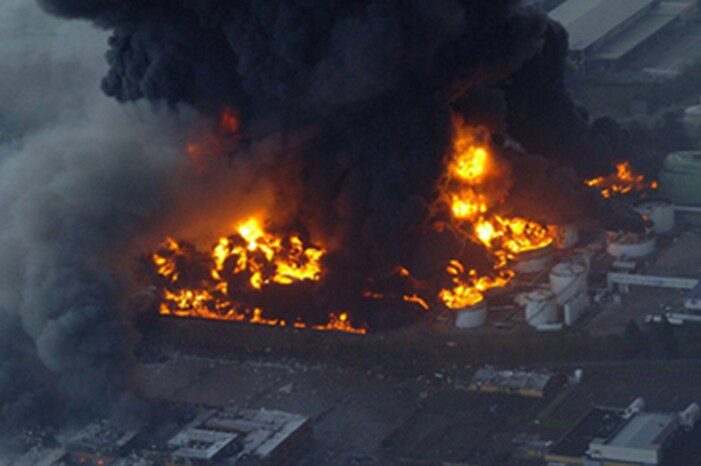
Buncefield – 15 years on: Advancements in the Predictive Aspects of COMAH
Learn how advanced modelling techniques improve COMAH predictions, facility design, and emergency response in light of the Buncefield event.

Preparing for your COMAH Safety Report
Learn what to include in your COMAH safety report, how to prepare effectively, and meet regulatory expectations with confidence.
Stay ahead in process safety and risk management
Get the latest trends in the field of process safety management straight to your inbox, and enhance your skills through knowledge sharing from industry experts.
Subsribe to our newsletter