As the global interest in hydrogen as a cleaner energy source continues to gain momentum, ensuring its safe storage and handling emerges as a critical priority. While hydrogen holds immense potential to reduce carbon emissions across industries, its highly flammable nature demands meticulous safety measures.
Fortunately, advanced modelling techniques offer a sophisticated approach to comprehensively assess associated consequences and risks. By simulating potential consequences of hydrogen release scenarios such as Jet Fires or explosions these models provide invaluable insights for crafting robust safety strategies. Join us as we explore the crucial junction where the potential of hydrogen intersects with the necessity of safety.
Understanding hydrogen storage risks
Hydrogen, renowned for its lightweight properties, exhibits a propensity to ignite even in minute quantities. This can be attributed to its wide flammability range and remarkably low ignition energy. This susceptibility is further intensified by its swift diffusion and dispersion characteristics.
Among the spectrum of potential incidents, fireballs emerge as one of the most critical scenarios to address, given their potential for swift and intense energy release. These events pose significant hazards to personnel, infrastructure, and the surrounding environment.
Hydrogen fireballs may arise from various factors, including prolonged exposure to heat generated by fires or nearby heat sources, resulting in increased cylinder pressure. Other factors encompass contamination of the hydrogen gas, precipitating reactive interactions, such as with oxygen, as well as procedural errors during filling operations or loss of the vessel’s structural integrity.
EFFECTS for hydrogen applications
An instantaneous release of compressed hydrogen, known as the fireball phenomenon, is frequently analysed using conventional BLEVE (Boiling Liquid Expanding Vapor Explosion) models. However, these models are primarily designed for Pressurised Liquefied Gases (PLG) and may inaccurately predict outcomes for hydrogen releases, leading to an overestimation of flame emissive power.
Hydrogen, typically stored as a compressed gas, possesses unique characteristics distinct from hydrocarbon gases. Notably, hydrogen exhibits a laminar burning velocity that is eight times faster than that of lighter hydrocarbons and is fourteen times lighter than air, rendering it highly buoyant.
In EFFECTS, our modelling approach incorporates these distinctive properties of hydrogen, resulting in accurate predictions that align closely with experimental data. For instance, flames fuelled solely by hydrogen might not be visible to the naked eye, particularly in daylight, because their emission band predominantly lies in the far infrared region. Our models consider hydrogen’s low radiant heat. Furthermore, EFFECTS accurately simulates the entire physics of the dispersion phenomenon including lighter-than-air behaviour and rising and growing behaviour of the resulting Fireball.
The utilisation of our “Gas Fireball” model offers stakeholders a comprehensive understanding of the heat radiation and overpressure effects associated with instantaneous hydrogen releases. This knowledge empowers them to enhance safety protocols and effectively mitigate potential hazards within storage facilities.
In our upcoming demonstration, we will showcase the efficacy of the Gas Fireball model through two hydrogen release scenarios, highlighting its practical application.
Modelling approach
Scenario 1 – Hydrogen storage tank for water electrolysis

Accident description
The first case involves an incident that occurred in Gangneung, South Korea, in May 2019. It entails a large volume mounded cylinder storing compressed hydrogen at low pressure. This incident arose due to oxygen permeating into a 40 m3 steel tank containing hydrogen at 10 bar pressure, generated through water electrolysis commonly found in industrial plants or testing facilities. 1

To simulate this scenario, we opted for the EFFECTS model ‘’Gas Fireball’’. In addition to predicting heat radiation outcomes, this model also integrates the blast effect of the fireball, providing overpressure results.
Results
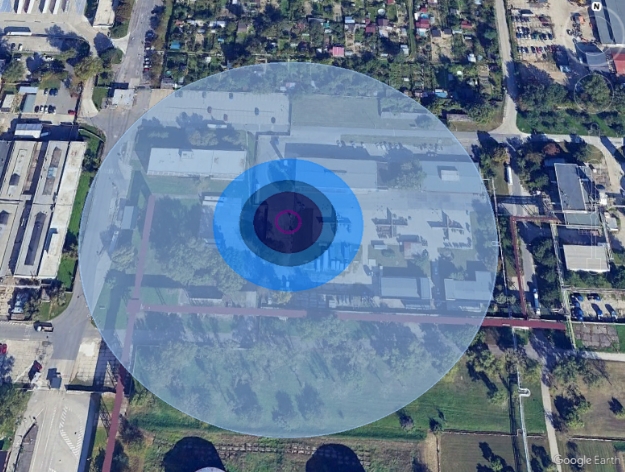
Apart from displaying heat radiation contours and overpressure contours for selected levels on a tile server background map, EFFECTS also presents heat radiation results in the form of a radiation grid, as depicted in Figure 2. This grid allows for direct reading of heat radiation values, providing a convenient reference for analysis. For added convenience, all contours can be superimposed over a receiving vulnerable object, allowing for a comprehensive analysis of the potential impacts. More detailed insights can then be obtained through receiver-specific reports, providing users with a deeper understanding of the potential consequences.

Furthermore, detailed information about the Fireball results, such as Fireball size, duration, and its effects on surrounding structures, is provided through graphs and a comprehensive report. For example, by examining the dimensions of overpressure contours in the report, one can gain an immediate understanding of the extent of damage caused by the explosion. In the case of the analysed event, the accident report highlights that within a 15-meter distance from the hydrogen tank, the structural integrity of the building beams was compromised. Additionally, windows within approximately 100 meters of the explosion site were shattered. To compare these distances with the model’s results, please refer to the contour dimensions in the report section of the project file at the end of this blog.
In addition to the top view, the heat radiation side view is of significant importance, and is available in the map and graph sections, as illustrated in Figure 4.

Scenario 2 – Hydrogen storage tank at refuelling station
Accident description
Our second Fireball scenario depicts an incident at a hydrogen fuel station situated within an urban area. These stations typically comprise delivery installations, storage facilities, and fuel supply systems, each representing potential points of failure. The storage infrastructure commonly involves bottle packages, consisting of multiple cylinders on a tube trailer, storing hydrogen at pressures of 500 bar, and additional intermediate storage in buffer tanks ranging from 520 to 950 bar. 3
Given the growing number of hydrogen refuelling stations, it is imperative to address this particular hydrogen storage application. Statistics reveal that by the end of 2023, Europe boasted a total of 265 hydrogen refuelling stations. 4
This scenario depicts damage to a valve on one of the cylinders mounted on a tube trailer during hydrogen loading operations. The sudden release of gas ignites, leading to a jet fire directed towards adjacent cylinders. The high-intensity heat swiftly damages the fuel reloading dispenser connectors and compromises the structural integrity of a cylinder. Notably, the affected cylinder is pressurised to 500 bars and has a volume of 350 litres.
Results
One of the observed effects of general hydrogen explosions at hydrogen refuelling stations, as exemplified by the incident in Kjørbø, Norway, is the shattering of windows in an office building located approximately 65 meters from the explosion centre. This phenomenon can be readily analysed using EFFECTS graphs, overpressure contours overlaid on a tile server background map (Figure 4), or contour dimensions provided in the report section of the results. Upon comparison of the effects, it becomes evident that the distance of 65 metres depicted in Figure 5 falls slightly behind the 69 mbar (1 psi) contour, which corresponds to the level of damage resulting in the shattering of windows.

EFFECTS not only offers a good representation of the model results suitable for direct reporting but also allows to export the results in the same form or import your contour into Google Earth.

Conclusion
In conclusion, the study of hydrogen fireball incidents, facilitated by sophisticated modelling tools like EFFECTS, underscores the critical role of predictive modelling in understanding and mitigating the risks associated with hydrogen storage and handling.
By meticulously simulating fireball scenarios and analysing their potential consequences, these models offer crucial insights into the dynamics of hydrogen releases, such as Jet Fires or explosions, and their impact on surrounding infrastructure and personnel safety. The detailed representations provided by EFFECTS enable users to assess the heat radiation distribution, overpressure effects, and structural vulnerabilities with precision, empowering them to develop robust safety protocols and mitigate potential hazards effectively.
As demonstrated by the case studies presented, such modelling approaches not only enhance our understanding of fireball phenomena but also play a vital role in safeguarding against their adverse effects, thus, advancing the safe integration of hydrogen as a sustainable energy solution. As we continue to harness the power of hydrogen, it’s imperative to prioritise safety, ensuring a smooth transition towards a cleaner future.
References
- Kim, Y. (2019) Review: Hydrogen Tank Explosion in Gangneung, South Korea. Center Hydrogen Safety Conference. Available at: Link
- Zum News (2019) Fire at a factory near the hydrogen tank explosion site… “Investigating the connection”. Available at: Link
- NIPV (2023) Hydrogen cylinder package – Torch fire. Available at: Link
- Electrive (2024) 37 new H2 refuelling stations built in Europe in 2023. Available at: Link
Would you like to see this example in action?
Download our project file to observe the consequence calculation of a Hydrogen Fireball incident using EFFECTS.
This project file can be accessed using the EFFECTS software or its free viewing demo.
Authors

Viktoria Bohacikova
Technical Product Specialist at Gexcon

Vinicius Simoes
Related insights
Browse additional insights to deepen your understanding and stay informed on related topics.
Liquid hydrogen safety considerations
Essential safety considerations for liquid hydrogen: key hazards, risk controls and best practices for safe handling and storage.
Lessons learnt from hydrogen incidents
Real-world hydrogen incident cases, their key lessons and practical safety improvements for safer hydrogen use.
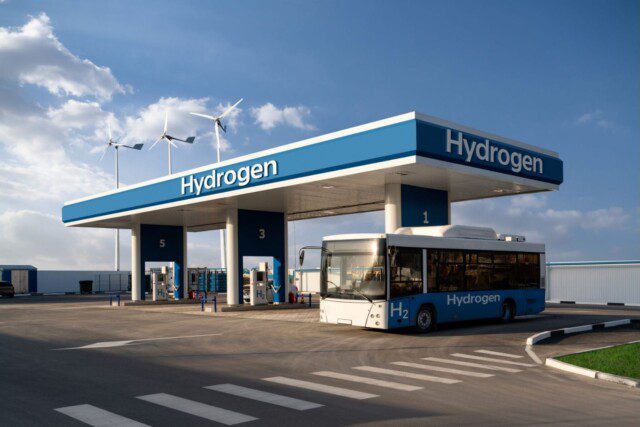
Hydrogen storage safety in urban settings: Analysing Societal Risk using RISKCURVES
This article primarily focuses on calculating Societal Risk, a crucial metric for evaluating risk acceptability, particularly relevant for the risk assessment of densely populated areas.
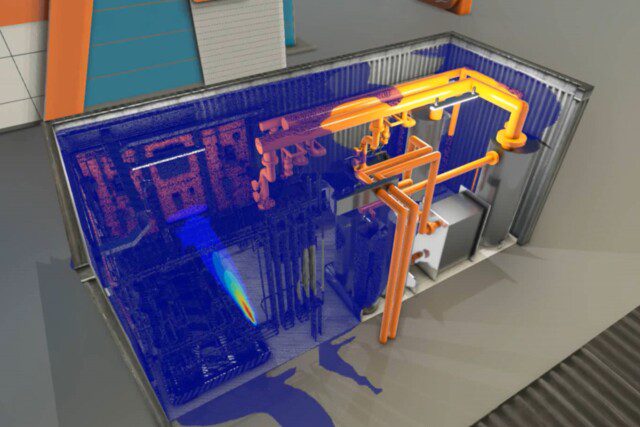
Comparison of FLACS simulations with SOTRA tests
This presentation discusses the comparison between FLACS simulations and medium-scale hydrogen dispersion and explosion tests.
Risk analysis for hydrogen refuelling stations
Learn how to analyse potential risk scenarios at hydrogen refuelling stations using RISKCURVES QRA software to streamline your projects.
Risk assessment of hydrogen in nuclear facilities
See how FLACS CFD tool helps simulate hydrogen hazards in nuclear facilities and support safer design through detailed consequence analysis.
Stay ahead in process safety and risk management
Get the latest trends in the field of process safety management straight to your inbox, and enhance your skills through knowledge sharing from industry experts.
Subsribe to our newsletter