The challenge
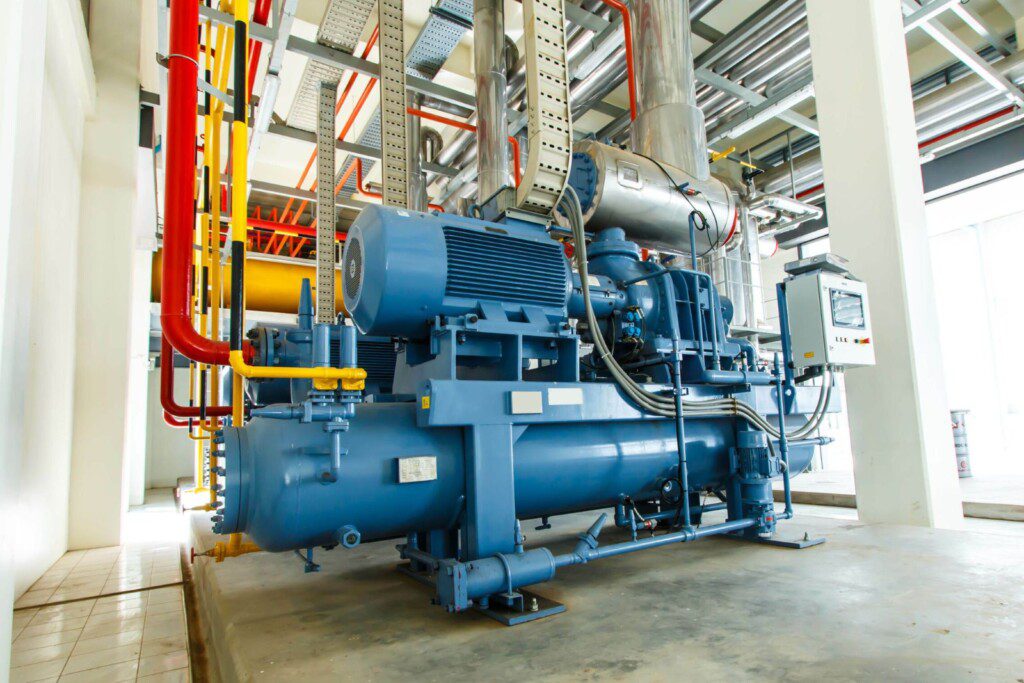
In the original design, the hydrogen compressors were not housed in a building but had a roof and limited weather protection, effectively making them “outdoors.” However, to comply with noise regulations, our client is considering enclosing the compressors within a building, necessitating modelling them as being inside an enclosed space.
This study on hydrogen compressors was part of a broader study for a hydrogen production and refuelling station.
The approach
Gexcon conducted a comprehensive study combining ventilation, dispersion, and explosion analyses.
The ventilation analysis evaluated the potential for diluting hydrogen gas within the compressor enclosure under natural ventilation conditions. This assessment established the facility’s natural ventilation effectiveness by analysing Air Changes per Hour (ACH) and/or local flow velocities.
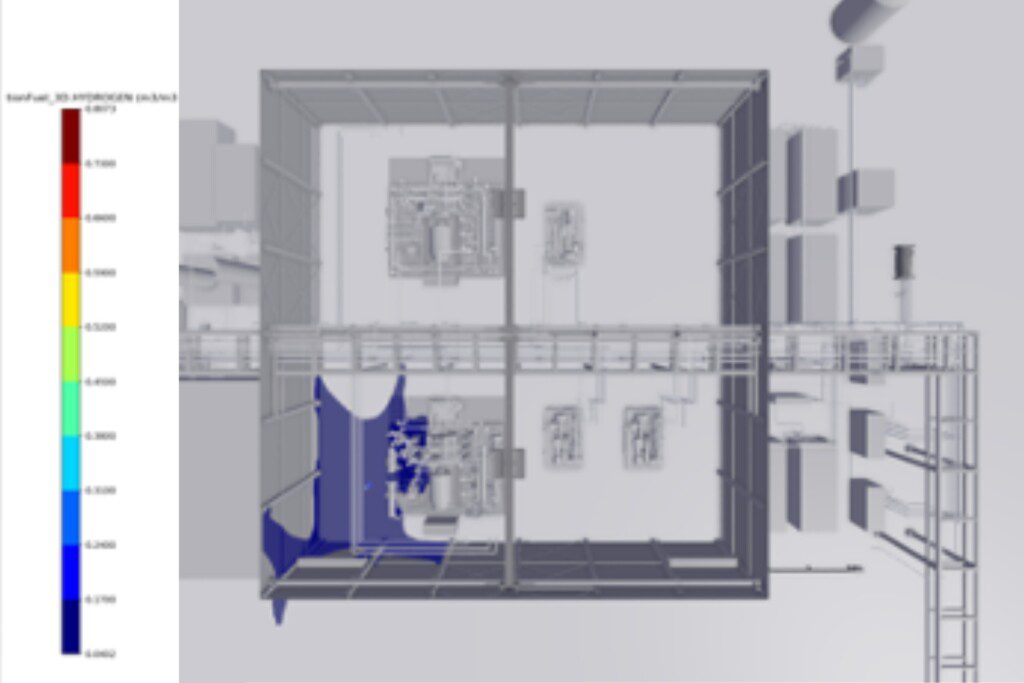
The dispersion analysis determined the gas migration behaviour and the potential maximum gas cloud size from a release within the compressor enclosure.
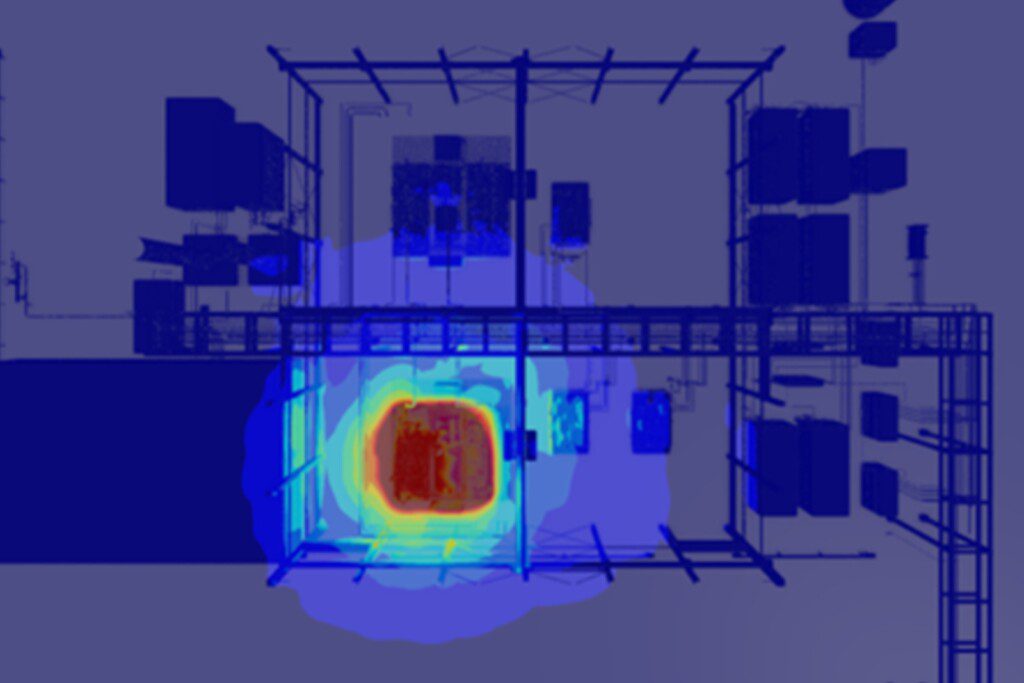
The explosion analysis evaluated the internal overpressures resulting from the ignition of the gas clouds.
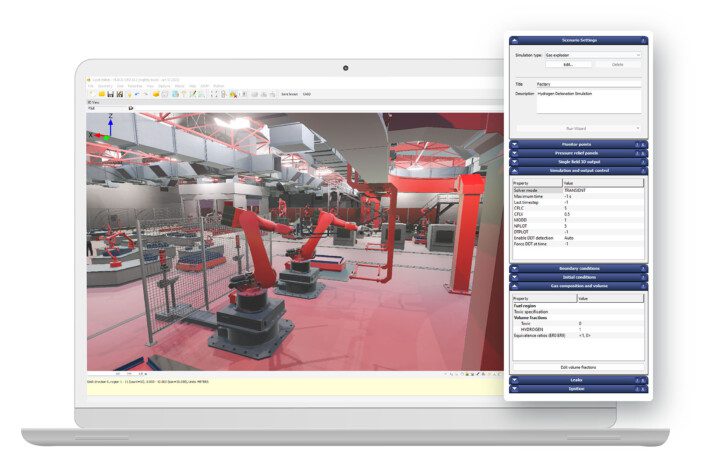
These analyses were conducted using FLACS CFD (Computational Fluid Dynamics) consequence analysis software, selected for its capability to account for complex geometries, obstacles, or enclosed spaces and assess the effect of ventilation rates on gas dispersion behaviour, thus ensuring accurate results.
Finally, the study assessed the required ventilation rates for diluting flammable gas releases in accordance with EN 60079-10-1.
The outcome
Gexcon’s consulting team helped our client understand the complexities of hydrogen gas dispersion and the potential consequences of explosions using the proposed geometric setup and predefined scenarios.
Our analysis of the facility’s natural ventilation showed that the ventilation rates required to achieve a “medium” dilution grade are significantly higher than those provided by natural ventilation, regardless of wind speed.
The results of explosion simulations igniting the worst-case credible clouds revealed that incorporating explosion relief venting through panel failure did not reduce the maximum overpressures but did improve the distribution of overpressure within the enclosure.
The outcomes of this analysis provided the client with:
- Improved building ventilation
- Based on our findings, our client was equipped with the foundation to enhance the design of the enclosed hydrogen compressor building. Our team advised implementing substantial improvements to the ventilation arrangements by updating the building’s design.
- Suggested use of gas detection to enhance early warning capabilities
- Additionally, the importance of installing gas detectors was highlighted, as early detection of flammable gas clouds is crucial for preventing the accumulation of significant quantities of flammable gas.
- Improve safety and cut redesign costs with CFD modelling
- Using CFD to accurately simulate real-world conditions offers a reliable basis for safety design decisions. It helps identify potential design issues, prevent costly modifications, and implement safety measures to protect workers and the surrounding environment.
Insights from the project
- Accurate geometry matters
- Realistic geometry modelling of installations has significant influences on the accuracy and reliability of the results.
- Impact of confinement and ventilation
- Confinement and ventilation can influence the gas dispersion behaviour.
- Better risk understanding through realistic dispersion modelling
- Realistic modelling of hydrogen gas dispersion improves the understanding of risk and gives better decision support for the cost-effective implementation of preventive and mitigative measures in the facility.
Need a partner to help drive your project forward?
Our experts are here to help.
Relevant solutions
Facility Layout Optimisation and Verification
Develop safer, compliant facility layouts by identifying hazards early, avoiding costly redesigns, and minimising risks through expert analysis.

Consequence and Impact Modelling
Helping you assess the consequences of potential hazardous events and plan how to manage them.

HVAC System Design Optimisation
Optimise airflow and minimise gas build-up risks with HVAC system analysis to support safer, more efficient operations.
FLACS
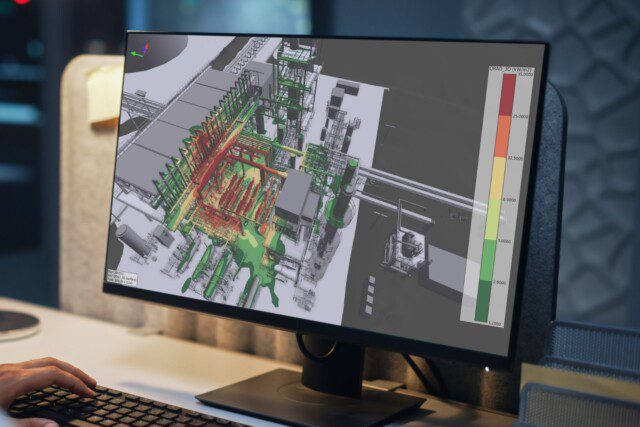
Advanced CFD tool for simulating fires, explosions, and gas dispersion in complex environments.
