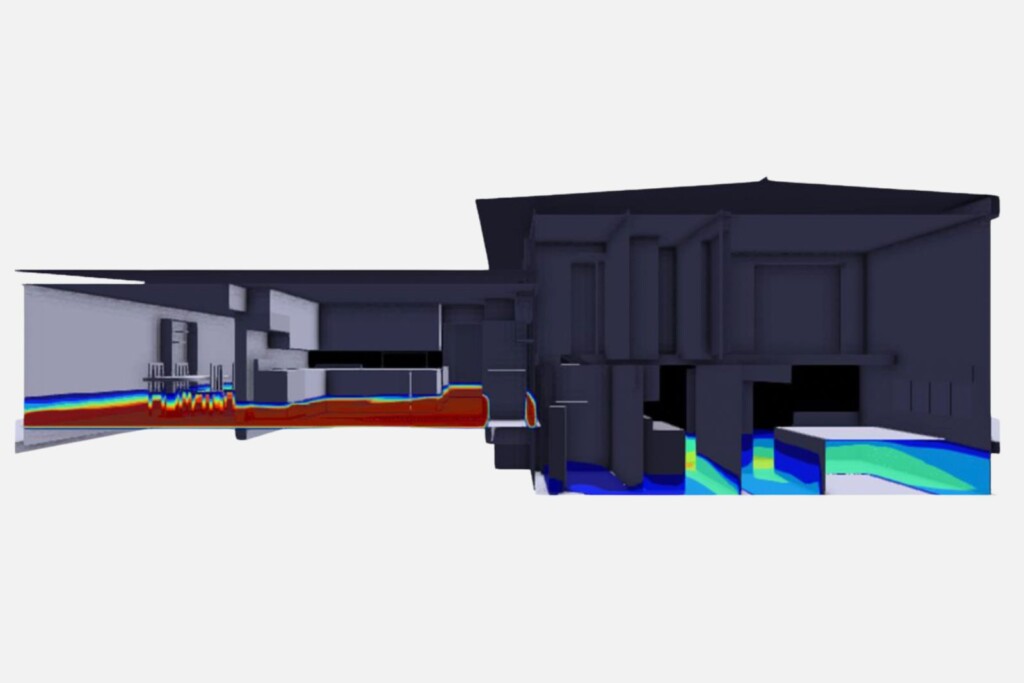
The National Fire Protection Association (NFPA) was developing a standard for combustible gas detector installation requirements, NFPA 715: Standard for the Installation of Fuel Gases Detection and Warning Equipment.
It was envisioned that such requirements can be established as has been done for CO detection in NFPA 720, “Standard for the Installation of Carbon Monoxide (CO) Detection and Warning Equipment”.
The goal of the study was to establish technical bases for combustible gas detector installation location recommendations in residences that use Natural gas (NG) or Liquefied Petroleum gas (LPG).
Project Summary
Recent experiences with combustible gas releases in residential buildings have led to a proposal for NFPA Standards development for locating combustible gas detectors and consensus on installation location requirements.
NFPA has initiated a Standard, NFPA 715, Standard for the Installation of Fuel Gases Detection and Warning Equipment, that will cover the selection, design, application, installation, location, performance, inspection, testing, and maintenance of fuel gas detection and warning equipment in buildings and structures. Technical analysis for justifying combustible gas detector installation location was lacking to support Standards development. This study was proposed to address the residential installation criteria for these devices and systems.
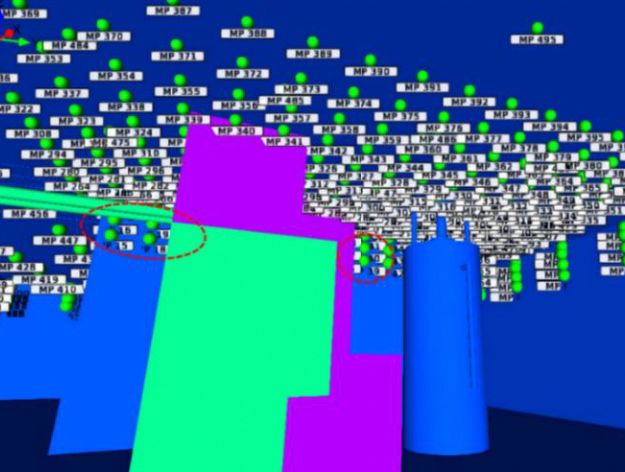
The study uses computational fluid dynamics (CFD) to quantitatively evaluate gas detector performance as a function of placement in residential occupancies. Natural gas and liquefied petroleum gas releases are simulated in different residential structures and gas concentrations are tracked at numerous potential detector locations within these structures to evaluate which locations are most effective for reliable and early detection. Over 250 CFD simulations were performed with a wide range of plausible leak types and environments to produce robust technical bases upon which gas detector location recommendations can be made.
A hazard-based approach was applied to compare the performance of gas detector installation locations. More specifically, this study quantified detector location performance based on 1) the ability of an installed detector at a specific location to detect before certain hazardous conditions arise and 2) the ability to provide sufficient response time prior to the hazardous conditions arising.
Project Objectives
The specific objectives of this project were to:
- Support the development of NFPA 715 by providing technical analysis for locating combustible gas detectors in residential buildings.
- Address the lack of data to justify detector installation locations for Standards development.

Would you like to learn more?
Visit the project page or contact us to learn more.
Other Projects
CO2PipeHaz
Quantitative Failure Consequence Hazard Assessment for Next Generation CO₂ Pipelines.
HySEA
Pre-normative research on vented deflagrations in enclosures and containers for hydrogen energy applications.

Large-scale DDT Testing – RPSEA Project Award
The project’s objective is to identify the triggers for deflagration-to-detonation transition (DDT), explore mitigation strategies, and improve the accuracy of predictive tools for enhanced safety.
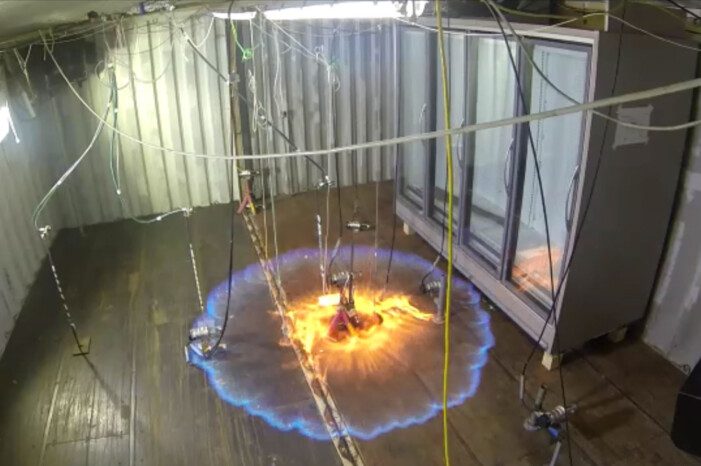
Fire Hazard Evaluation of A3 Refrigerants
The project aims to evaluate the fire hazard of R-290 propane in refrigeration appliances used in commercial retail and kitchen settings.
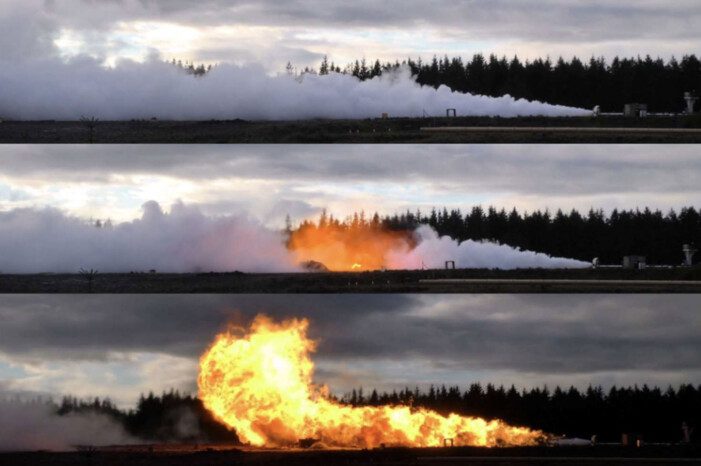
AIRRE (Assessing the influence of real releases on explosions)
The project aims to improve understanding of the effect realistic releases and turbulent flow conditions have on the consequences of accidental gas explosions in the petroleum industry.
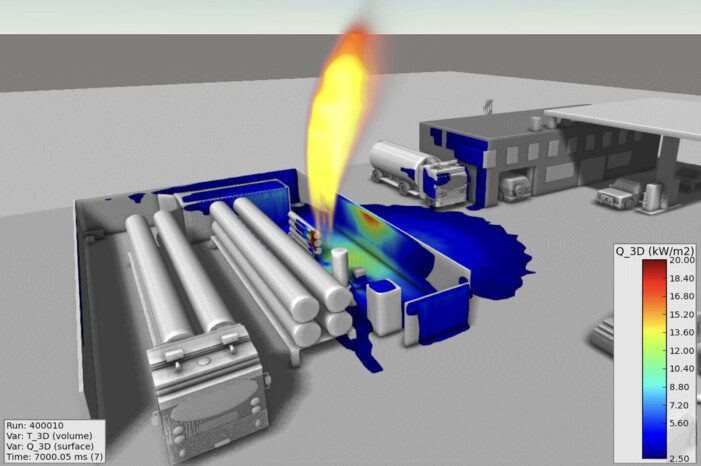
Hy3DRM (3D Risk Management for hydrogen installations)
The project set out to develop the 3DRM concept for hydrogen installations, including a prototype of a hypothetical hydrogen filling station.
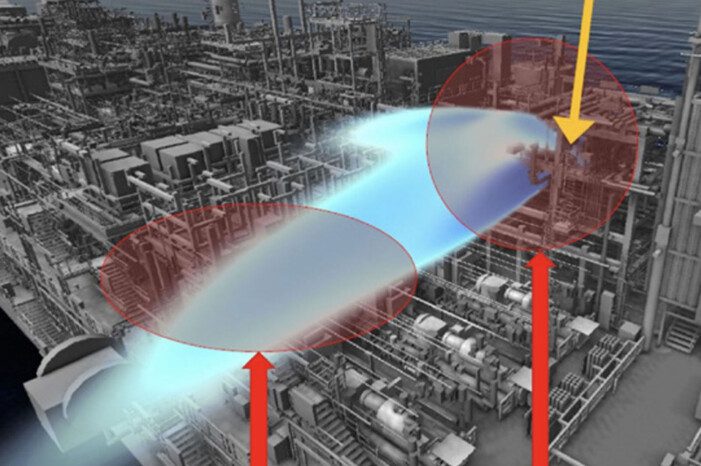
Gas Detector Layout Optimisation – Fortissimo
Optimising gas detector layouts in hazardous manufacturing and production plants with FLACS.
SH2IFT
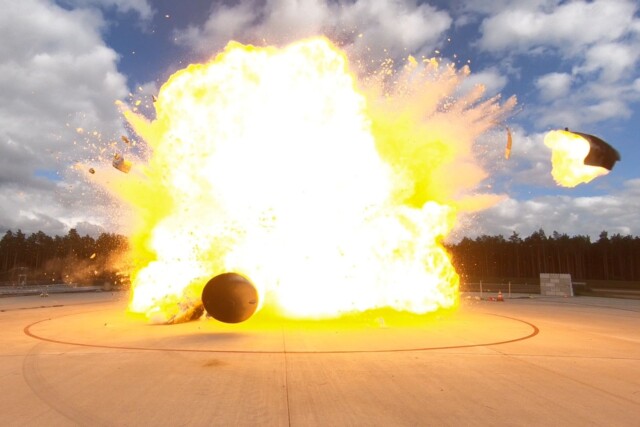
The SH2IFT (safe hydrogen fuel handling and use for efficient implementation) project focuses on on consequences of handling and use of large volumes of hydrogen within closed and semi-closed environments and in maritime transport.

Hellesylt Hydrogen Hub – Pilot-E
The project aimed to develop a hydrogen production facility for ferries, cruise ships, and other mobility applications.

Liquid hydrogen supply chain in Norway for maritime applications – Pilot-E
A project to develop Norway’s national hydrogen infrastructure, securing reliable LH2 supply for decarbonising maritime transport.
SAFEN
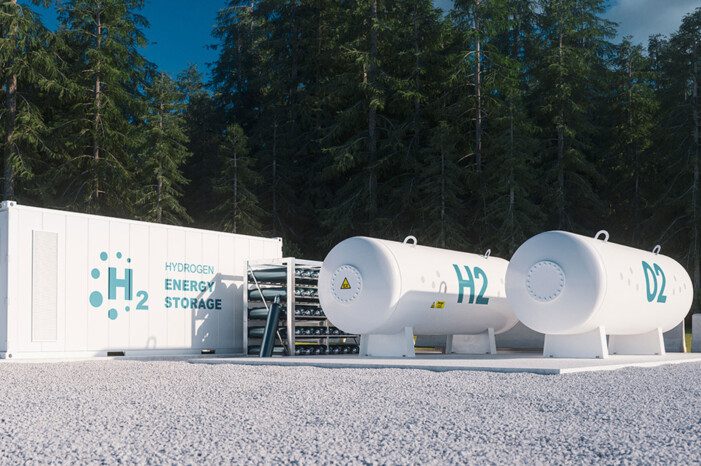
SAFEN aims to establish the knowledge required to develop risk-based methodologies enabling cost-efficient safety design for hydrogen, ammonia, and CO2 facilities.

SH2IFT-2
The second part of the SH2IFT (safe hydrogen fuel handling and use for efficient implementation) project explores a risk-based approach for operational safety.
