Presented at International Symposium on Fire Investigation, 2012
Authors: Derek Engel, Scott Davis
The current NFPA 720 code requirement for carbon monoxide (CO) detectors in residential structures requires placement outside of each separate sleeping area and on each floor of the residence. There is however no further guidance to specific placement of the detector (high, low, near or within furnace closets, etc.), as well as no acknowledgement to different housing and HAVC styles (forced hot air, hot water, etc.).
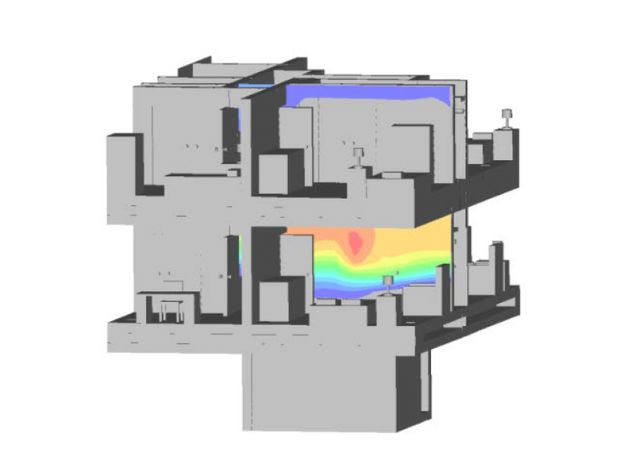
As the concentration of CO approaches several hundred parts per million, the time for detector alarm can be as little as a few minutes, much smaller than the characteristic mixing time of the residence. The general basis for detector placement requirements assumes that once the flue gases cool CO is generally neutrally buoyant in air, and becomes well mixed and distributed evenly throughout the residence.
Previous investigations have concluded that the CO is well mixed for residences with forced hot air heating systems and the CO in hot flue gases stratifies due to buoyancy for systems without an air-handling device to cause mixing.
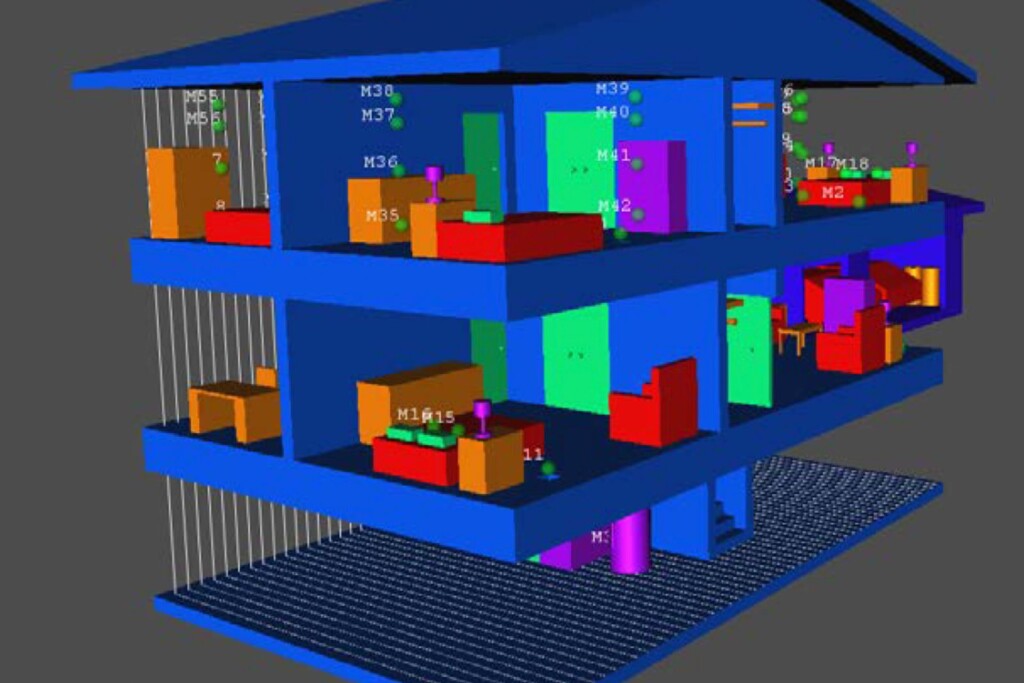
Using the CFD software FLACS, a study was performed to evaluate how CO would disperse and migrate in various residential structures and various HVAC designs. The goal would be to evaluate the migration of CO originating from hot flue gases, which are improperly vented into structures, and assess the validity of the well-mixed assumption as well as study the general dispersion patterns.
In addition, the study will provide further guidance as to optimal places for detector placement to allow early detection, while minimizing nuisance alarms.
Would you like to learn more about this topic?
Read the full paper or contact us to learn more.
Related insights
Browse additional insights to deepen your understanding and stay informed on related topics.

Key lessons from LNG incidents for safer operations
Lessons learnt from past LNG incidents, such as the Cleveland Disaster, the Skikda Explosion, and the Plymouth Plant Incident.
Learning from a propane cylinder BLEVE incident
Due to propane’s characteristics, there are safety-critical design features and procedures that should be implemented in the propane industry to ensure the safe use of propane.

Learning from ammonium nitrate explosion incidents
Ammonium nitrate is stable, but bulk storage near fire hazards can lead to major explosions despite long-known safety risks.
How to properly design your dust explosion protective systems
Learn how poor dust system design led to a major plant explosion and what steps to take to prevent similar combustible dust incidents.

Unraveling the mysteries of ammonium nitrate detonations
Learn how to prevent ammonium nitrate incidents by understanding the conditions that lead to explosive decomposition and how to avoid them.
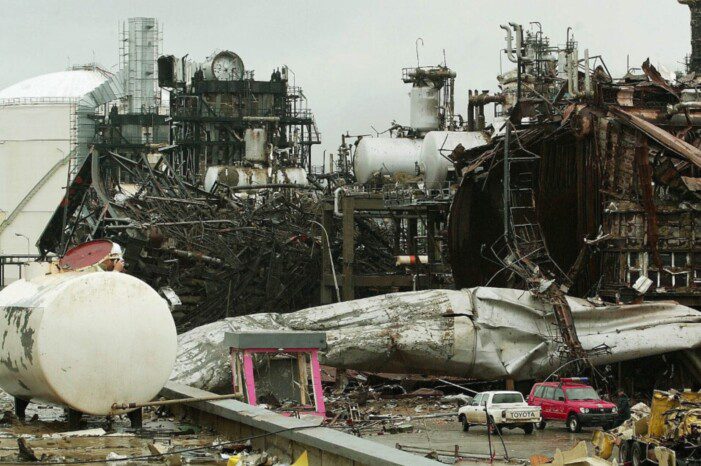
Lessons learned from LNG incidents
Learn about the importance of safety in LNG facilities by examining lessons from the 2004 Skikda LNG liquefaction facility explosion and the 1944 Cleveland Disaster.
Stay ahead in process safety and risk management
Get the latest trends in the field of process safety management straight to your inbox, and enhance your skills through knowledge sharing from industry experts.
Subsribe to our newsletter