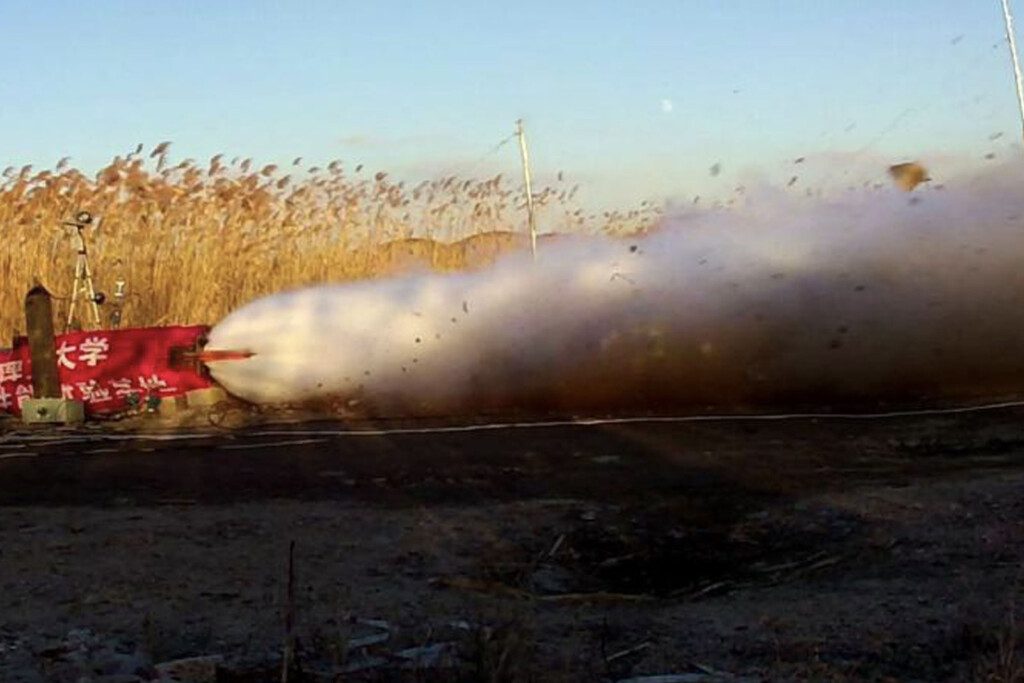
The CO₂PipeHaz project focused on assessing the hazards associated with CO₂ pipelines, which are a critical component of carbon capture and storage (CCS) systems.
This project addresses the fundamentally important and urgent issue regarding the accurate predictions of fluid phase, discharge rate, emergency isolation and subsequent atmospheric dispersion during accidental releases from pressurised CO₂ pipelines to be employed as an integral part of large-scale Carbon Capture and Storage (CCS) chain.
Project Summary
As part of the challenge to reduce the impact of global warming, pressurised pipelines are considered to be the most practical option for transporting captured CO₂ from fossil fuel power plants for subsequent sequestration. A large release from a pipeline transporting fluids between the capture and injection facilities could have major accident potential due to the toxicity of CO₂ at high concentrations.
The European CO₂PipeHaz project was concerned with the modelling and validation of source terms and dispersion for potential major releases from CO₂ pipelines.
Project Objectives
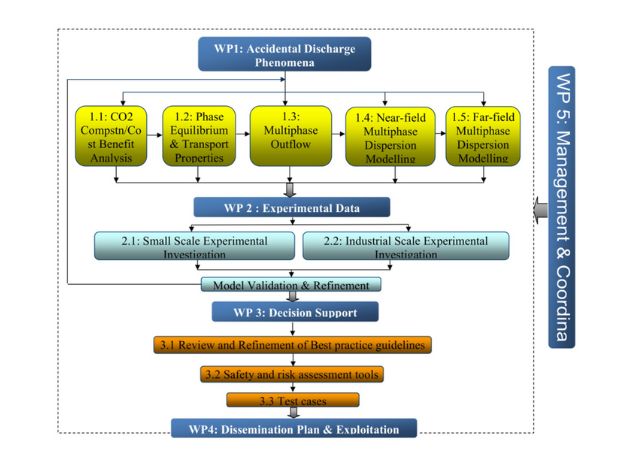
The CO₂PipeHaz project is focused on the development and validation of mathematical models and decision support tools for hazard assessment of CO₂ transportation pipelines to be employed as an integral part of the CCS chain. The main objectives as outlined in the Description of Work (DoW) are to:
- Define an optimum level of impurities in the CO₂ stream based on safety, environmental and economic analysis;
- Develop a computationally efficient multi-phase heterogeneous outflow model for the accurate prediction of the time-variant release rate and the physical state of escaping CO₂ following pipeline failure, based on a reliable equation of state for CO₂ and CO₂ mixtures;
- Develop multi-state dispersion models for predicting the subsequent concentration of the released CO₂ as a function of time and distance from the release, both in terms of a detailed near- and far-field modelling capability;
- Conduct small- and large-scale experimental validations of the models developed;
- Provide a detailed understanding of the hazards presented by CO₂ releases through experimentation and, using the data generated, validate the outflow and dispersion models developed;
- Embody the understanding and predictive capabilities developed in decision support tools, assessing and improving existing safety, risk assessment methods, tools for CO₂ pipeline application, and producing refined best practice guidelines; and
- Demonstrate the usefulness of the tools developed through their application to possible CO₂ pipeline designs.
Our Role
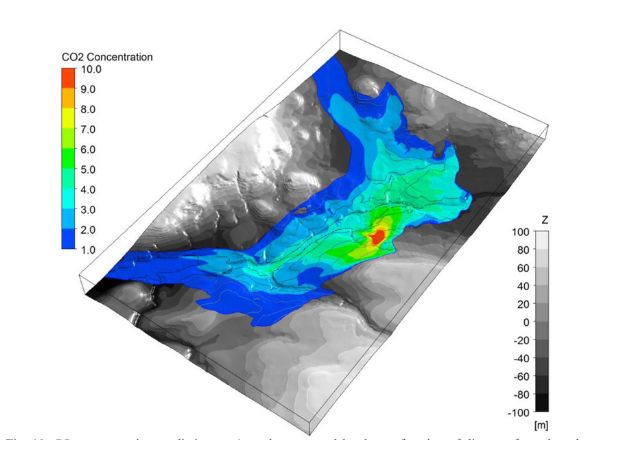
Gexcon coordinated the efforts related to WP1.5 on the modelling of far-field dispersion of carbon dioxide resulting from accidental pipeline releases, including the importance of terrain and the wind field on the dispersion behaviour.
Far-field dispersion modelling used computational fluid dynamics (CFD) and methods were developed to import realistic terrain data into the FLACS software. To model the behaviour of solid CO₂ particles formed in the near-field jet, a Lagrangian particle-tracking model for multiphase dispersion has been successfully implemented in FLACS.
The model can predict the spatial and temporal evolution of the CO₂ concentration during pipeline release scenarios. It takes into account the two-way coupling effects between the continuous gas phase and the dispersed particle phase, and also particle sublimation and deposition.
The validation of both FLACS and CFX models against results from the small-scale experiments of INERIS and the large-scale experiments of DUT was successfully carried out.H2IFT-2 project is to carry out Work Package 2, focusing on model validation.
Consortium
This project was led by University College London, UCL, (UK) with the other partners being the University of Leeds (UK), INERIS (France), Gexcon (Norway), Demokritos (Greece), Dalian University of Technology, DUT, (China) and the Health and Safety Laboratory, HSL, (UK).
Journal Paper
CO₂PipeHaz: Quantitative Hazard Assessment for Next Generation CO₂ Pipelines, Energy Procedia, 63: 2510-2529

Would you like to learn more?
Visit the project page or contact us to learn more.
Other Projects

Large-scale DDT Testing – RPSEA Project Award
The project’s objective is to identify the triggers for deflagration-to-detonation transition (DDT), explore mitigation strategies, and improve the accuracy of predictive tools for enhanced safety.
HySEA
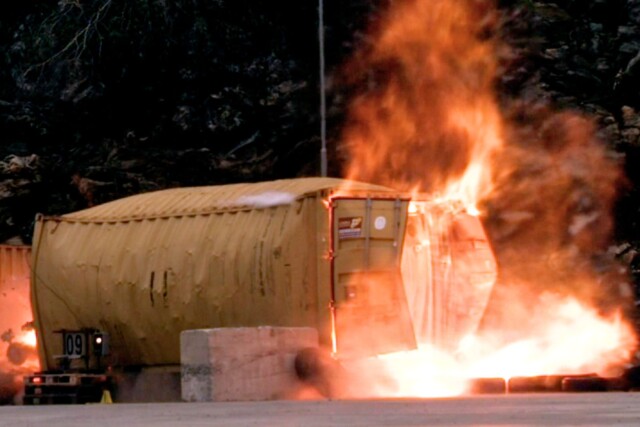
Pre-normative research on vented deflagrations in enclosures and containers for hydrogen energy applications.
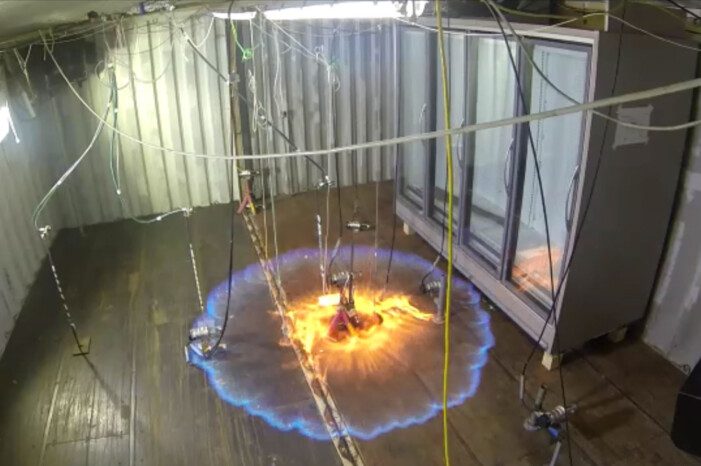
Fire Hazard Evaluation of A3 Refrigerants
The project aims to evaluate the fire hazard of R-290 propane in refrigeration appliances used in commercial retail and kitchen settings.
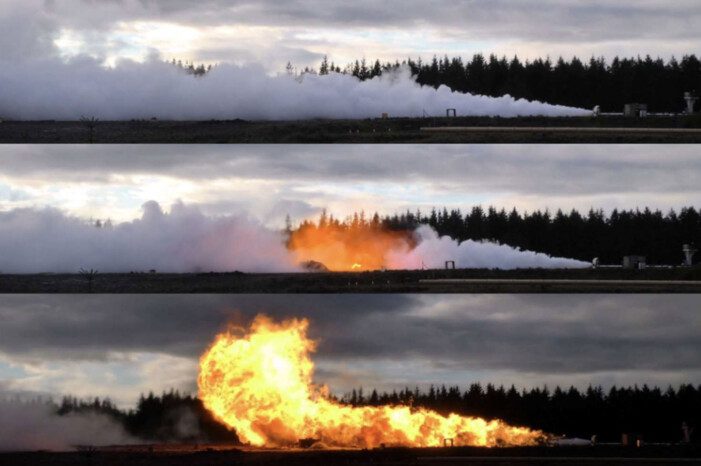
AIRRE (Assessing the influence of real releases on explosions)
The project aims to improve understanding of the effect realistic releases and turbulent flow conditions have on the consequences of accidental gas explosions in the petroleum industry.
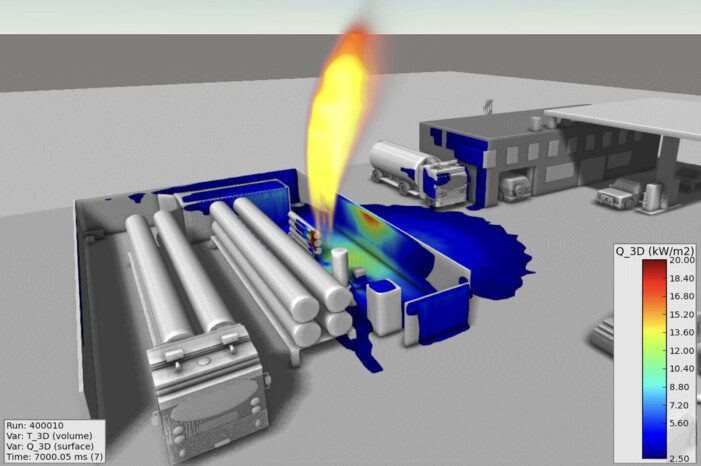
Hy3DRM (3D Risk Management for hydrogen installations)
The project set out to develop the 3DRM concept for hydrogen installations, including a prototype of a hypothetical hydrogen filling station.
SH2IFT
The SH2IFT (safe hydrogen fuel handling and use for efficient implementation) project focuses on on consequences of handling and use of large volumes of hydrogen within closed and semi-closed environments and in maritime transport.
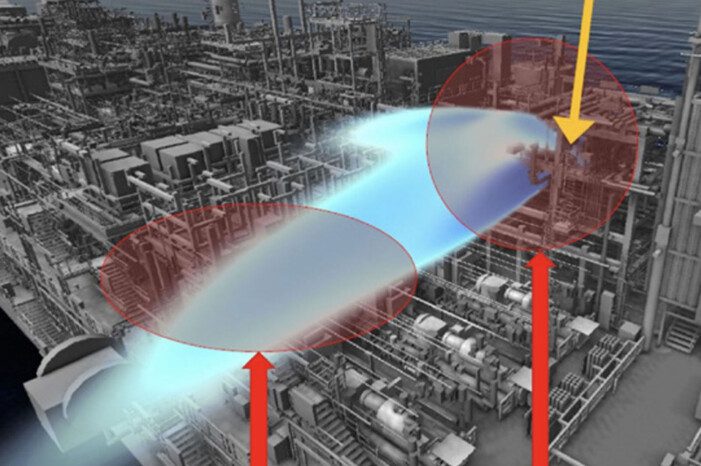
Gas Detector Layout Optimisation – Fortissimo
Optimising gas detector layouts in hazardous manufacturing and production plants with FLACS.

Hellesylt Hydrogen Hub – Pilot-E
The project aimed to develop a hydrogen production facility for ferries, cruise ships, and other mobility applications.

Liquid hydrogen supply chain in Norway for maritime applications – Pilot-E
A project to develop Norway’s national hydrogen infrastructure, securing reliable LH2 supply for decarbonising maritime transport.
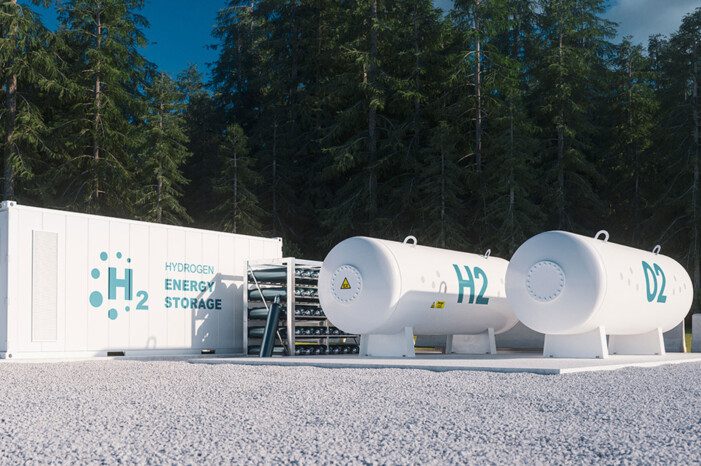
SAFEN
SAFEN aims to establish the knowledge required to develop risk-based methodologies enabling cost-efficient safety design for hydrogen, ammonia, and CO2 facilities.
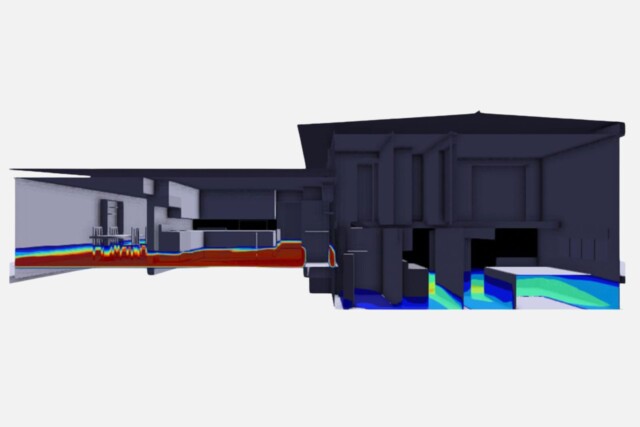
Combustible Gas Dispersion in Residential Occupancies and Detector Location Analysis
Gexcon has been involved in an NFPA research project supporting the development of NFPA 715.

SH2IFT-2
The second part of the SH2IFT (safe hydrogen fuel handling and use for efficient implementation) project explores a risk-based approach for operational safety.
