
Safe Hydrogen Fuel handling and use for efficient Implementation (SH2IFT) is a collaborative and knowledge-building project (KSP) funded by The Research Council of Norway (NFR) under the topic of environment-friendly energy.
The project started on October 1, 2021 and runs until September 30, 2025.
Project Summary
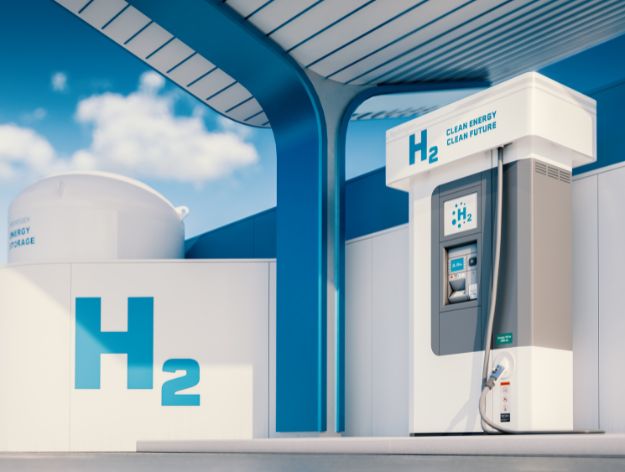
Hydrogen is becoming a critical enabler in the ongoing energy transition, and it is expected that hydrogen will be applied in many different applications and industrial sectors. The safety-related properties of hydrogen, and the characteristic operating conditions of technical systems for producing, transporting and using hydrogen, implies that fires and explosions represent a significant hazard for installations with considerable inventories of hydrogen. To this end, it is essential to develop science-based solutions for fire and explosion protection, and to disseminate state-of-the-art knowledge to relevant stakeholders.
The overall objective of SH2IFT-2 is to develop new knowledge on critical aspects of hydrogen safety, and at the same time facilitate the competence building required for supporting widespread use of hydrogen in society. The project will work to improve solutions for safe handling of hydrogen and hydrogen-based energy carriers by developing new, and improve existing, modelling tools, perform large-scale release, fire and explosion experiments, and provide input to guidelines for safe use of hydrogen. The combination of large-scale experiments, validation of advanced consequence models, risk based operational safety, and the critical evaluation of the strength of knowledge in risk assessments for hydrogen systems, represents a unique opportunity to progress the science on hydrogen safety significantly beyond the current state-of-the-art.
The involvement of stakeholders covering the entire value chain of hydrogen production, transport and use, implies that the research activities will have high relevance for industrial applications. Close collaboration between leading research organisations and a wide range of Norwegian and international stakeholders from industry and government will address both societal and industry needs for knowledge and competence building, and thus secure existing and establish new value creation and employment in Norway.
Project Objectives
The primary objective of the project is to develop new knowledge on critical aspects of hydrogen safety, and at the same time facilitate the competence building required for supporting widespread use of hydrogen in society.
The secondary objectives of the project are to:
- Investigate measures to prevent the formation of explosive and toxic atmospheres of hydrogen and ammonia respectively in enclosed spaces using ventilation
- Increase the understanding of the damage potential in ignited large high-pressure discharges
- Increase the understanding of how accidental hydrogen jet fires impact exposed equipment/passive fire protection (PFP) and how these scenarios differ from comparable hydrocarbon scenarios
- Increase the understanding of degradation mechanisms related to hydrogen-metal interaction in a defined application
- Analyse the strength of knowledge in risk assessments and compare the overall risk picture for a range of energy carriers used in different energy systems, to provide science-based recommendations to stakeholders
Our Role
Gexcon’s role in the SH2IFT-2 project is to carry out Work Package 2, focusing on model validation.
- Task 2.1 focuses on modelling the loss of containment of hydrogen and hydrogen-based fuels, including source models and dispersion following releases in open and confined geometries with varying degrees of congestion. Several relevant models will be evaluated
- Task 2.2 will model explosions in hydrogen-air mixtures, including potential effects from mitigation measures such as venting, chemical inhibition and combinations thereof
- Task 2.3 addresses the modelling of hydrogen jet fires from gaseous and liquid hydrogen. It will include the effect of PFP on thermal loads and structural response
R&D Partners
- SINTEF Industry
- University of Southeast Norway
- NTNU
- RISE Fire Research AS
- University of Stavanger
- University of Bergen
- Gexcon
- Karlsruhe Institute of Technology
- National Center for Scientific Research «Demokritos»
Sponsors
- Eviny Elektrifisering AS
- Equinor Energy AS
- Gassco
- Total Energies EP Norway
- Safetec Nordic AS
- VIPO AS
- Greenstat Hydrogen AS
- Ballard Power Systems Norway
- Air Liquide
- Akzo Nobel Coatings International B.V.
- ENGIE
- Shell International Exploration and Production B.V.
- Technip Energies N.V.
- Gasnor AS
- GTRGaz
- Møre- og Romsdal Fylkeskommune
- BP Exploration Operating Company Limited

Would you like to learn more?
Visit the project page or contact us to learn more.
Other Projects
CO2PipeHaz
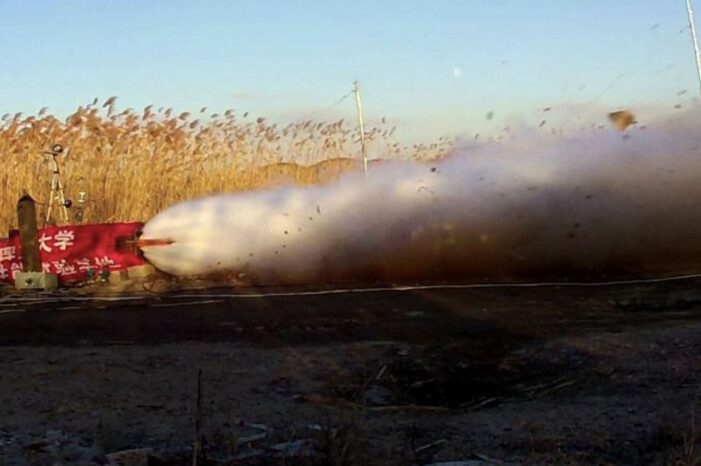
Quantitative Failure Consequence Hazard Assessment for Next Generation CO₂ Pipelines.
HySEA
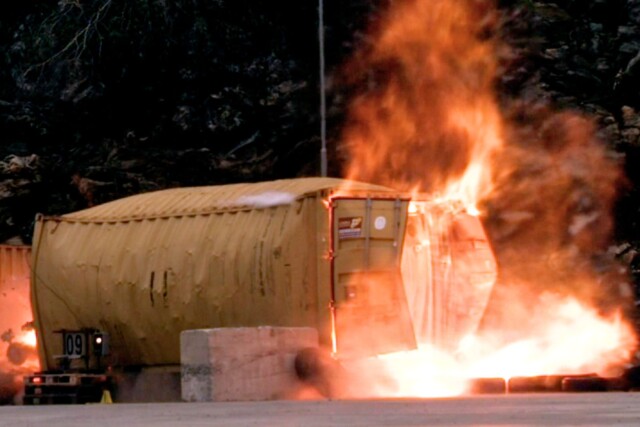
Pre-normative research on vented deflagrations in enclosures and containers for hydrogen energy applications.

Large-scale DDT Testing – RPSEA Project Award
The project’s objective is to identify the triggers for deflagration-to-detonation transition (DDT), explore mitigation strategies, and improve the accuracy of predictive tools for enhanced safety.
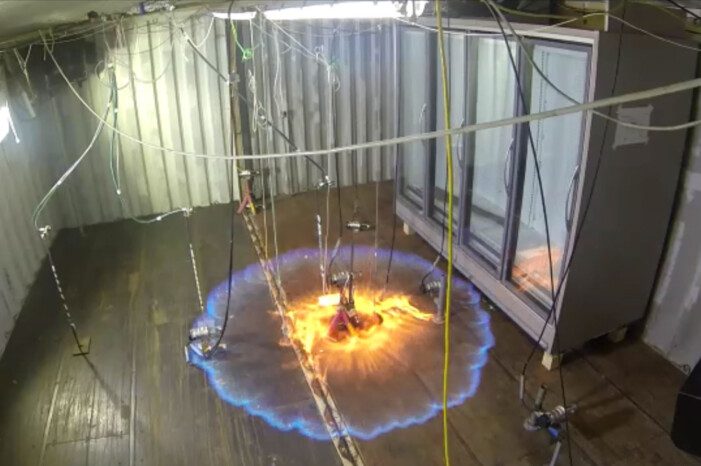
Fire Hazard Evaluation of A3 Refrigerants
The project aims to evaluate the fire hazard of R-290 propane in refrigeration appliances used in commercial retail and kitchen settings.
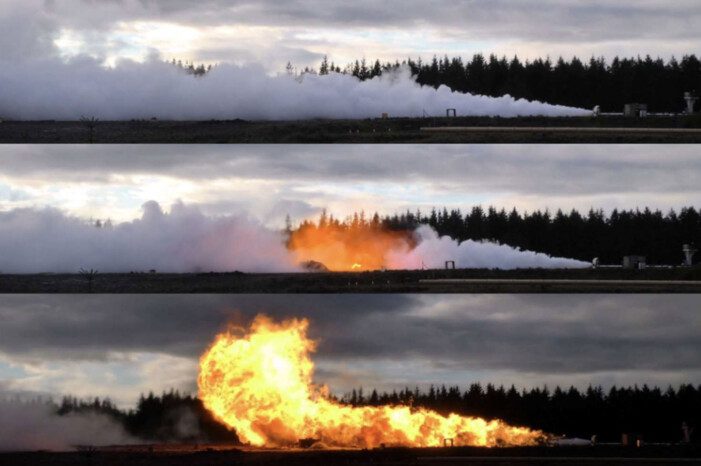
AIRRE (Assessing the influence of real releases on explosions)
The project aims to improve understanding of the effect realistic releases and turbulent flow conditions have on the consequences of accidental gas explosions in the petroleum industry.
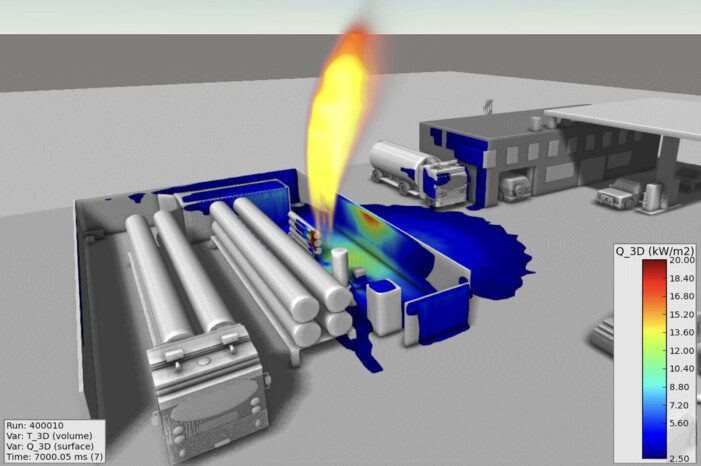
Hy3DRM (3D Risk Management for hydrogen installations)
The project set out to develop the 3DRM concept for hydrogen installations, including a prototype of a hypothetical hydrogen filling station.
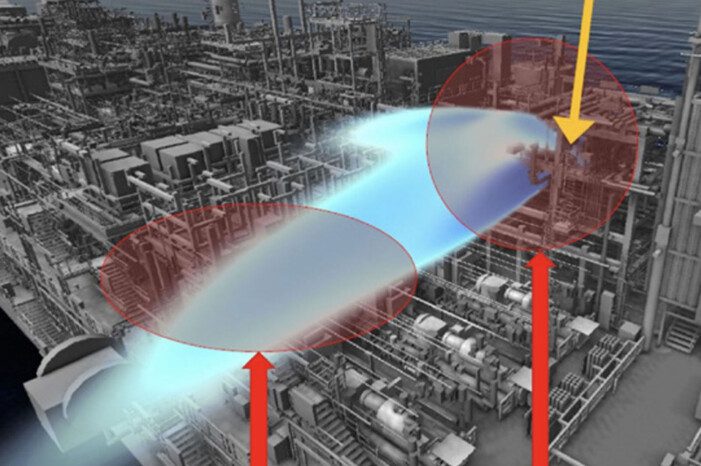
Gas Detector Layout Optimisation – Fortissimo
Optimising gas detector layouts in hazardous manufacturing and production plants with FLACS.
SH2IFT
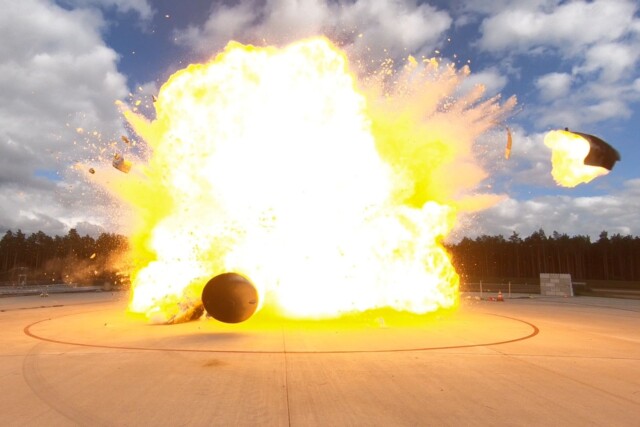
The SH2IFT (safe hydrogen fuel handling and use for efficient implementation) project focuses on on consequences of handling and use of large volumes of hydrogen within closed and semi-closed environments and in maritime transport.

Hellesylt Hydrogen Hub – Pilot-E
The project aimed to develop a hydrogen production facility for ferries, cruise ships, and other mobility applications.

Liquid hydrogen supply chain in Norway for maritime applications – Pilot-E
A project to develop Norway’s national hydrogen infrastructure, securing reliable LH2 supply for decarbonising maritime transport.
SAFEN
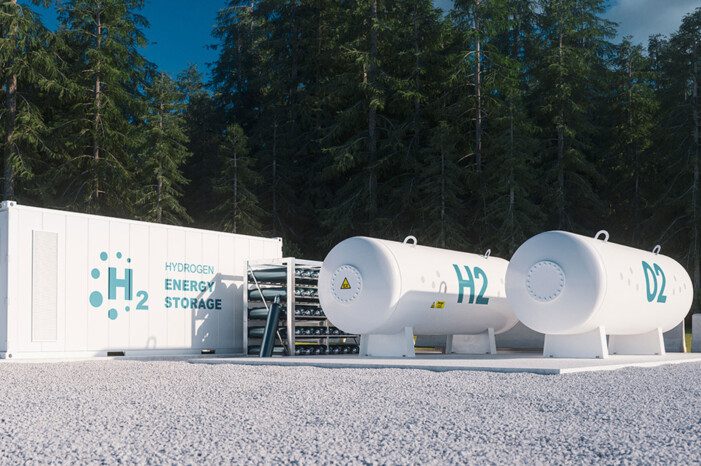
SAFEN aims to establish the knowledge required to develop risk-based methodologies enabling cost-efficient safety design for hydrogen, ammonia, and CO2 facilities.
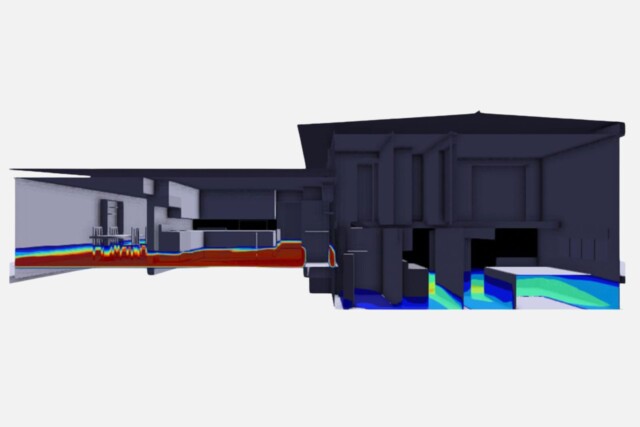
Combustible Gas Dispersion in Residential Occupancies and Detector Location Analysis
Gexcon has been involved in an NFPA research project supporting the development of NFPA 715.
