In the ever-evolving landscape of global energy, Liquefied Natural Gas (LNG) stands as one of the key players in bridging the gap between traditional fossil fuels and renewable energy sources. This versatile fuel, known for its efficiency and relatively lower environmental impact, has become increasingly important in meeting the world’s growing energy demands. However, with great power comes great responsibility, and the LNG industry has faced its share of challenges, particularly in terms of safety.
As safety professionals, we’re tasked with safeguarding not just the product, but the people and environments involved in its production, storage, transportation, as well as off-site surrounding areas. But how can we effectively mitigate risks and prevent incidents in LNG facilities? One of the answers lies in learning from our past.
This article explores the critical lessons learnt from past LNG incidents, such as the Cleveland Disaster, the Skikda Explosion, and the Plymouth Plant Incident, offering insights that can shape safer practices in LNG facilities worldwide.
LNG: A double-edged sword
Before we dive into the specifics of LNG incidents, it’s essential to understand the nature of the substance we’re dealing with. LNG is methane that has been cooled to -162°C (-260°F), condensing it into a liquid form. This process reduces its volume by about 600 times, making it easier and more economical to transport over long distances.
LNG plays a crucial role in our global energy landscape. It’s a cleaner-burning fossil fuel compared to coal or oil, making it an attractive option for countries looking to reduce their carbon footprint whilst meeting growing energy demands. From powering homes and businesses to fuelling vehicles, LNG’s applications are diverse and far-reaching.
LNG poses several dangers upon release due to its extremely low temperature and flammability. When LNG is released, it rapidly evaporates as it warms up, forming a large, flammable gas cloud. The extreme cold of the LNG can cause the moisture in the surrounding air to condense, creating a visible white vapour cloud. While this cloud itself is not flammable, the natural gas vapours that mix with the air as LNG vaporises can form a highly flammable mixture. If this vapour cloud encounters an ignition source, it can ignite, leading to a fire or explosion.
Using water to extinguish an LNG fire can be hazardous. Water may cause LNG to vaporise more quickly, potentially increasing the volume of flammable gas and spreading the fire or triggering secondary explosions. Experiments with LNG have shown that attempting to extinguish LNG fires with water can also result in the ejection of ice particles due to rapid expansion and cooling, which causes the water to freeze. Moreover, since LNG is less dense than water, pouring water on an LNG spill can cause the liquid to spread, expanding the flammable vapour cloud.
Additionally, the extremely low temperature of LNG poses risks of cryogenic burns and structural damage to containment systems.
Watch a webinar to learn more about hazards at LNG facilities.
Learn moreThese risks underscore the critical importance of robust safety measures in LNG facilities. As industry professionals, our primary goal is to prevent incidents that could harm personnel, damage infrastructure, or impact the environment. By learning from past incidents, we can obtain valuable insights to enhance our safety protocols and prevent future unwanted events.
In the following sections, we’ll explore three notable LNG incidents that have contributed to shaping our understanding of LNG safety. Each incident will provide a summary of the event, its causes, and the crucial lessons learnt.
Echoes of the past incidents
Throughout the history of LNG handling, storage, and use, several incidents have served as wake-up calls for the industry. Let’s explore three of these incidents and the valuable lessons they provided.
The Cleveland Disaster (1944)
- Incident summary
The Cleveland East Ohio Gas explosion of 1944 stands as a stark reminder of the potential dangers associated with LNG storage and handling.
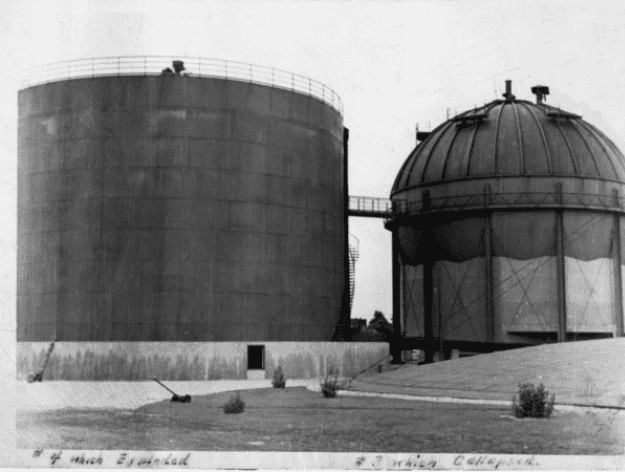
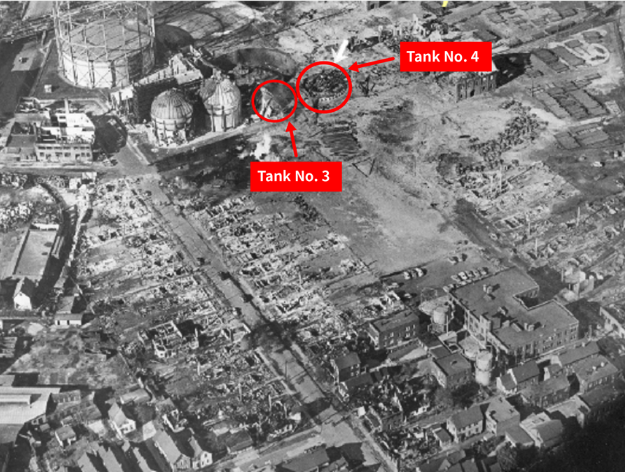
On the afternoon of October 20, 1944, LNG began leaking from Storage Tank No. 4. The liquefied gas leaking from the tank, located at the northern end of East 61st Street, adjacent to the New York Central Railroad, rapidly vaporised, forming a dense, flammable gas cloud that spread through the surrounding neighbourhood. The gas cloud then ignited and exploded. About 20 minutes later, a second tank (Storage Tank No. 3) collapsed due to intense heat exposure on its uninsulated steel columns. The tank’s contents rapidly evaporated and ignited, further escalating the disaster. 1
This catastrophic event claimed over 160 lives, severely injured hundreds more, and demolished an entire neighbourhood.2
The root cause of this disaster was traced back to the use of a low-nickel 3.5% alloy steel unsuitable for the extreme cold temperatures of LNG on Storage Tank No. 4. When exposed to cryogenic temperatures, this material became brittle and eventually cracked, leading to a leak from the tank.
- Lessons learnt
From this tragic incident, the LNG industry learnt several critical lessons:
- The incident highlighted the necessity for materials that can endure extremely low temperatures, leading to the development of specialised materials such as 9% nickel steel and aluminium alloys for cryogenic applications.
- This incident also emphasised the need for comprehensive safety management systems. The severity of the incident was worsened by the absence of diking or bunding around the tanks, which allowed the spread of the leak into the residential area.
- The absence of fire insulation on the neighbouring spherical tanks led to a second release, underscoring the need for adequate spacing between tanks and fire protection measures, such as those to prevent fire-induced failures, to prevent cascading failures.
- Although residents were evacuated during the first release, they returned and were trapped by the unexpected second release, highlighting the necessity of reliable emergency response plans.3
- This disaster also underscored the importance of proper siting for LNG facilities. The tanks were located near a populated area and a busy railway station, where it was hypothesised that excessive vibration contributed to the crack propagation of Tank No. 4. Current regulations mandate that LNG storage and processing facilities be sited away from densely populated areas, with sufficient buffer zones to reduce potential risks.
Skikda, Algeria (2004)
- Incident summary
Fast forward to 2004, and we encounter another significant incident in the LNG industry.
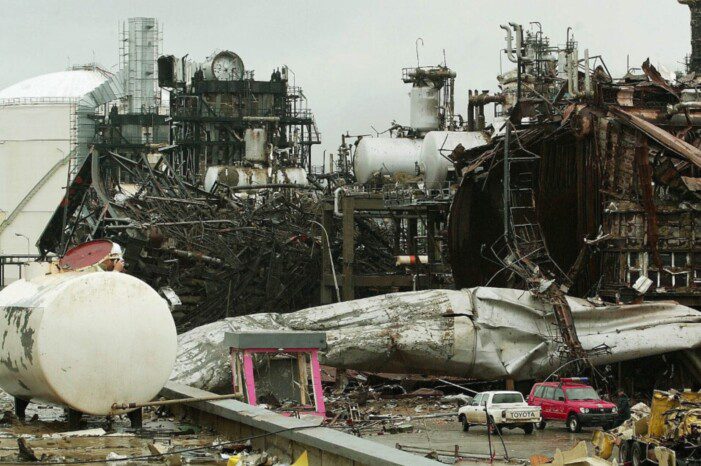
On January 19, 2004, a massive explosion occurred at an LNG production facility in Skikda, Algeria. The massive blast killed 27 people and caused significant damage to the facility, disabling three LNG lines which impacted approximately 2% of the world’s liquefaction capacity.4 This tragic event underscored that, despite decades of advancements since the Cleveland disaster, vigilance in LNG safety cannot be relaxed.

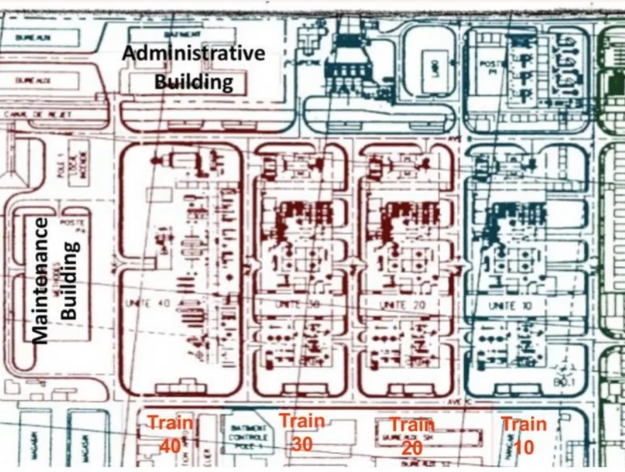
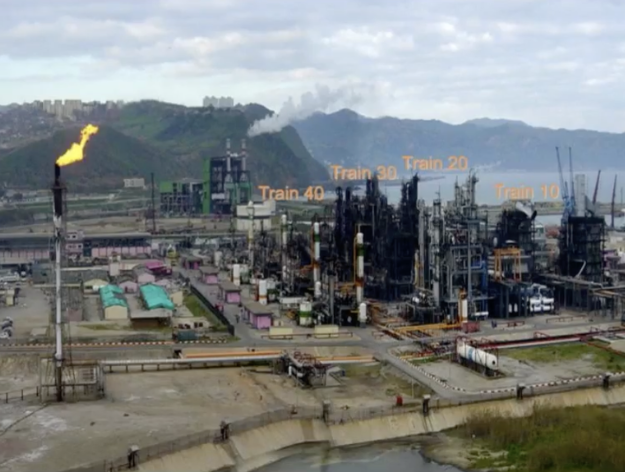
In summary, the LNG accident at Skikda began with a significant cold methane leak from a pipeline carrying LNG to the plant’s boiler at approximately 6:39 PM. The leaked gas then mixed with air and was drawn into the boiler by a fan, leading to a rapid buildup of steam pressure inside the boiler due to the large volume of gas burning. An operator in the Unit 40 control room noticed the steam pressure in the boiler drum rising quickly, causing the safety valve to activate.
Despite the operator reducing the fuel gas flow to the burners to the minimum setting, the pressure continued to build. At 6:40 PM, an operator near Train 30 reported to the Train 40 control room via intercom that a vapour cloud was forming at Unit 40. Almost simultaneously, a first explosion was heard, followed immediately by a much larger second explosion and a massive fireball. The ensuing fire quickly engulfed Trains 40, 30, and 20, as the blast damaged the piping and equipment in these operational units.4
The uncontrolled introduction of gas created an explosive mixture in the boiler’s firebox, resulting in an internal explosion that destroyed the boiler’s water wall. This explosion ignited a vapour cloud outside, which caused a massive secondary explosion that led to a catastrophic disaster at the facility.
The Skikda Incident was attributed to a combination of factors, including a leak of hydrocarbon vapour that found an ignition source and facility siting issues. 4 The investigation also revealed underlying issues in process safety management, including inadequate maintenance practices and insufficient safety systems.5
- Lessons learnt
The Skikda Explosion offers valuable lessons for the LNG industry:
- The incident reinforced the critical importance of comprehensive process safety management systems in LNG facilities as the incident showed that there was poor maintenance and poor general condition of unit 40.5 It highlighted the need for regular equipment inspections and preventive maintenance programs.
- The explosion also underscored the need for robust safety systems capable of quickly detecting and responding to potential leaks, eliminating strong ignition sources when gas is detected, and implementing effective shutdown mechanisms.3
- The explosion further illustrated the importance of appropriate facility siting. Investigations showed that the site’s layout, with different units in close proximity, caused a domino effect.5 Key structures, such as the maintenance building, admin building, and control room, were all too close to the explosion site. According to current standards and regulations for facility siting, these buildings should not have been located there.3
Plymouth, Washington (2014)
- Incident summary
More recently, the 2014 incident at the Plymouth LNG facility in Washington state provided another valuable lesson for the industry. Whilst this incident fortunately did not result in any fatalities, it led to injuries, evacuation of nearby residents, and significant property damage, serving as a reminder that even minor oversights can lead to major consequences.

The Plymouth incident occurred during routine liquefaction startup operations at the facility’s LNG purification and regeneration system. The investigation revealed that the primary cause of the explosion was inadequate pressure purging, which allowed oxygen to remain in the system. This oxygen was mixed with natural gas and the mixture was drawn into a salt bath heater during startup, where it auto-ignited. A detonation wave then travelled through the piping of the purification unit, leading to the failure of adsorber D-20A due to sudden over-pressurisation. Debris from adsorber D-20A and its associated piping caused extensive damage to the surrounding plant facilities.6
- Lessons learnt
This incident highlighted the critical importance of human factors, operational discipline, and adherence to procedures, especially during non-routine operations like start-ups and shutdowns.
- It showed that having thorough purging procedures and enhanced safety protocols during startup are essential. Ensuring all flammable gases are fully removed and verifying that all potential hazards are addressed before startup can prevent small mistakes from turning into major disasters. These emphasise the need for careful attention to safety throughout the operation and serve as a reminder that in high-risk industries like LNG, attention to detail and a commitment to safety can make all the difference.
- Moreover, the Plymouth Incident also reinforced the importance of designing safety systems with multiple layers of protection, such as enhanced pressure monitoring and real-time gas detection. Investing in such systems is not just about ticking boxes—it’s about protecting the people on the ground and the community around them by mitigating risks.
Spanning seven decades, these three incidents underscore the critical importance of material selection, process safety management, operational discipline, and fostering a strong safety culture. As we advance, these lessons continually inform our approach to LNG safety, driving ongoing improvement in safety practices within the industry.
Best practices for LNG safety
Learning from past LNG incidents has been valuable in shaping strong safety practices in the industry. As safety professionals, it’s up to us to put these practices into action and keep refining them to maintain the highest safety standards in LNG facilities. Let’s take a look at some of the key best practices that have come out of our industry’s shared experiences.
Comprehensive hazard identification and risk assessment
A thorough understanding of potential hazards is fundamental to LNG safety. This involves conducting detailed hazard identification and risk assessments at every stage of an LNG facility’s lifecycle, from design to decommissioning.
These assessments should consider all scenarios, including equipment failures, human errors, and natural disasters, to implement safeguards that reduce risks to as low as reasonably practicable (ALARP). Moreover, regularly reviewing and updating these assessments ensures that safety measures remain effective as conditions change.
Resilient Process Safety Management (PSM) systems
The Skikda incident highlighted the critical importance of Process Safety Management (PSM) systems. These systems should encompass all aspects of facility operations, including equipment integrity, operating procedures, management of change, and emergency response.
Key elements of an effective PSM system include:
- Clear documentation of operating procedures and safety protocols.
- Rigorous management of change processes to evaluate and control potential risks associated with operational or equipment changes.
- Comprehensive maintenance and inspection programs to ensure the integrity of critical equipment.
- Regular audits and reviews to identify areas for improvement.
- Regular training and competency assessments for all personnel.
Safe facility design and layout
The siting and layout of LNG facilities are vital for safety and risk reduction, as shown by the three incidents reviewed. Proper siting involves choosing locations that minimise natural hazard impacts and avoid populated areas, reducing potential harm to communities.
Additionally, the facility’s layout should ensure safe operations and effective emergency responses, with safe distances between equipment, buffer zones for hazardous materials, accessible safety equipment, and clear evacuation routes.
Read a case study on how we support our client in reviewing their LNG facility design and advising on additional risk reduction measures.
Learn moreEquipment design
The Cleveland Disaster taught us the importance of proper material selection and equipment design. Today, LNG facilities must use materials that can withstand cryogenic temperatures and implement robust maintenance programs to ensure the integrity of all equipment and prevent operational discontinuity.
Testing and certification of safety-critical equipment, such as pressure relief valves and emergency shutdown systems, are best practices in equipment design.
Advanced safety technologies
Leveraging advanced technologies can significantly enhance safety in LNG facilities. Some key technological advancements include:
- Fire and gas detection systems integrated with emergency shutdown systems for rapid response to potential incidents.
- Advanced process control systems that can automatically shut down operations in the event of abnormal conditions.
- Advanced tools that aid in conducting reliable and efficient safety studies for ensuring safe and cost-effective facility design and layout. These include tools for consequence modelling, Quantitative Risk Assessment (QRA), and structural response analysis.
Effective emergency preparedness and response
Despite our best efforts to prevent incidents, we must always be prepared for the worst. All three incidents we’ve examined underscore the importance of effective emergency response planning. To minimise the impact of potential incidents, comprehensive plans must include:
- Clear emergency procedures and evacuation routes.
- Regular drills to enhance response capabilities.
- Coordination with local emergency services and communities.
- Robust crisis communication plans to ensure timely and accurate information dissemination.
Fostering a strong safety culture
Whilst technologies and procedures are crucial, the human element remains at the heart of LNG safety. Fostering a strong safety culture throughout the organisation is essential for ensuring that safety remains the top priority at all times.
Key elements of a strong safety culture include:
- Visible leadership commitment to safety.
- Open channels for reporting safety concerns without fear of reprisal.
- Regular safety meetings and toolbox talks to reinforce safety awareness.
- Recognition and reward systems for proactive safety behaviours.
- Continuous learning and improvement mindset, including thorough investigation and learning from near-misses and incidents.
Continuous learning and improvement
Perhaps the most important lesson from these incidents is the need for continuous learning and improvement. The LNG industry must stay vigilant, learning not only from major incidents but also from near-misses and minor events.
Implementing a robust incident reporting and investigation system can help identify trends and potential areas for improvement. Organisations should also regularly review and update their safety procedures and protocols to incorporate lessons learnt from past incidents.
Conclusion
As we consider the lessons from past incidents and the resulting best practices, it’s evident that the LNG industry has come a long way in terms of safety. However, the journey towards continually improving safety standards is far from over. The dynamic nature of the energy industry, along with advancing technologies and evolving regulations, requires us to stay alert and proactive in our approach to LNG safety.
Moreover, the increasing focus on sustainability and environmental protection is also shaping the future of LNG safety. As the industry moves towards cleaner and more efficient operations, new challenges and opportunities in safety management will emerge. This includes addressing the safety aspects of new technologies such as carbon capture and storage, which are increasingly being integrated into LNG operations.
Watch a webinar to learn more about the Cleveland Disaster and the Skikda Explosion
Learn moreReferences
1. Case Western Reserve University (no date) East Ohio Gas Co. Explosion and Fire. Available at: Link
2. Cleveland Police Museum (2021) East Ohio Gas Explosion, October 20, 1944: Police Response and Report. Available at: Link
3. Scott G. Davis, Ph.D, PE, CFEI (2020) Webinar: Is Your Facility Safe? Lessons Learned from LNG Incidents. Available at: Link
4. Scott G. Davis, PhD, PE, CFEI (2020) Have We Learned Our Lessons: Revisiting the 2004 Skikda Explosion 16 Years Later. Sixteenth Global Congress on Process Safety, Virtual Event, 17-21 August 2020. Available at: Link
5. Roukia Ouddai, Hassane Chabane, Assia Boughaba and Mohamed Frah (2012) The Skikda LNG accident: losses, lessons learned and safety climate assessment, International Journal of Global Energy Issues (IJGEI), Vol. 35, No. 6, 2012. Available at: Link
6. Richard Nemec (2016) PHMSA, State Investigation Faults Williams NW Pipeline For 2014 Explosion. Natural Gas Intelligence. Available at: Link
7. Pipeline and Hazardous Materials Safety Administration (2016) Failure Investigation Report – Liquefied Natural Gas (LNG) Peak Shaving Plant, Plymouth, Washington. Available at: Link
Authors

Viktoria Bohacikova
Technical Product Specialist at Gexcon
Related insights
Browse additional insights to deepen your understanding and stay informed on related topics.
The 7 essential hazards at LNG facilities
Get a fundamental overview of hazards that apply to various types of LNG facilities and their physical consequences.
LNG facility siting: The benefits of using advanced modelling tools in your study
How advanced modelling tools can help improve LNG facility siting by supporting safer and more practical decision-making.
LNG facility siting regulations and standards in the US
Get an overview of facility siting regulations and standards for LNG facilities, with a focus on those in the United States.

Advanced modelling techniques to resolve Process Hazards Analysis action items at LNG facilities
Learn how Process Hazard Analysis (PHA) items in LNG facilities are evaluated further using advanced modelling techniques.
Lessons learned from LNG incidents
Learn about the importance of safety in LNG facilities by examining lessons from the 2004 Skikda LNG liquefaction facility explosion and the 1944 Cleveland Disaster.
Stay ahead in process safety and risk management
Get the latest trends in the field of process safety management straight to your inbox, and enhance your skills through knowledge sharing from industry experts.
Subsribe to our newsletter