Welcome to the third episode in our series “CO2 hazard modelling with EFFECTS and RISKCURVES for CCUS pipeline transportation”.
In this episode, Sonia Ruiz Pérez, Product Manager of EFFECTS and RISKCURVES, discusses the challenges in modelling CO2 hazards.
Watch the third episode below, or read the full script if you prefer to review the content in text form.
Video
Script
Hello everyone. My name is Sonia Ruiz Pérez, the Product Manager of the EFFECTS and RISKCURVES software tools, and I would like to welcome you to the third part of our video series, CO2 Hazard Modelling with EFFECTS and RISKCURVES for CCUS Pipeline Transportation.
Today, we’ll be discussing the challenges of modelling CO2 releases from pipeline failures.
But before that, let’s look at what happens during a pipeline failure to understand the complexities involved.
When a pipeline fails, the chain of events differs depending on whether the pipeline is above ground or buried.
- For above-ground pipelines, a puncture or a rupture causes the release of pressurised CO2 as a high-velocity jet. This jet entrains air, and it typically exits vertically, but environmental factors like wind or nearby structures can alter its trajectory.
- For buried pipelines, a rupture causes the pressurised CO2 to displace soil, forming a crater. This causes the CO2 jet to emerge vertically from the crater. The crater size and the soil’s properties affect the release dynamics, including jet velocity, dispersion, and potential phase changes.
- In both scenarios, the rapid expansion of CO2 results in significant cooling. It often transitions into a mix of gas and solid dry ice, creating a dense, cold vapour cloud. This cloud stays close to the ground, spreading along the terrain. It’s influenced by wind and terrain conditions and displaces oxygen, creating an asphyxiation risk.
Understanding this chain of events is essential for accurately assessing and developing effective safety measures for the associated risks.
As mentioned in the previous video, hazard modelling plays a vital role in simulating these scenarios and predicting how CO2 behaves during an accidental release.
However, accurately modelling CO2 releases comes with its own set of challenges.
Now let’s look into these modelling challenges.
- Challenge #1 – CO2 multiphase nature
The first challenge lies in the multi-phase nature of CO2 releases. So, during a high-pressure release, CO2 undergoes rapid depressurisation within the pipeline, causing it to flash into a mix of gas, liquid, and solid phases.
These phase transitions occur much faster than those of other liquefied gases, adding complexity to the modelling process. Advanced thermodynamic models are required to accurately simulate these behaviours.
- Challenge #2 – CO2 releases from buried pipeline
For buried pipelines, the release dynamics are significantly influenced by the size and shape of the crater and the properties of the displaced soil. Overlooking these factors can lead to inaccuracies in modelling dispersion, velocity, and phase behaviour.
- Challenge #3 – Limitations of standard evaporation models
On the other hand, standard evaporation models often fail to capture the sublimation process of solid CO2 or even the spreading of CO2 behaviour from a crater, adding complexity to the scenario.
- Challenge #4 – Exit conditions
The next challenge is determining the exit conditions of CO2, which depend on pipeline pressure and temperature at the point of failure.
At high pressures, when CO2 behaves as a pressurised liquefied gas, rapid depressurisation can create a two-phase jet of vapour and solid CO2. Accurately predicting these exit conditions is critical because they determine the downstream behaviour of the release, including jet velocity and spread.
- Challenge #5 – Dense gas nature of CO2
Additionally, carbon dioxide’s dense gas nature requires specialised dispersion models. That is because dense clouds tend to flow along the terrain and accumulate in low-lying areas, potentially creating oxygen-deficient zones.
The presence of solid CO2 particles adds complexity as sublimation affects the thermodynamics of the dispersing cloud.
- Challenge #6 – Environmental factors
Moreover, environmental factors such as wind, terrain, and atmospheric conditions heavily influence CO2 dispersion patterns. In flat terrains, dense CO2 clouds may spread uniformly, while in hilly or confined areas, the gas may pool.
On the other hand, variations in temperature or humidity can alter sublimation rates, impacting dispersion.
Now that we have identified these challenges, it’s clear that accurate modelling of CO2 releases requires careful consideration of all of these factors. Ignoring elements like phase transitions, crater effects, or environmental conditions can result in inaccurate predictions, compromising safety decision-making.
However, performing this level of detailed modelling manually is both time-consuming and complex.
That’s where tools like EFFECTS and RISKCURVES, they play a crucial role.
These software tools are designed to address the unique challenges of CO2 hazard modelling, providing reliable predictions of CO2 behaviour under various conditions, as well as advanced simulations that account for phase transitions, crater formation, and environmental conditions.
This ensures you have the insights needed to make informed safety-critical decisions for CCUS projects.
In the next video, I will demonstrate how EFFECTS tackles these modelling challenges. I will also share snapshots of the software in action and examples of calculation results so that you can see firsthand how these tools can enhance your safety projects.
Thank you very much for watching, and I look forward to seeing you in the next video.
About the series
This series explores the safety and modelling challenges of transporting carbon dioxide (CO2) through pipelines in CCUS technology and showcases how safety professionals can use EFFECTS and RISKCURVES software tools to address these challenges.
You can access the available episodes below:
- Part 3 – CO2 hazard modelling challenges
- Part 4 – CO2 hazard modelling with EFFECTS
- Part 5 – CO2 risk assessment with RISKCURVES
Have questions about CO2 safety?
If you have any questions about CO2 safety or would like to learn more about CO2 hazard modelling, feel free to reach out to us via email at info@gexcon.com.
Interested in learning about CO2 hazard modelling?
Watch our webinar to explore the challenges of accurately modelling CO2 releases and see how advanced tools can overcome them.
Related insights
Browse additional insights to deepen your understanding and stay informed on related topics.
CO2 hazard modelling with EFFECTS
The fourth episode explains how the EFFECTS consequence modelling software helps address the CO2 hazard modelling challenges.

Modelling CO2 releases in CCUS with EFFECTS
This white paper explores how EFFECTS consequence modelling software supports safety engineers, risk analysts, and project managers in modelling CO2 release scenarios.
CO2 risk assessment with RISKCURVES
This final episode explains how RISKCURVES QRA software complements EFFECTS consequence modelling tool in analysing the risk of CO2 transport for CCUS projects.
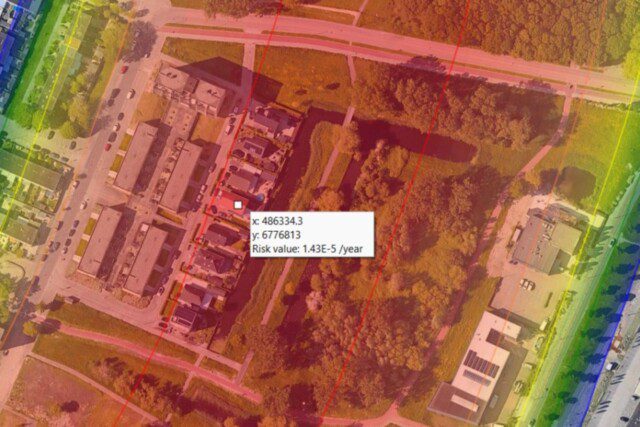
CCS risk assessment: Analysing IRPA and LSIR for pipelines transporting CO2
Analysing risks with RISKCURVES for buried pipelines transporting CO2, focusing on Individual Risk criteria LSIR and IRPA.
CO2 hazard modelling
This webinar discusses CO2 hazard modelling and demonstrates how advanced tools can be used to accurately assess and mitigate CO2 risks.

Hazardous Area Classification in Carbon Capture, Utilisation, and Storage (CCUS)
Learn how hazardous area classification (HAC) zoning and risk assessments support safety in CCUS infrastructure.
CO2 hazards in Carbon Capture, Utilisation, and Storage (CCUS)
An overview of the key safety concerns related to CO2 in CCUS technology, examples of accidents involving large CO2 releases, and safety measures.
Hazards associated with CO2 pipeline transportation
This episode discusses the fundamental properties of CO2 and the hazards associated with CO2 pipeline transportation.
Stay ahead in process safety and risk management
Get the latest trends in the field of process safety management straight to your inbox, and enhance your skills through knowledge sharing from industry experts.
Subsribe to our newsletter