Welcome to the fourth episode in our series, “CO2 Hazard Modelling with EFFECTS and RISKCURVES for CCUS Pipeline Transportation.”
In this episode, Sonia Ruiz Pérez, Product Manager of EFFECTS and RISKCURVES, explains how the EFFECTS consequence modelling software helps address the CO2 hazard modelling challenges discussed in the third episode.
You’ll be shown the key features in EFFECTS for CO2 release modelling, along with examples of the software in use through video clips and snapshots.
Video
Script
Hello, everyone. I’m Sonia Ruiz Pérez, the Product Manager for the EFFECTS and RISKCURVES software tools, and today I would like to welcome you to the fourth part of our video series “CO2 Hazard Modelling with EFFECTS and RISKCURVES for CCUS Pipeline Transportation”.
In the previous video, we examined the complexities of modelling CO2 releases from pipeline failures, including:
- the multiphase nature of CO2 releases,
- crater formation during buried pipeline ruptures,
- determining exit conditions for above-ground and buried pipelines,
- modelling dispersion behaviour from craters,
- considering the dense gas nature of CO2 and the presence of solid particles, and
- the influence of terrain and environmental conditions.
As mentioned in the previous video, all of these challenges make accurate modelling of CO2 releases both essential and complex.
However, advanced modelling tools like EFFECTS and RISKCURVES simplify this process by offering powerful features that ensure reliable and efficient modelling.
In this video, I will show you how EFFECTS addresses these challenges, making CO2 release modelling more reliable and efficient.
Before diving into the solutions, let me quickly introduce EFFECTS for those who might not be familiar with this software tool.
EFFECTS is an advanced, user-friendly software tool designed to analyse the consequences of accidental releases of dangerous chemicals, including CO2.
It calculates heat radiation from fires, overpressure from explosions, and toxic concentrations or doses from dispersing clouds.
Now let’s see how EFFECTS addresses the challenges of CO2 hazard modelling in the event of pipeline failures.
- Solution 1 – Spray Release model submodule
So, first of all, EFFECTS incorporates a Spray Release model submodule designed to simulate the flashing behaviour of two-phase releases. This submodule is applicable for continuous release scenarios in EFFECTS.
This Spray Release model captures the rapid phase transition of CO2 during depressurisation, calculating:
- flashing behaviour of liquefied CO2 as it expands into a jet,
- solid deposition of dry ice,
- airborne mass of both solid particles and liquid droplets, and
- expanded jet characteristics such as diameter and aerosol density.
This model accurately reflects the equilibrium between solid and vapour phases, effectively addressing carbon dioxide’s unique multiphase nature.
- Solution 2 – Long Pipeline Release model
Furthermore, EFFECTS also features a specialised Long Pipeline Release model designed specifically for high-pressure pipelines.
This model simulates:
- depressurisation behaviour,
- rupture size and location, and
- outflow dynamics taking into account heat transfer from the pipe wall.
The model also allows users to define whether the pipeline is buried or above ground. For buried pipelines, the model predicts crater formation, taking into account factors such as pipeline diameter, depth, pressure, and soil type.
Additionally, the model allows the definition of a double-sided outflow and can include the effect of pipeline inlet delays.
The Spray Release model, which I mentioned earlier, is integrated within this model to calculate critical outputs such as solid deposition, airborne mass, expanded diameter, and aerosol density.
- Solution 3 – Advanced Dispersion model
EFFECTS extends its capabilities even further for buried pipeline scenarios through advanced dispersion modelling.
In crater mode, the dispersion model handles the unique behaviour of two-phase jets exiting a crater. It considers critical factors such as jet properties, environmental conditions, and wind effects to ensure accurate simulations.
The model simulates the full physics of the dispersion phenomenon, including transitions between lighter-than-air, dense gas, and neutral gas states.
The Dispersion model also supports multiphase behaviour, allowing for the modelling of processes such as the recondensation or sublimation of liquid droplets and CO2 solid particles. These features ensure the accurate prediction of larger cloud formations.
The Dispersion model incorporates modelling techniques comparable to Computational Fluid Dynamics (CFD). These include handling phase changes, heat transfer, and terrain effects.
By capturing the entire thermodynamic process, EFFECTS effectively addresses the complexities of carbon dioxide’s dense gas behaviour and the presence of solid particles.
- Solution 4 – Model validation
The EFFECTS dispersion model has undergone extensive validation using a wide range of experimental datasets for CO2 releases.
Notable examples include datasets from:
- CO2PIPETRANS,
- COOLTRANS, COSHER,
- CO2SafeArrest,
- KitFox,
- INERIS,
- CHRC,
- Donat, and
- Vidali.
This ensures that the tool provides accurate and reliable CO2 release simulations for a wide range of scenarios.
All these validations, along with the theoretical foundations of the models, are accessible to customers through the EFFECTS and RISKCURVES Document Portal. With this robust validation process in place, you can confidently rely on EFFECTS to deliver accurate and reliable results for your CO2 release modelling needs.
Before we wrap up, let me show you some snapshots from EFFECTS to give you a better sense of how this software tool works in practice.
- [Preview at 06:54] – Input setup for calculating crater formation from a buried pipeline rupture
- [Preview at 07:17] – Crater formation results shown in both map and report formats
- [Preview at 07:30] – Input setup for modelling CO2 release from the crater, based on the crater formation result
- [Preview at 07:54] – CO2 dispersion from the crater visualised on a map
- [Preview at 08:11] – Graph view of CO2 dispersion from the crater
- [Preview at 08:23] – Overlay of vulnerable areas and lethality concentration contour in Google Earth
- [Preview at 08:37] – Modelling result for a liquefied CO2 release from an above-ground pipeline
EFFECTS enables you to develop effective emergency response strategies and implement robust safety measures to protect both people and the environment. The software plays a vital role in ensuring the safe and efficient deployment of CCUS projects.
I encourage you to explore EFFECTS hands-on to experience its full capabilities.
A series of pre-calculated project examples, showcasing the software in action, are available on Gexcon’s website. These use cases provide a practical understanding of how EFFECTS can assist with CO2 hazard modelling for CCUS pipeline transportation.
To explore these EFFECTS files, you can use the commercial version if you already have a license or download the free demo version of the software.
This demo version is available on Gexcon’s website and allows you to view pre-calculated projects at no cost.
Thank you so much for watching this video. I hope you found these insights valuable and that they inspire confidence in how EFFECTS can support your safety projects.
In the final video of this series, we’ll explore how RISKCURVES complements EFFECTS, helping you perform comprehensive quantitative risk assessments for CO2 pipeline transportation. I look forward to seeing you in the next video.
Thank you.
About the series
This series explores the safety and modelling challenges of transporting carbon dioxide (CO2) through pipelines in CCUS technology and showcases how safety professionals can use EFFECTS and RISKCURVES software tools to address these challenges.
You can access the available episodes below:
- Part 3 – CO2 hazard modelling challenges
- Part 4 – CO2 hazard modelling with EFFECTS
- Part 5 – CO2 risk assessment with RISKCURVES
Have questions about EFFECTS for CO2 applications?
If you have any questions about CO2 hazard modelling with EFFECTS, please feel free to contact us at effects@gexcon.com.

Interested in learning more about CO2 hazard modelling?
Watch our webinar to explore the challenges of accurately modelling CO2 releases and see how advanced tools can overcome them.
Related insights
Browse additional insights to deepen your understanding and stay informed on related topics.

Modelling CO2 releases in CCUS with EFFECTS
This white paper explores how EFFECTS consequence modelling software supports safety engineers, risk analysts, and project managers in modelling CO2 release scenarios.
CCS risk assessment: Analysing IRPA and LSIR for pipelines transporting CO2
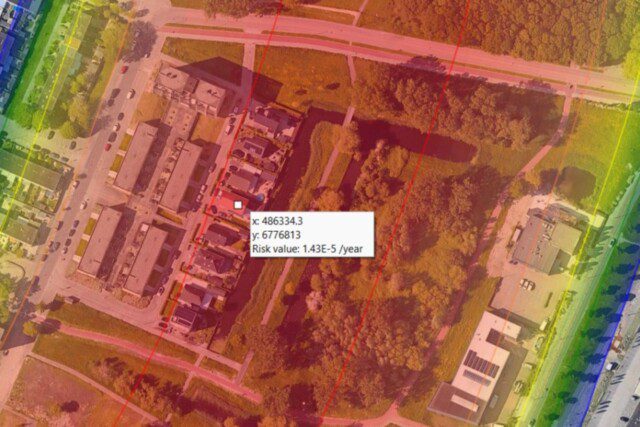
Analysing risks with RISKCURVES for buried pipelines transporting CO2, focusing on Individual Risk criteria LSIR and IRPA.

Hazardous Area Classification in Carbon Capture, Utilisation, and Storage (CCUS)
Learn how hazardous area classification (HAC) zoning and risk assessments support safety in CCUS infrastructure.

CO2 hazards in Carbon Capture, Utilisation, and Storage (CCUS)
An overview of the key safety concerns related to CO2 in CCUS technology, examples of accidents involving large CO2 releases, and safety measures.
CO2 hazard modelling
This webinar discusses CO2 hazard modelling and demonstrates how advanced tools can be used to accurately assess and mitigate CO2 risks.
CO2 hazard modelling with EFFECTS
The fourth episode explains how the EFFECTS consequence modelling software helps address the CO2 hazard modelling challenges.
CO2 hazard modelling challenges
This third episode discusses the challenges in modelling CO2 releases, including its multiphase nature, the impact of craters when pipelines are buried, dense gas behaviour, and more.
Hazards associated with CO2 pipeline transportation
This episode discusses the fundamental properties of CO2 and the hazards associated with CO2 pipeline transportation.
Stay ahead in process safety and risk management
Get the latest trends in the field of process safety management straight to your inbox, and enhance your skills through knowledge sharing from industry experts.
Subsribe to our newsletter