Propane is a non-toxic and colorless gas and a member of the paraffin hydrocarbons along with methane and ethane. It has a clean-burning characteristic and can be used for many applications in homes, businesses, and industries, such as cooking, space heating, fuel for internal combustion engines, and raw material to create other chemical products.
Propane is stored in tanks and cylinders as a compressed liquid, commercially known as LPG (Liquefied Petroleum Gas). The liquid exists in equilibrium with propane vapor in the container headspace. As the temperature of the liquid propane increases, the pressure within the cylinder increases according to the vapor pressure of the propane. Similarly, when the temperature of the liquid propane decreases, the pressure within the cylinder decreases.
Another important aspect regarding liquefied propane is that as its temperature increases the liquid propane expands and fills up more of the container volume. In fact, liquid propane expands 17 times more than water during similar temperature increases.
Due to these characteristics, there are safety-critical design features and procedures that should be implemented in the propane industry to ensure the safe use of propane.
Otherwise, it could lead to a catastrophic incident, such as the 2014 Philadelphia Food Truck Explosion.
On July 1, 2014, a propane cylinder catastrophically failed and exploded on the back of a food truck parked at the intersection of Wyoming Avenue and 3rd Street in Philadelphia, PA.

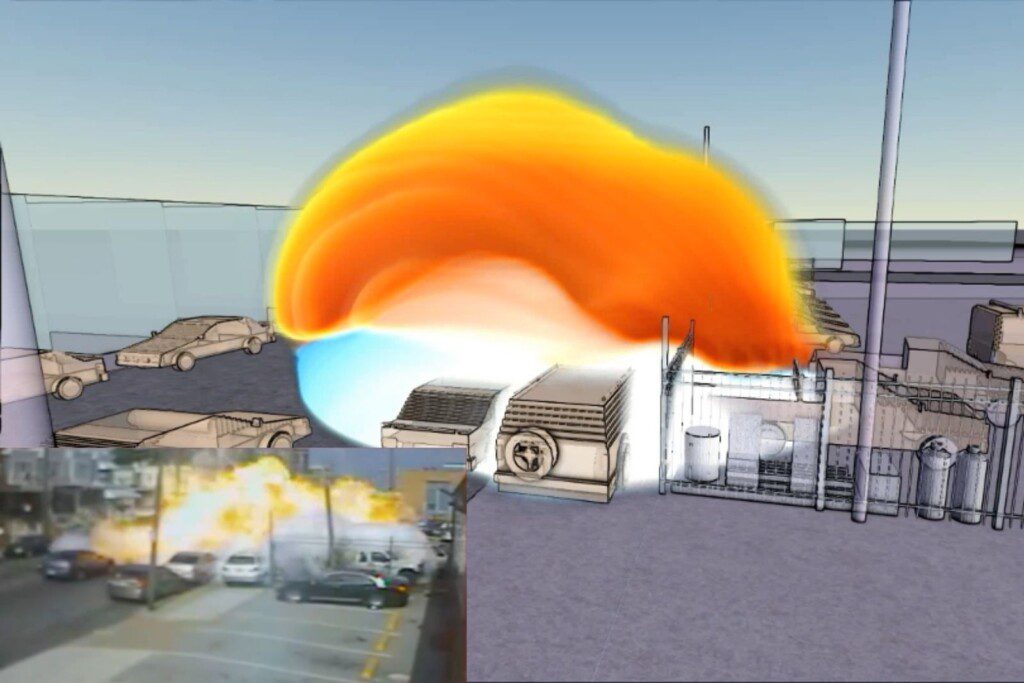
The explosion led to a sudden release of pressurized propane vapor and superheated propane liquid, which rapidly evaporated resulting in a large white cloud that entered and engulfed the rear of the food truck.

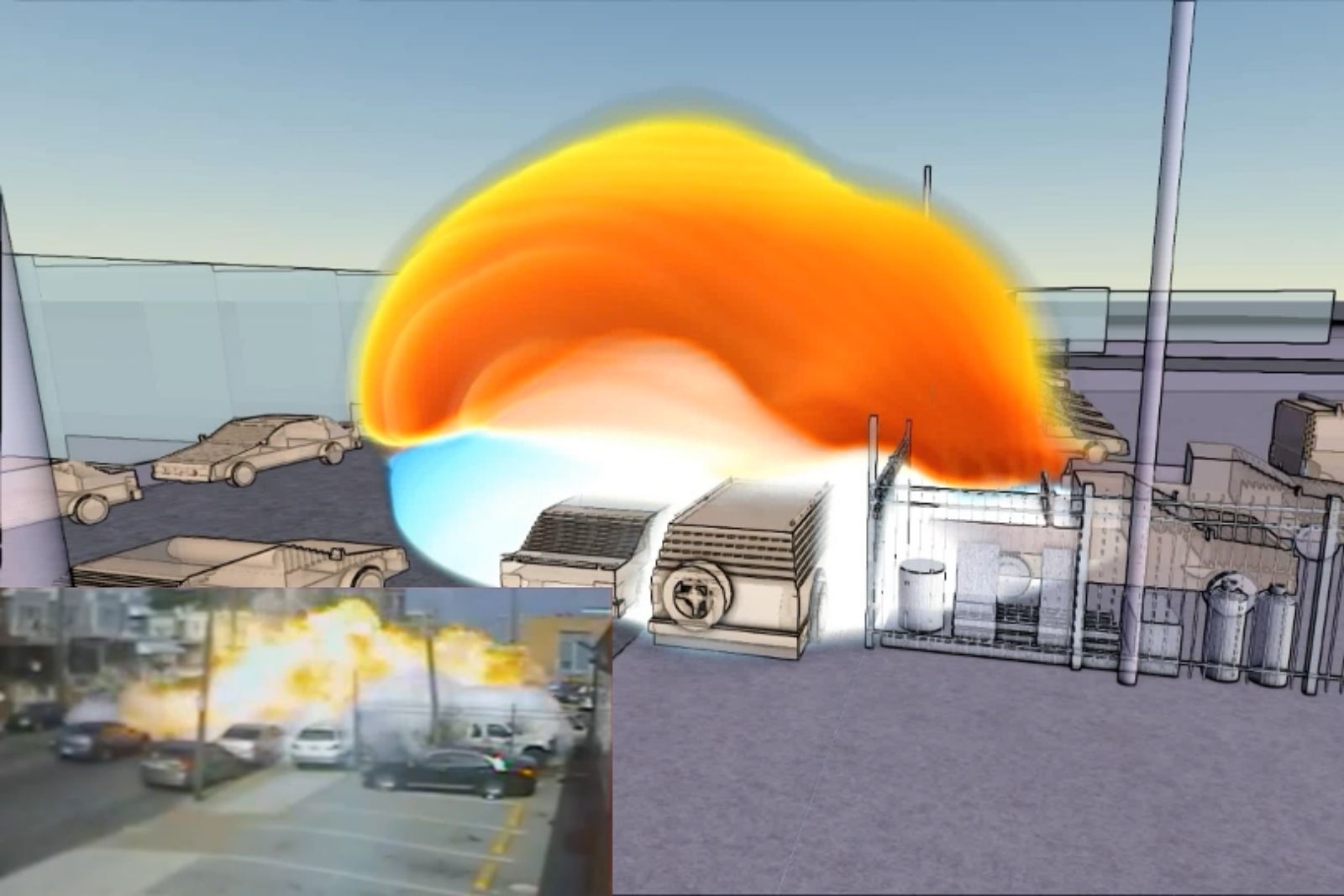
This cloud ultimately found an ignition source within the food truck and resulted in a significant fireball burning both inside and outside of the food truck.

The explosion and ensuing fire fatally injured the food truck owner and her daughter, and also caused injuries to 11 other individuals.

At the 2022 Spring Meeting and 18th Global Congress on Process Safety, Gexcon US CEO & Principal Engineer Scott G. Davis, Ph.D., P.E., CFEI will present a paper entitled “Propane Cylinder BLEVE: Investigation Findings and Lessons Learned in the 2014 Philadelphia Food Truck Explosion”.
Dr. Davis will present the results of our investigation into the cause and origin of the catastrophic failure and explosion event, which included:
- video footage of the explosion and ensuing fire;
- advanced propane phase diagrams to determine the expansion and resulting pressures within the cylinder prior to failure; and
- applying advanced blast techniques to determine the post-catastrophic blast and ignition during the event. These techniques included advanced computational fluid dynamic modeling.
He will also discuss safety-critical design features and processes in the propane industry that must be in place to ensure the safe use and filling of propane cylinders.
Presentation detail
Title: Propane Cylinder BLEVE: Investigation Findings and Lessons Learned in the 2014 Philadelphia Food Truck Explosion
Author: Scott G. Davis and Derek M. Engel
Session: Fires, Explosions and Reactivity II
Presenter: Scott G. Davis
Date & Time: Tuesday, April 12, 2022 – 11:15 – 11:45 AM CDT
Would you like to learn more about this topic?
Access our paper by clicking the button below and reach out to our experts for any queries.
Authors

Scott G. Davis, Ph.D., P.E., CFEI
US CEO – Principal Engineer at Gexcon

Derek M. Engel, M.S., P.E., CFEI
Managing Engineer @ Gexcon US
Related insights
Browse additional insights to deepen your understanding and stay informed on related topics.

Key lessons from LNG incidents for safer operations
Lessons learnt from past LNG incidents, such as the Cleveland Disaster, the Skikda Explosion, and the Plymouth Plant Incident.
Learning from a propane cylinder BLEVE incident
Due to propane’s characteristics, there are safety-critical design features and procedures that should be implemented in the propane industry to ensure the safe use of propane.
Learning from ammonium nitrate explosion incidents
Ammonium nitrate is stable, but bulk storage near fire hazards can lead to major explosions despite long-known safety risks.
How to properly design your dust explosion protective systems
Learn how poor dust system design led to a major plant explosion and what steps to take to prevent similar combustible dust incidents.

Unraveling the mysteries of ammonium nitrate detonations
Learn how to prevent ammonium nitrate incidents by understanding the conditions that lead to explosive decomposition and how to avoid them.
Lessons learned from LNG incidents
Learn about the importance of safety in LNG facilities by examining lessons from the 2004 Skikda LNG liquefaction facility explosion and the 1944 Cleveland Disaster.
Stay ahead in process safety and risk management
Get the latest trends in the field of process safety management straight to your inbox, and enhance your skills through knowledge sharing from industry experts.
Subsribe to our newsletter