What you will learn
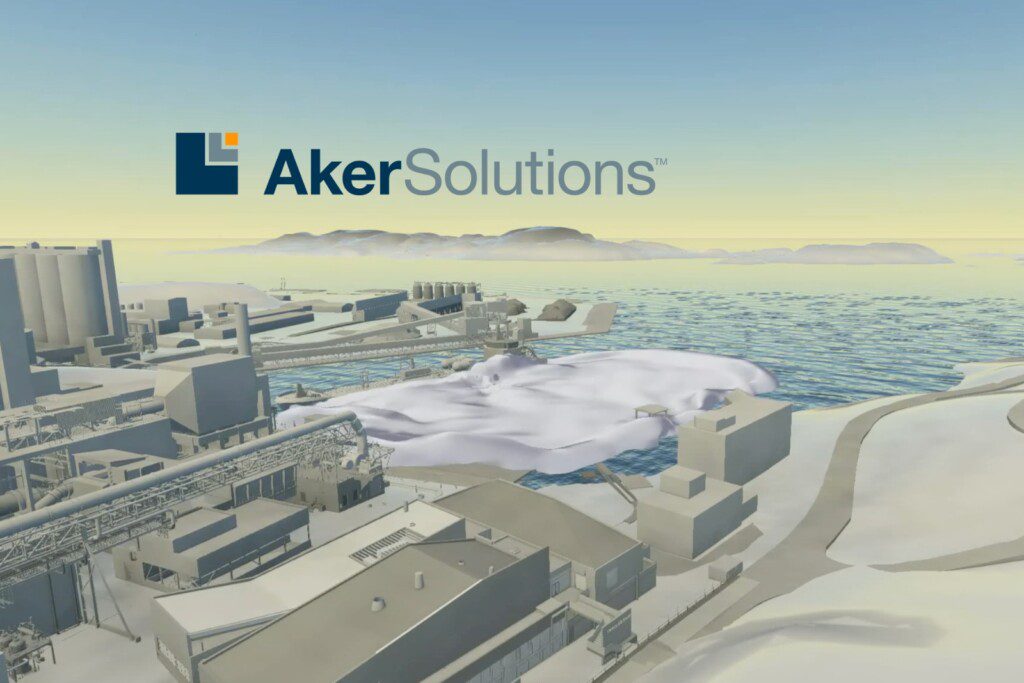
You will be presented with the summary of recent work conducted by Aker Solutions on the topic of CO2 dispersion modelling:
- Aker Solutions takes on modelling dispersion from supercritical/ liquid CO2.
- Comparison of CFD results with experimental data.
- Example from projects.
- Challenges and list of things we would like to see improved in FLACS.
Meet the speakers

Stian Jensen
Senior Principal Engineer at Aker Solutions
Stian Jensen is a Senior Principal Engineer in Aker Solutions with a master’s degree in mechanical engineering from NTNU in 2002.
He has worked in the safety industry for more than 11 years, including on- and offshore QRA, probabilistic explosion modelling, gas dispersion, fire and ventilation CFD simulations.
Stian has contributed to the development of the Norwegian DSB guideline for QRA and in the development of RispEx (a simplified tool for explosion load decision support).
Lately, Stian has been – and still is – heavily involved in multiple projects related to carbon capture storage and utilization, hydrogen and ammonia. Stian has been a FLACS user for more than 11 years.
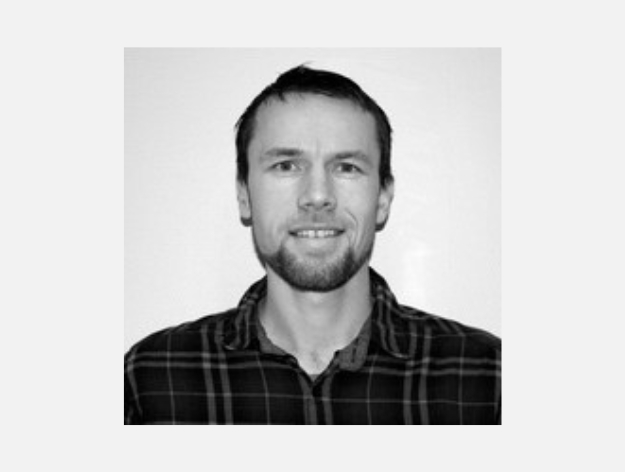
Espen Gåserud is a Senior Specialist Engineer in Aker Solutions with a Masters degree in environmental engineering from NTNU in 2008.
He has worked in the safety industry for more than 14 years, including on- and offshore QRA, gas dispersion, fire and ventilation CFD simulations.
Espen also has an interest for helideck turbulence and thermal plume studies using CAP437 and NORSOK C-004 criteria, and modelling of fires on road tunnels.
Lately, Espen has been – and still is – heavily involved in multiple projects related to carbon capture storage and utilization. Espen has only been a FLACS user for about 2 years, but has worked alongside with FLACS studies for more than a decade.

Vincent Zhang is a Senior Risk and CFD Engineer in Aker Solutions with a Master’s degree in Naval Architecture from HUST in 2004.
He has worked in the maritime, oil and gas industry for more than 18 years.
His main jobs are providing quantitative or qualitative safety risk analyses for onshore/offshore oil and gas facilities, either as part of the QRA, as decision-making support, or independent analysis, typically consequence analysis with CFD simulations for giving design input.
Download webinar recording
Please fill in the form below to access the webinar recording.
More presentations from FLUG 2022
Browse the full collection of presentations from the FLUG 2022 event.
2022 FLUG Meeting registration is now open
The registration for the 2022 FLUG Meeting, taking place virtually on 31 October – 3 November, is now open!
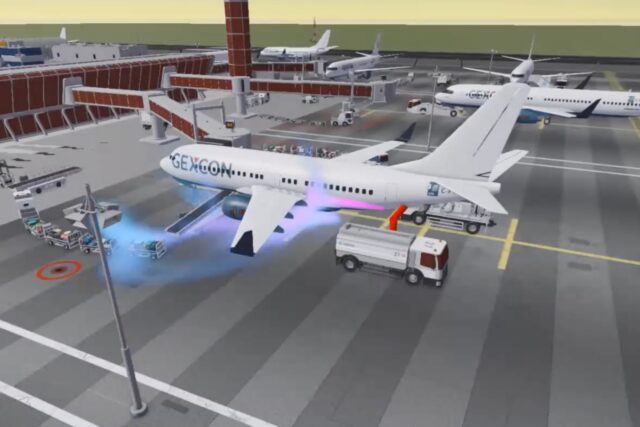
Can we fly safely on liquid hydrogen? Using advanced modelling tools to understand the hazards
See how advanced CFD modelling can be used to understand the hazards from potential LH2 release scenarios while refuelling an aircraft.
Combustion modelling of hydrogen in FLACS
See how Gexcon is improving hydrogen combustion modelling in FLACS to reduce conservatism and support better safety assessments.

Numerical study of hydrogen leakage, diffusion, and combustion in an outdoor parking space under different parking configurations
See how FLACS helps assess hydrogen release and fire risks for fuel cell vehicles in outdoor parking setups.
CO2 dispersion modelling in FLACS
Understand CO2 dispersion modelling examples, challenges, and insights from Aker Solutions.
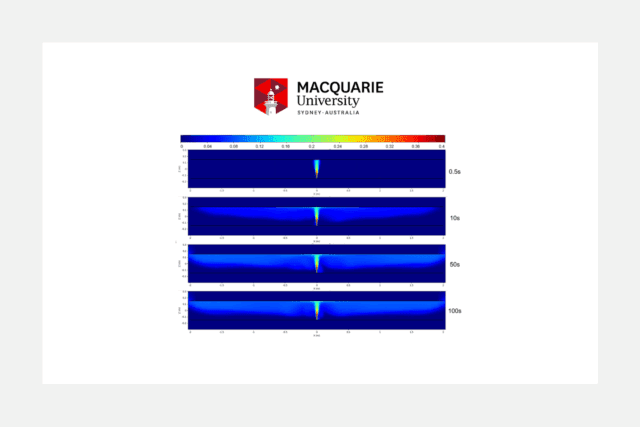
Numerical study on helium dispersion and ventilation in a semi-enclosed channel with FLACS-Hydrogen
See how CFD and experiment compare in modelling helium dispersion to improve hydrogen safety in confined or semi-enclosed areas.
LNG Model Evaluation Protocol (MEP)
The presentation provides a summary of the completed MEPs and an outlook towards the remaining work.
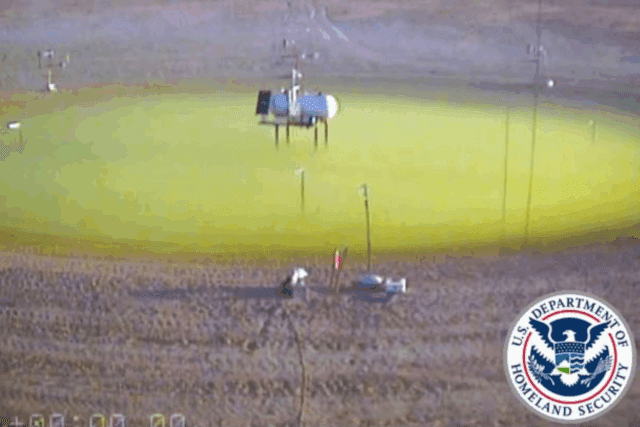
Jack Rabbit III project on ammonia dispersion modelling
See how large-scale trials in the Jack Rabbit III project can help improve ammonia dispersion modelling for better safety assessments.
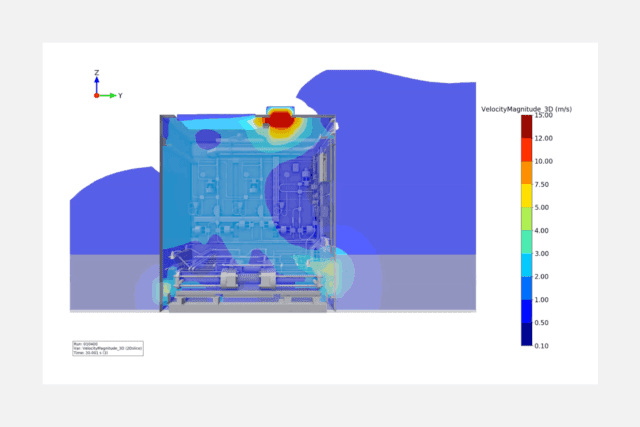
Is ventilation your trustworthy old friend when it comes to hydrogen
See why typical ventilation may not be enough for hydrogen safety and explore safer options for public-facing hydrogen applications.
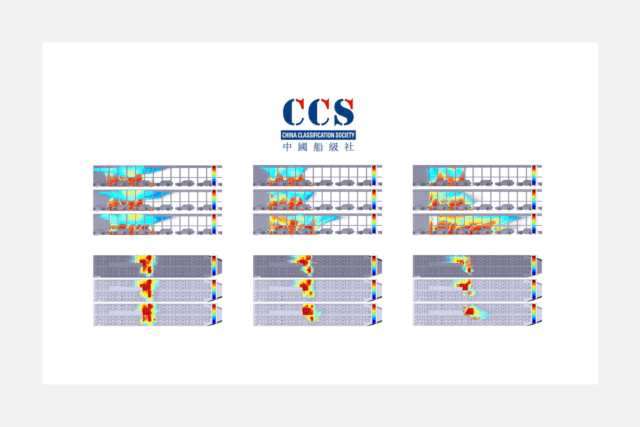
Consequence analysis of thermal runaway of lithium battery-powered vehicles on ro-ro ships
Learn how FLACS helps assess thermal runaway risks from lithium battery vehicles on ro-ro ships and improve fire response design.
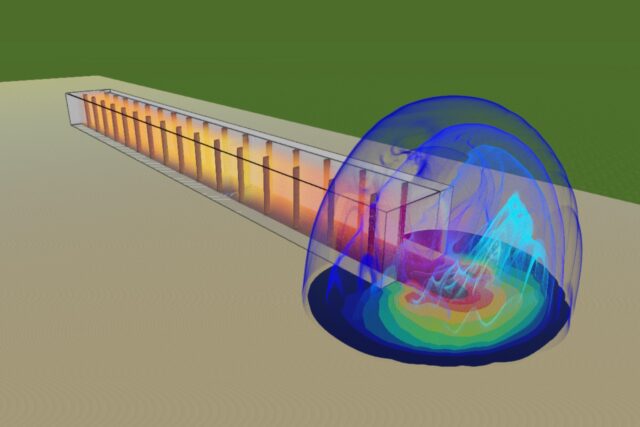
New detonation modelling in FLACS
Learn about the new detonation modelling in FLACS based on HYEX Safety’s experience and Gexcon’s implementation.
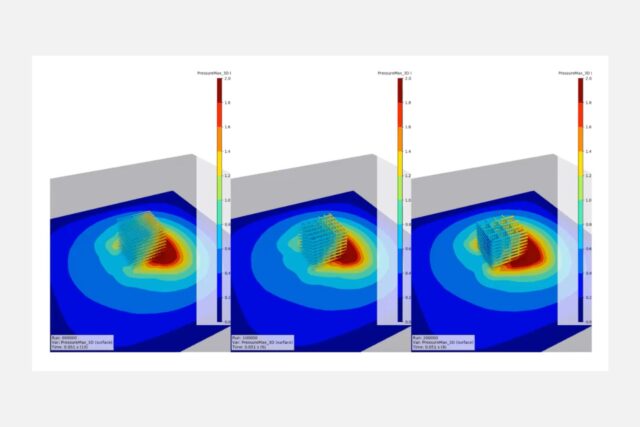
New mesh geometry handling in FLACS
Gexcon presents the work that has been done so far on the new mesh geometry handling in FLACS.
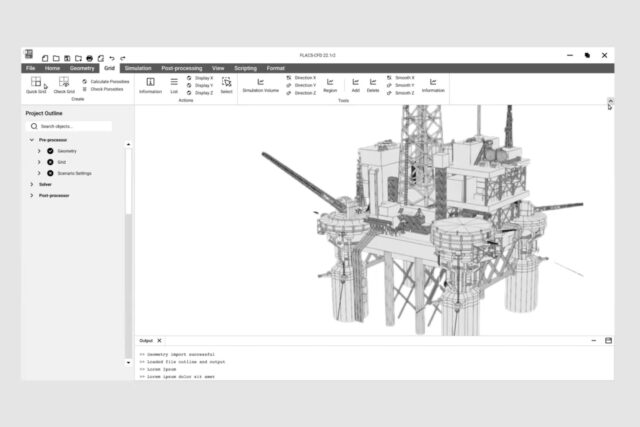
New UX of FLACS
A presentation where Gexcon and Creative Navy show the development of new UX for FLACS.
The direction of FLACS at FLUG 2022
Learn about the roadmap for FLACS development.
Stay ahead in process safety and risk management
Get the latest trends in the field of process safety management straight to your inbox, and enhance your skills through knowledge sharing from industry experts.
Subscribe to our newsletter