
About the webinar
Understanding hydrogen safety in outdoor car parks using CFD.
As the number of hydrogen fuel cell vehicles (HFCVs) being used is increasing, confirming that their safety level is the same as that of gasoline vehicles is becoming important. HFCVs are commonly parked in outdoor spaces. Thus, the safety of HFCVs in garage scenarios should be ensured, and related regulations, codes, and standards for preventing accidents must be developed.
In this study, the Flame Acceleration Simulator (FLACS) software was utilised to evaluate the behaviour of hydrogen release, dispersion, and flame propagation in the presence of multiple HFCVs in an outdoor parking space through the activation of thermally activated pressure relief devices (TPRDs).
The effects of different leak diameters (2, 3, and 4 mm), release directions (upward and downward), and parking configurations (vertical and parallel) on the formation of a flammable gas cloud (FGC) and safety distances were examined by considering tank blowdown.
The results showed that larger TPRD diameters resulted in a larger envelope of the FGC; however, it also dissipated faster in outdoor parking spaces. Compared with the vertical parking configuration, the fire-origin HFCV had less impact on adjacent vehicles in the parallel parking configuration.
The direction of an upward release was found to contribute to a decrease in the volume of the FGC in outdoor parking spaces owing to low congestion. This study highlights the significance of the TPRD diameters and parking configurations, providing guidance for the safe introduction of HFCVs in existing outdoor parking spaces and infrastructure.
This presentation is part of FLUG 2022.
What you will learn
- The effect of different parking layouts (vertical vs parallel) on fire spread risks.
- How CFD can support safety design for HFCVs in public outdoor parking areas.
Meet the speaker

Yahao Shen
PhD Student at Tongji University
Yahao Shen is a PhD student in the School of Automotive Studies at Tongji University in Shanghai. His main research interest focuses on hydrogen safety in Fuel Cell Vehicles (FCVs), including:
- studies on preliminary qualitative hazard identification of FCVs
- CFD analysis on hydrogen leakage, dispersion, and subsequent combustion from the FCVs by using FLACS
- Quantitative Risk Assessment of FCVs in multiple scenarios (garages) by using FLACS-Risk
Yahao Shen has been using FLACS for dispersion modelling and consequence analysis for over two years.
Download webinar recording
Please fill in the form below to access the webinar recording.
More presentations from FLUG 2022
Browse the full collection of presentations from the FLUG 2022 event.
2022 FLUG Meeting registration is now open
The registration for the 2022 FLUG Meeting, taking place virtually on 31 October – 3 November, is now open!
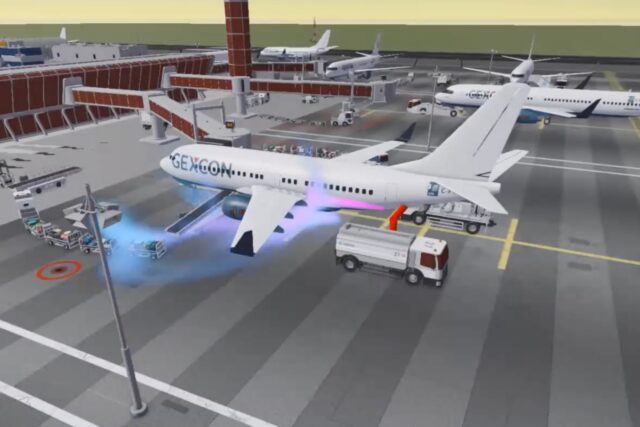
Can we fly safely on liquid hydrogen? Using advanced modelling tools to understand the hazards
See how advanced CFD modelling can be used to understand the hazards from potential LH2 release scenarios while refuelling an aircraft.
Combustion modelling of hydrogen in FLACS
See how Gexcon is improving hydrogen combustion modelling in FLACS to reduce conservatism and support better safety assessments.

Numerical study of hydrogen leakage, diffusion, and combustion in an outdoor parking space under different parking configurations
See how FLACS helps assess hydrogen release and fire risks for fuel cell vehicles in outdoor parking setups.

CO2 dispersion modelling in FLACS
Understand CO2 dispersion modelling examples, challenges, and insights from Aker Solutions.
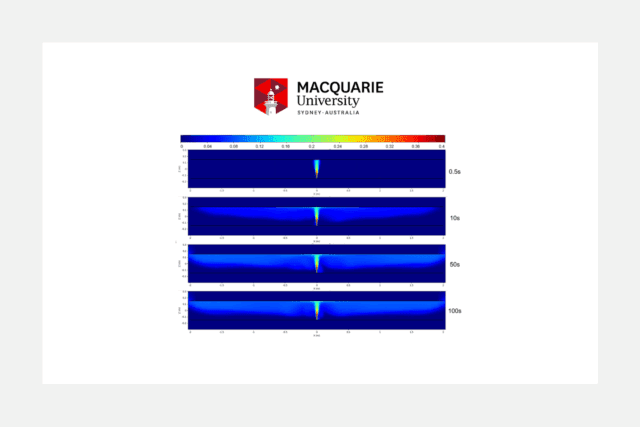
Numerical study on helium dispersion and ventilation in a semi-enclosed channel with FLACS-Hydrogen
See how CFD and experiment compare in modelling helium dispersion to improve hydrogen safety in confined or semi-enclosed areas.

LNG Model Evaluation Protocol (MEP)
The presentation provides a summary of the completed MEPs and an outlook towards the remaining work.
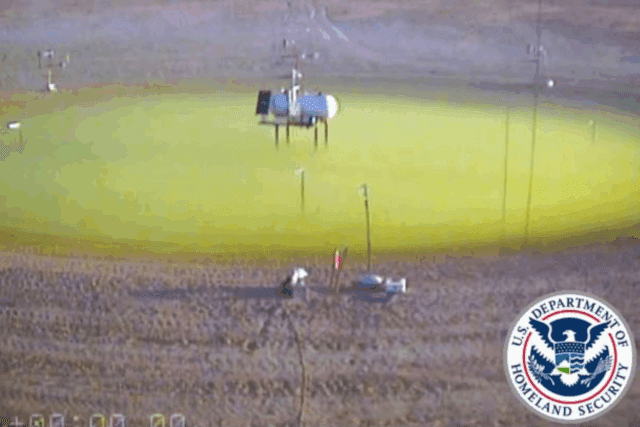
Jack Rabbit III project on ammonia dispersion modelling
See how large-scale trials in the Jack Rabbit III project can help improve ammonia dispersion modelling for better safety assessments.
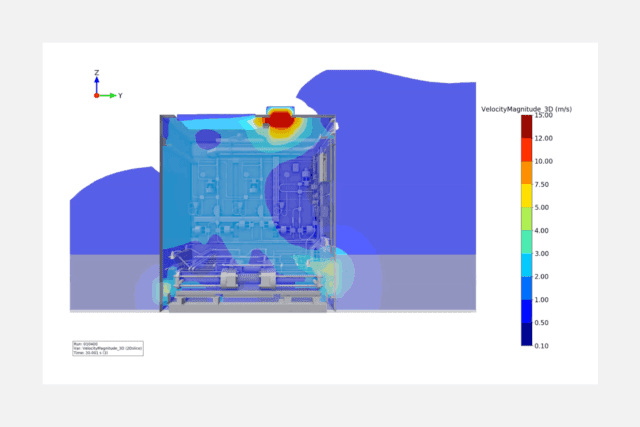
Is ventilation your trustworthy old friend when it comes to hydrogen
See why typical ventilation may not be enough for hydrogen safety and explore safer options for public-facing hydrogen applications.
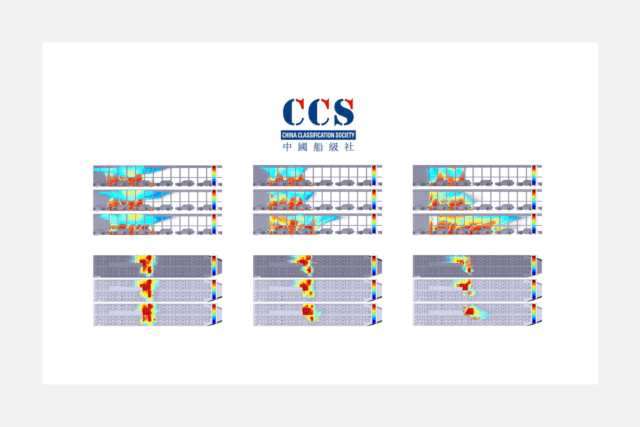
Consequence analysis of thermal runaway of lithium battery-powered vehicles on ro-ro ships
Learn how FLACS helps assess thermal runaway risks from lithium battery vehicles on ro-ro ships and improve fire response design.
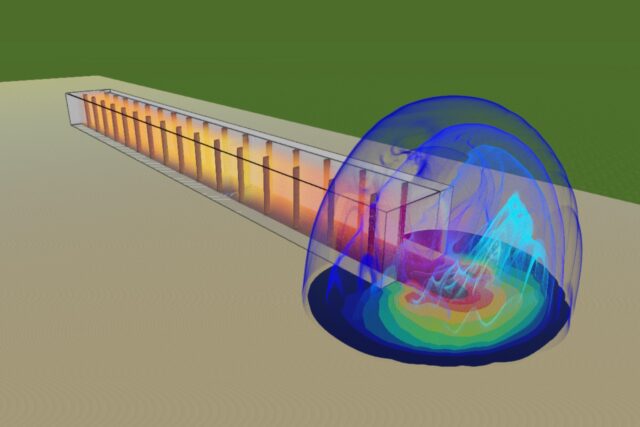
New detonation modelling in FLACS
Learn about the new detonation modelling in FLACS based on HYEX Safety’s experience and Gexcon’s implementation.
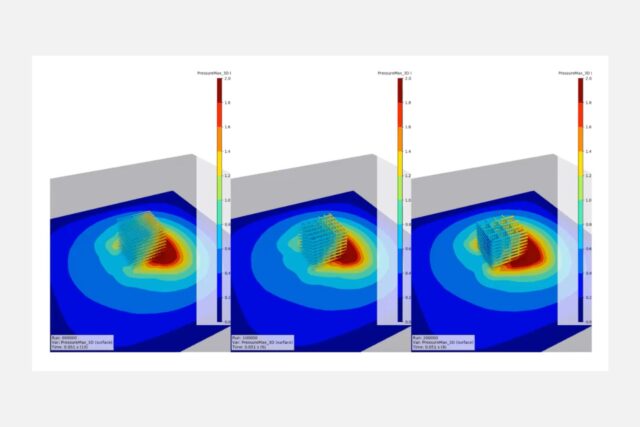
New mesh geometry handling in FLACS
Gexcon presents the work that has been done so far on the new mesh geometry handling in FLACS.
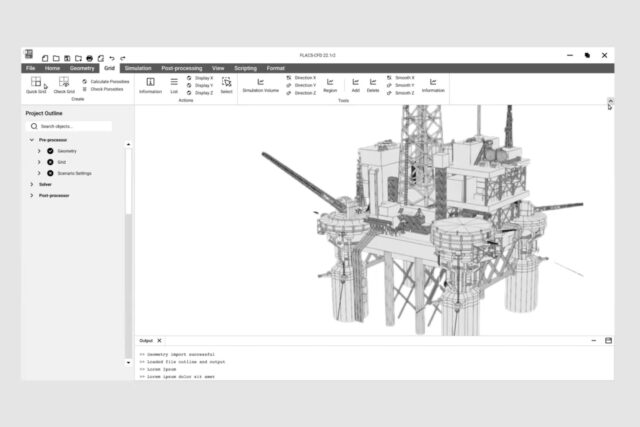
New UX of FLACS
A presentation where Gexcon and Creative Navy show the development of new UX for FLACS.
The direction of FLACS at FLUG 2022
Learn about the roadmap for FLACS development.
Stay ahead in process safety and risk management
Get the latest trends in the field of process safety management straight to your inbox, and enhance your skills through knowledge sharing from industry experts.
Subscribe to our newsletter