Batteries are indispensable in modern society, powering everyday devices such as smartphones, tablets, and laptops, as well as providing grid support and propulsion for electric vehicles and e-scooters. Their demand is expected to increase, as they play a crucial role in reducing our reliance on fossil fuels. However, the growing use of batteries brings a critical need to ensure their safety.
Batteries can pose significant hazards, such as gas releases, fires and explosions, which can harm users and possibly damage property. This blog explores potential hazards associated with batteries, how an incident may arise, and how to mitigate risks to protect users and the environment.
The role of batteries in decarbonisation
In recent years, electric vehicles have been promoted as a greener alternative to traditional fossil fuel vehicles due to the reduction in carbon emissions and other pollutants over their lifecycle. With a number of governments around the world planning to ban the sale of new diesel and petrol cars within the coming decades, this will inevitably lead to a rise in electric vehicles and subsequently an increased demand for batteries.

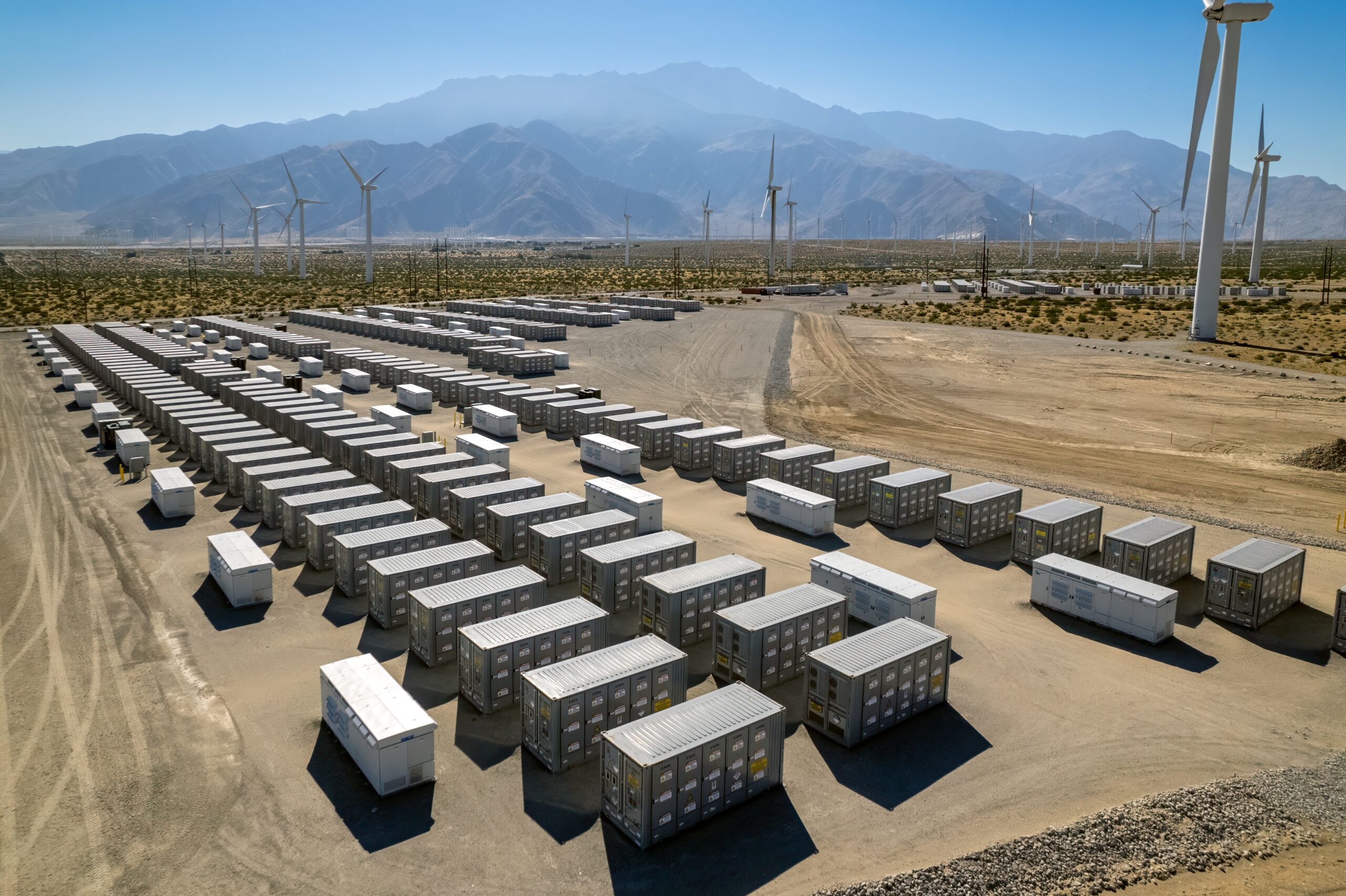
Battery energy storage systems (BESS) are also playing a role in the efforts to provide low carbon electricity particularly, by storing renewable energy. BESS are often used with renewable energy technologies where the energy generation rate fluctuates or is periodic, such as with solar power or wind turbines.
Typically, BESS are containerised systems comprising racks of lithium-ion batteries that store energy during low demand for use during peak hours. Larger facilities can also consist of multiple BESS containers.

However, the increased use of lithium-ion battery technologies does not come without risk. The potential for thermal runaway, leading to battery fires in accident or loss of control scenarios, is widely acknowledged. Lead-acid batteries also come with the risk of hydrogen off-gassing during normal operation.
Understanding battery hazards
Off-gassing
Off-gassing occurs when batteries, particularly lead-acid types, release gases such as hydrogen during overcharging. This can create flammable or explosive conditions if not properly ventilated.
Thermal runaway
Thermal runaway in li-ion batteries is a positive feedback loop of exothermic reactions. It can be triggered by electrical, thermal, or mechanical events that cause the battery’s internal temperature to rise. The elevated temperature accelerates exothermic chemical reactions within the battery which in turn generates more heat and further increases internal temperature therefore, acting as a positive feedback loop. As the temperature continues to increase, the battery may release flammable gases as a result of chemical decomposition. The extreme temperatures and generation of flammable gases can result in fires or explosions.
Thermal runaway can occur throughout the entire life cycle of the battery from manufacturing to recycling and disposal. This can be caused by:
- Incorrect fabrication or manufacturing defects
- Mishandling or impacts in transit, use, or disposal
- Improper use such as overcharging
- Short circuiting
- Component failure
- External fires
Potential consequences associated with battery hazards
Once a battery fire starts, it can be extremely difficult to control. Even if the flames are extinguished, reactions within the batteries can continue, generating flammable gas that may reignite.
As demonstrated by the well-documented fire at the Tesla Megapack battery farm in 2021, there is potential for cascading events as batteries are often stored or used in large numbers, such as during transit or in BESS containers. Flames and intense radiation from the fire can result in fatalities and cause financial losses by damaging surrounding equipment and structures.
If flammable gas accumulates in a confined space, such as within a BESS container, an explosion can occur upon ignition. Overpressures from the explosion can cause damage within the container and the external surrounding area, and harm people through the blast wave or from missiles generated by the initial blast.
Another consequence of battery fires is the release of toxic gases such as hydrogen fluoride, which can disperse into the surrounding area. Hydrogen fluoride is a particularly toxic chemical and can cause harm even at low concentrations.
Mitigation measures and best practices for battery systems
Although the consequences of battery systems can be severe, the overall level of risk associated with battery energy storage systems can be fairly low compared to other industries. This is because catastrophic failures are typically infrequent, and a number of safety measures can be implemented effectively. Below are a number of measures and practices that can be implemented in order to control the risk to personnel and the public at battery facilities.
- Build awareness of battery safety
Personnel should be properly trained and educated on the safe handling, storage, and disposal of batteries and provided with training on procedures for battery fires and thermal runaway events in order to prevent and mitigate battery-related accidents.
- Ensure the proper design and manufacturing of battery systems
Proper battery design, manufacturing and installation are necessary to ensure safety. The batteries themselves should include built-in safety features such as vents and separators. Energy storage systems should also have safety features to protect against short-circuiting, overcurrent, arc flashing, and ground faults.
Strict quality control processes during manufacturing should be adhered to in order to avoid defects, contaminants or component misalignment which can lead to thermal runaway during operation.
- Install adequate ventilation
The ventilation system should be sufficient to maintain proper air circulation and enable cooling of the area. In the event of thermal runaway, the ventilation system should be capable of preventing the build-up of flammable gases – in such situations, additional emergency ventilation or an enhanced ventilation rate may be required.
Implementing redundancy in the HVAC system, an alarm upon system failure, or interlocking such that the battery system cannot operate whilst the HVAC system is down could also be considered.
- Implement thermal management
Thermal runaway events can be triggered due to excess heat. Subsequently, an effective cooling system, thermal insulation and sufficient spacing between cells should be installed to manage and dissipate heat. Similar to the HVAC system, redundancy in the system and interlocking with the operation of the batteries should be considered.
- Physical isolation and separation
Batteries can be isolated from critical equipment and personnel by using barriers or containment systems. Similarly, separation between adjacent batteries can slow down or avoid escalation during thermal runaway.
- Implement a battery management system
Battery Management Systems (BMS) can be used to monitor and control battery charging, discharging, and temperature providing the ability to detect and respond to abnormalities in real-time.
- Detection and isolation
Off-gas generation can indicate that catastrophic failure and thermal runaway are just minutes away. Effective gas detection combined with the shutdown and electrical isolation of a battery system can, in some cases, prevent the cell temperature from increasing and, therefore, mitigate thermal runaway.
- Fire suppression and explosion protection
A fire suppression system should be designed to suppress and extinguish a fire quickly to mitigate against propagation throughout a module, rack, container or area. The fire suppression method will vary by facility but may include inert gases, mists, sprinklers and chemical suppressants.
Explosion protection, such as structural reinforcements and explosion relief panels, can help mitigate the effects of an explosion in containerised battery energy storage systems.
- Perform regular safety studies
Various process safety studies can be applied to battery operations. A HAZID can identify potentially hazardous scenarios associated with the handling, assembly, use, storage or testing of Li-ion batteries and their components. Other studies that could be applied include:
- Hazard and operability study (HAZOP)
- What if? study
- Layers of protection analysis (LOPA)
- Quantitative Risk Assessment
While risk assessments can be conducted internally, utilising third-party experts provides a valuable opportunity to fill gaps in in-house experience and knowledge.
In addition to these process safety studies, there are tools and techniques that can be suitably adapted for battery safety assessments.
Toxic dispersion modelling
Dispersion modelling studies can be conducted to assess the potential for toxic gases to reach neighbouring sites or the general public during a battery fire. Validated modelling tools, such as EFFECTS and FLACS from Gexcon, can effectively model toxic releases and subsequent dispersion.

Modelling toxic releases from BESS thermal runaway in EFFECTS.
Learn moreExplosion modelling
Similarly, EFFECTS and FLACS can model an explosion following the ignition of flammable gas released into a confined area during thermal decomposition.
The challenge in the modelling approach lies in defining the source terms, as the composition and quantity of the generated gas depend on various factors, including battery chemistry, state of charge, trigger event, battery arrangement, and casing. The size of the flammable cloud can be approximated based on the worst-case filling of the area, dispersion modelling results, or data from testing or literature.
Explosion modelling results can provide multiple outputs, including maximum overpressures, pressure wave propagation, and pressure impulse. Modelling can also assess mitigation measures, such as the effectiveness of explosion relief panels.
Video 1. BESS container explosion following thermal runaway simulated in FLACS.
Conclusion
Ensuring battery safety is fundamental, especially with the growing use of batteries. By understanding the associated risks, such as thermal runaway, off-gassing, and explosions, we can take pre-emptive steps to mitigate these hazards.
Implementing safety measures, such as building battery safety awareness, proper design and manufacturing, adequate ventilation, thermal management, and regular safety studies, can support in reducing the potential for accidents.
Additionally, using advanced modelling tools, such as EFFECTS and FLACS, helps accurately assess risks and make data-driven decisions when implementing safety measures.
By prioritising their safety, we can harness the benefits of battery technologies while minimising associated risks.
Authors

Jake Connor
Product Specialist at Gexcon

Chris Coffey
VP Products at Gexcon
Related insights
Browse additional insights to deepen your understanding and stay informed on related topics.

Battery Energy Storage System (BESS) fire and explosion prevention
Learn about the critical factors in BESS safety, focusing on fire and explosion risks, regulations, and safety strategies.
Battery safety: Associated hazards and safety measures
Practical insights on battery safety: common hazards, risks and measures to ensure safe handling and operation.
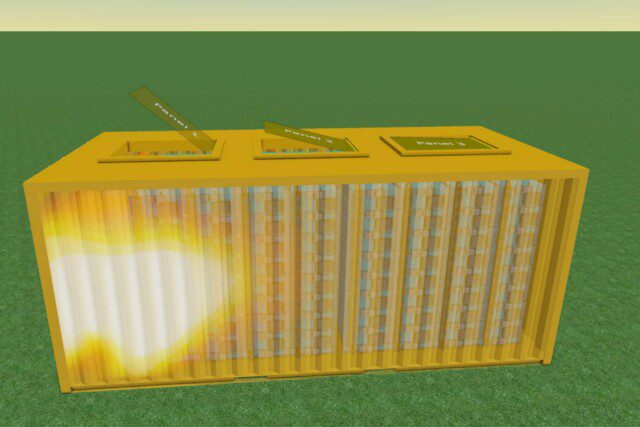
Thermal runaway of batteries simulation with FLACS
Learn how FLACS is used to simulate battery thermal runaway and compare results with experimental data for reliable analysis.
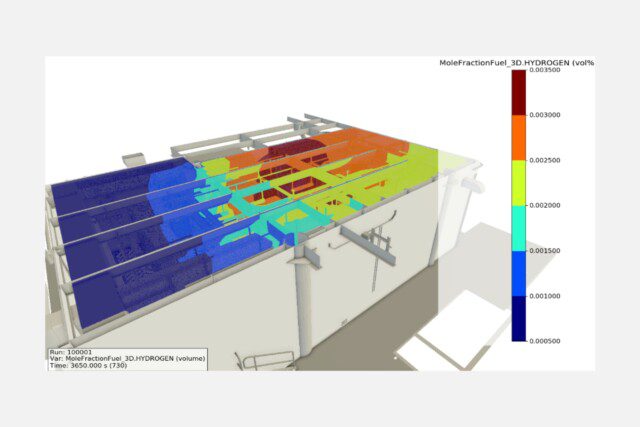
Accumulation of flammable hydrogen in a closed room with Forced Air Re-circulation
See how FLACS is used to evaluate hydrogen build-up risks in battery rooms with air recirculation and ceiling obstructions.
Consequence analysis of thermal runaway of lithium battery-powered vehicles on ro-ro ships
Learn how FLACS helps assess thermal runaway risks from lithium battery vehicles on ro-ro ships and improve fire response design.
Stay ahead in process safety and risk management
Get the latest trends in the field of process safety management straight to your inbox, and enhance your skills through knowledge sharing from industry experts.
Subsribe to our newsletter