Presented at ISFI meeting, Hyattsville, USA, Sept 27-29, 2010
Authors: Scott G. Davis, Peter Hinze, Olav R. Hansen and Kees van Wingerden
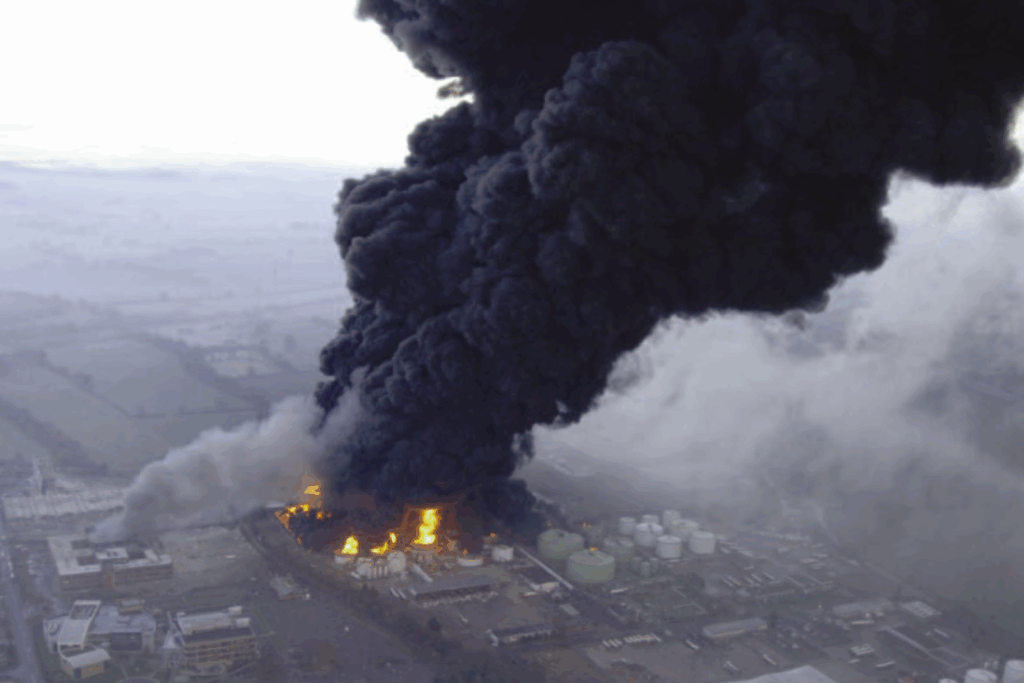
At 6:00 am on Sunday December 11, 2005 a large explosion occurred at the Buncefield Oil Storage Depot. The explosion destroyed a significant section of the depot and caused widespread damage to homes and businesses surrounding the site. Overfilling of one of the storage tanks caused a release of 300 tons of unleaded gasoline and created a very large vapor cloud (>120,000 m2). The ignition source of the cloud was likely an emergency pump house. The explosion resulted in very large overpressures (> 2bar), which caused significant damage to neighboring commercial and residential structures. Broken windows were observed up to 8 km (5 miles) from the site.
Due to the severity of the event, the Buncefield Major Incident Investigation Board (BMIIB) was formed in January 2006 to oversee the investigation. In order to achieve very large overpressures in unconfined vapor cloud explosions, a large number of obstacles are required to cause turbulence and flame acceleration, which further causes turbulence ahead of the flame front. While investigative groups have for a number of years been aware of the potential for flame acceleration and overpressure generation due to obstacles in gas clouds, the Buncefield depot was relatively uncongested and could not cause the observed overpressures. In fact in May 2006, the BMIIB concluded that, “The magnitude of the overpressures generated… is not consistent with current understanding of vapour cloud explosions. … The investigation has, so far, been unable to establish why the ignition of the vapour cloud and the explosion propagation… caused significant overpressures that produced the severe damage to property.” In addition, the blast damage indicators appeared to have contradicted the location of the ignition source, where objects were blown towards instead of away from the ignition source.
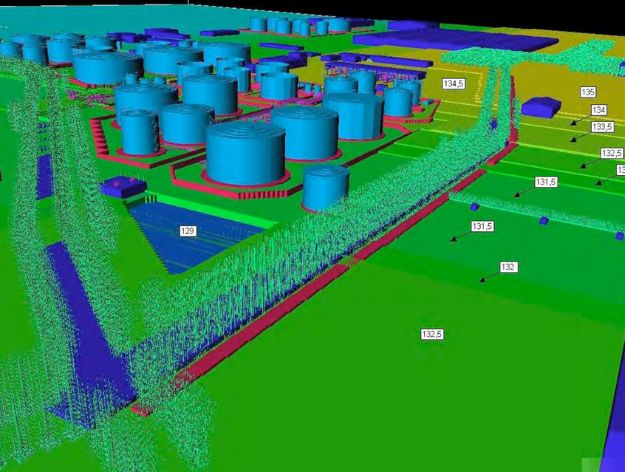
Gexcon was contacted by one of the facility owners to help in the investigation of this large explosion. Initial site inspections showed that alongside the roads surrounding the site (Buncefield Lane and Three Cherry Trees Lane), dense vegetation in the form of trees and bushes was present. Using the explosion simulator FLACS, the geometry of the Buncefield site was modeled including the dense vegetation. A large, shallow, heavier-than-air gas cloud was defined to cover part of the site and surroundings. Upon ignition a flame was established in the gas cloud. This flame accelerated through the trees along the surrounding roads, and resulted in high overpressures of several bar being generated by FLACS.
In addition, FLACS simulations predicted strong convective flow towards the ignition source and reconciled the observed blast damage indicators. To our knowledge this is the first time the effect of trees on explosions has been demonstrated by 3D analyses. To further demonstrate the validity of these results, a set of experiments was performed to demonstrate that congestion caused by dense vegetation could cause the same flame accelerations. The main conclusions of the study are that trees can have an influence on flame acceleration in gas-air clouds, and that advanced models such as FLACS can be used to study such influence.
Would you like to learn more about this topic?
Read the full paper or contact us to learn more.
Related insights
Browse additional insights to deepen your understanding and stay informed on related topics.

Key lessons from LNG incidents for safer operations
Lessons learnt from past LNG incidents, such as the Cleveland Disaster, the Skikda Explosion, and the Plymouth Plant Incident.
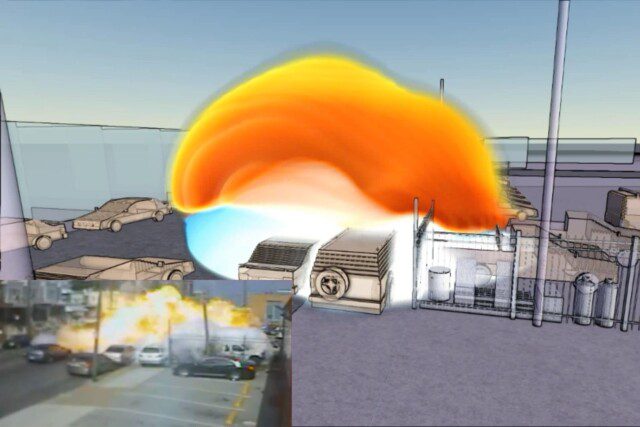
Learning from a propane cylinder BLEVE incident
Due to propane’s characteristics, there are safety-critical design features and procedures that should be implemented in the propane industry to ensure the safe use of propane.
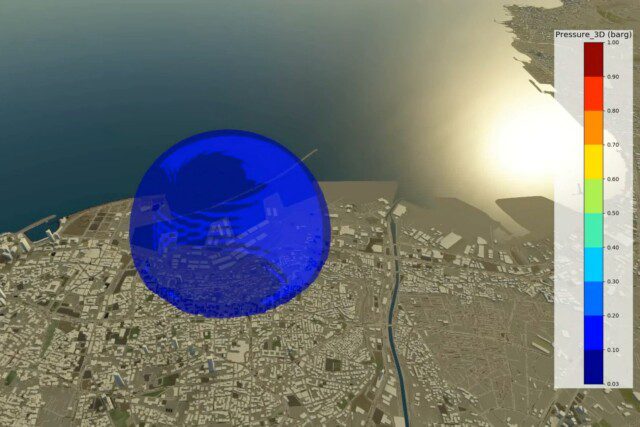
Learning from ammonium nitrate explosion incidents
Ammonium nitrate is stable, but bulk storage near fire hazards can lead to major explosions despite long-known safety risks.
How to properly design your dust explosion protective systems
Learn how poor dust system design led to a major plant explosion and what steps to take to prevent similar combustible dust incidents.

Unraveling the mysteries of ammonium nitrate detonations
Learn how to prevent ammonium nitrate incidents by understanding the conditions that lead to explosive decomposition and how to avoid them.
Lessons learned from LNG incidents
Learn about the importance of safety in LNG facilities by examining lessons from the 2004 Skikda LNG liquefaction facility explosion and the 1944 Cleveland Disaster.
Stay ahead in process safety and risk management
Get the latest trends in the field of process safety management straight to your inbox, and enhance your skills through knowledge sharing from industry experts.
Subsribe to our newsletter