Presented at ISFI meeting, Hyattsville, USA, Sept 27-29, 2010
Authors: Scott G. Davis, Derek Engel, Filippo Gavelli, Peter Hinze and Olav R. Hansen
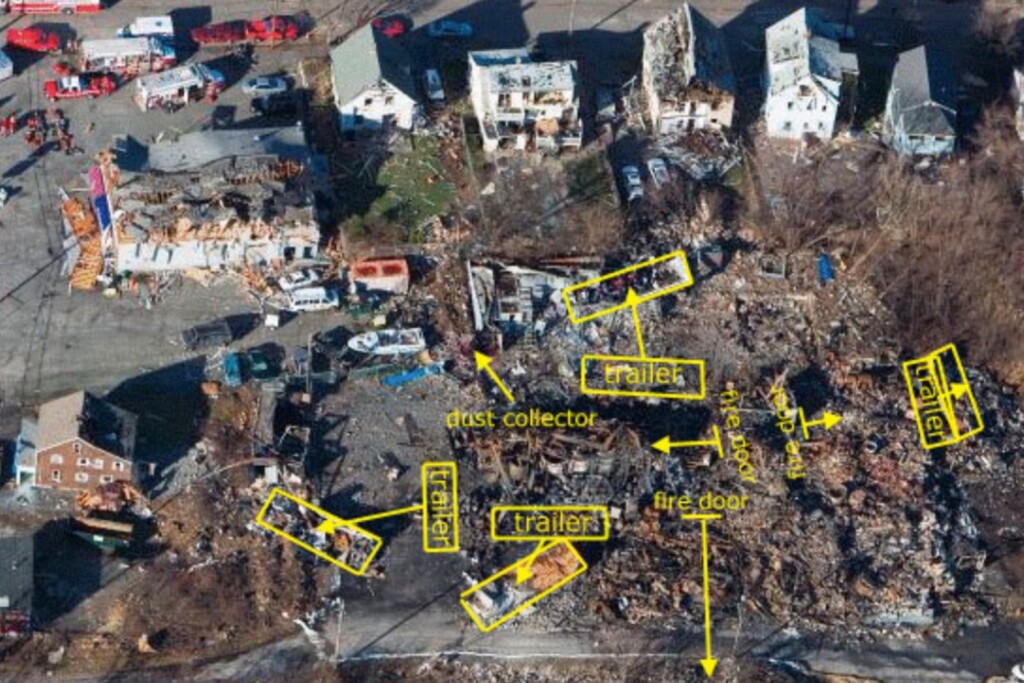
At approximately 2:46 AM on November 22, 2006, the largest explosion in the history of Massachusetts occurred in Danvers in an ink and paint manufacturing facility.
The explosion was caused by an accumulation of gas or vapors within the facility that was subsequently ignited. The blast completely destroyed the 1,400 m2 (15,000 ft2) facility and caused significant damage to the surrounding property and structures. Broken windows were observed up to 1.6 km (one mile) from the facility. In addition, residences immediately to the north and commercial structures to the west were severely damaged by the blast. The ensuing fire burned in the facility for hours after the explosion.
Some key observations regarding the near-field blast damage include:
(1) the walls of a production room were observed to have been blown outward during the explosion and must have been due to a significant overpressure early in the explosion,
(2) directional damage within the facility that included lifted and bent mezzanine grating, and
(3) damage to the neighboring structures outside the facility.
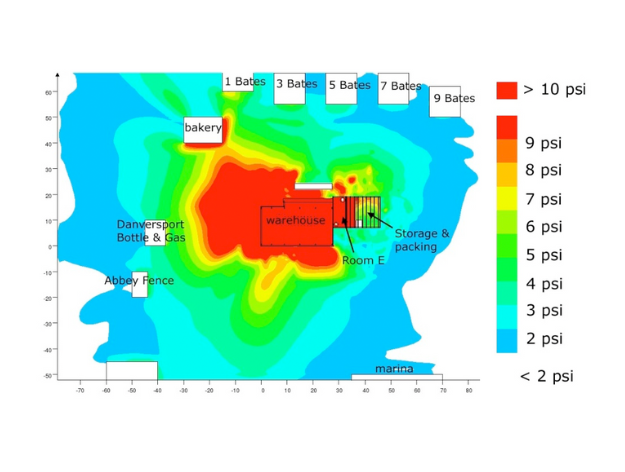
Using the advanced dispersion and explosion CFD software FLACS, it was possible to investigate the chain of events leading to the explosion. This included evaluating potential ignition sources within the facility and the corresponding explosion itself, by comparing the simulated overpressures of the exploding fuel-air cloud with the near-field blast damage within and outside the facility.
Simulations demonstrated that the Danvers explosion was far from trivial to understand and that the resulting blast-damage was very dependent on the details of the exploding fuel-air mixture. This study showed how only certain ignition locations within the facility storage room were capable of reconciling the observed near-field blast damage, and hence the origin of the explosion was identified.
The study further demonstrates how advanced CFD tools such as FLACS provide invaluable analyses for explosion investigations.
Would you like to learn more about this topic?
Read the full paper or contact us to learn more.
Related insights
Browse additional insights to deepen your understanding and stay informed on related topics.
Key lessons from LNG incidents for safer operations
Lessons learnt from past LNG incidents, such as the Cleveland Disaster, the Skikda Explosion, and the Plymouth Plant Incident.
Learning from a propane cylinder BLEVE incident
Due to propane’s characteristics, there are safety-critical design features and procedures that should be implemented in the propane industry to ensure the safe use of propane.
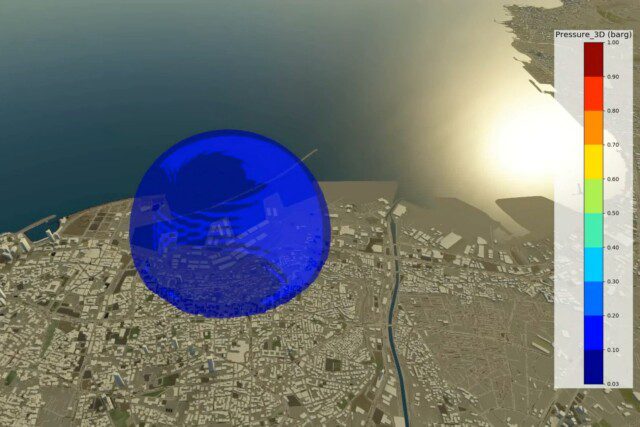
Learning from ammonium nitrate explosion incidents
Ammonium nitrate is stable, but bulk storage near fire hazards can lead to major explosions despite long-known safety risks.
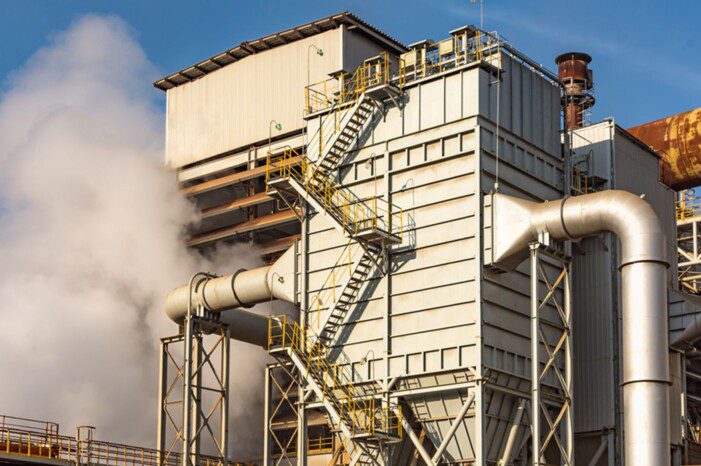
How to properly design your dust explosion protective systems
Learn how poor dust system design led to a major plant explosion and what steps to take to prevent similar combustible dust incidents.

Unraveling the mysteries of ammonium nitrate detonations
Learn how to prevent ammonium nitrate incidents by understanding the conditions that lead to explosive decomposition and how to avoid them.
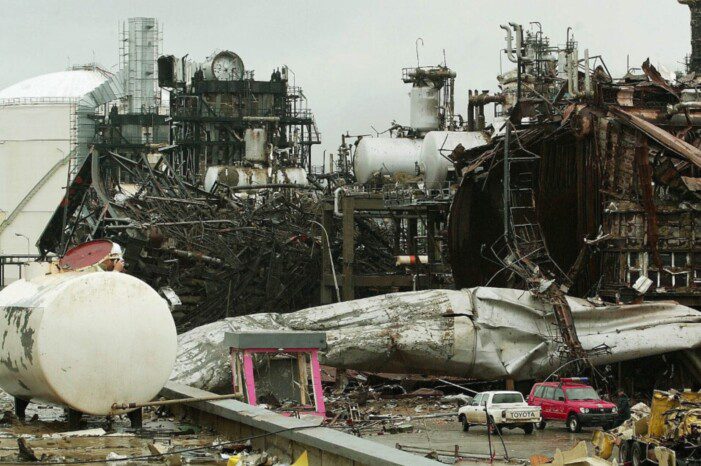
Lessons learned from LNG incidents
Learn about the importance of safety in LNG facilities by examining lessons from the 2004 Skikda LNG liquefaction facility explosion and the 1944 Cleveland Disaster.
Stay ahead in process safety and risk management
Get the latest trends in the field of process safety management straight to your inbox, and enhance your skills through knowledge sharing from industry experts.
Subsribe to our newsletter