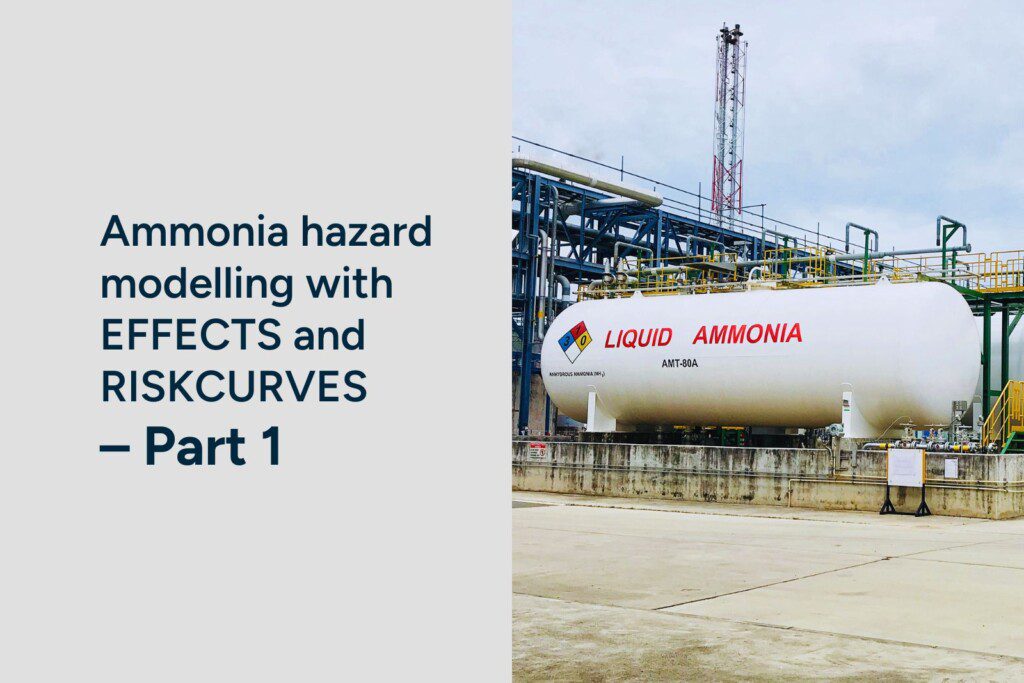
Welcome to the first episode in our series, “Ammonia Hazard Modelling with EFFECTS and RISKCURVES”.
In this episode, Viktoria Boháčiková, Technical Product Specialist, discusses why ammonia safety is critical. She provides an overview of ammonia’s traditional and emerging energy applications, briefly outlines its hazards related to its properties, and shares real-world accident examples that highlight the importance of proper risk management.
You can watch the episode below or read the full script if you prefer to explore the content in text format.
Video
Script
Hi, I’m Viktoria Boháčiková, Technical Product Specialist at Gexcon, and I would like to welcome you to our video series, “Ammonia Hazard Modelling with EFFECTS and RISKCURVES”.
Ammonia is not only essential in chemical production but is also gaining attention as a key player in the global energy transition. However, handling ammonia introduces complex safety challenges that demand careful management.
In this series, we’ll explore:
- why ammonia safety is critical,
- the key hazards it presents,
- what are the challenges in modelling these hazards, and
- how our tools EFFECTS and RISKCURVES can help you tackle these challenges effectively.
By the end, you’ll have a clear understanding of how these tools support safer ammonia operations.
Let’s start with today’s topic. Why is ammonia safety so important?
Ammonia is one of the most widely produced chemicals worldwide, with over 18 million tonnes stored and transported yearly. It’s a key component in fertilisers, plastics, textiles, explosives, and even household cleaning products.
But ammonia’s relevance extends far beyond these traditional uses. It’s now emerging as a key player in the global energy transition.
Ammonia is a valuable option for energy systems due to its storage flexibility. It can be stored in large amounts as a liquid under pressure, or at a refrigerated temperature of minus 33 degrees Celsius. Its established supply chains, originally built for fertiliser production, provide a solid foundation for scaling its use as an energy carrier.
In the global energy transition, ammonia serves two main roles.
First, it acts as a direct fuel. Ammonia can be burned in engines or used in fuel cells, emitting only water and nitrogen as byproducts. The maritime industry is leading the shift to using ammonia to replace heavy fuel oils in marine engines.
Second, ammonia functions as a hydrogen carrier. Hydrogen is essential for decarbonisation, but storing and transporting it can be costly and technically challenging, requiring either cryogenic tanks or high-pressure cylinders. Ammonia offers a practical solution with its higher energy density and the ability to be transported using existing infrastructure. This makes it an ideal option for long-distance hydrogen transport and regional distribution.
This dual role positions ammonia as a pivotal element in decarbonising global energy systems.
However, these opportunities come with significant safety challenges.
Ammonia is primarily a toxic substance. Even low levels of exposure can irritate the eyes and throat, while higher concentrations can cause serious health issues, burns or even death.
While ammonia is flammable, it only becomes a significant concern under very specific conditions, as its flammability requires a high ignition temperature and its narrow flammability range makes ignition less likely. By the time ammonia reaches ignition conditions, toxic exposure has often already led to fatalities.
Nonetheless, improper handling of ammonia can still result in catastrophic consequences, as past accidents demonstrate.
For example, in 1992, a tank failure in Dakar, Senegal, released 22 tonnes of ammonia, causing a dense, toxic cloud to spread. Tragically, this accident resulted in 129 fatalities and over 1000 injuries.
Another example occurred in 2002 when a train derailment in North Dakota released 240,000 gallons of ammonia, creating a toxic plume that led to one death, hundreds of injuries, and millions in damages.
These accidents highlight why ammonia safety can’t be taken lightly. Whether for industrial or new energy applications, managing ammonia-related risks is critical to protect people, the environment, and operations.
Thank you for watching. I hope this video has provided valuable insights into the importance of ammonia safety. Stay tuned for the next chapter, where we will dive into the unique hazards associated with ammonia. See you soon.
About the series
This series looks at the safety and modelling challenges involved in handling ammonia and demonstrates how safety professionals can use Gexcon’s consequence modelling tool EFFECTS and QRA tool RISKCURVES to manage these challenges.
You can access available episodes in this series using the links below.
- Part 1 – Why ammonia safety is critical
- Part 2 – Hazards associated with ammonia
- Part 3 – Ammonia hazard modelling challenges (coming soon)
- Part 4 – Ammonia hazard modelling with EFFECTS (coming soon)
- Part 5 – Ammonia risk assessment with RISKCURVES (coming soon)
Or visit our YouTube playlist.
Have questions about ammonia safety?
If you have any questions about ammonia safety or would like to learn more about ammonia hazard modelling, feel free to reach out to us at info@gexcon.com.

Interested in learning more about ammonia hazard modelling?
Watch a webinar to explore the challenges of accurately modelling ammonia releases and see how advanced tools can overcome them.
Related insights
Browse additional insights to deepen your understanding and stay informed on related topics.
Ammonia hazard modelling
Learn the basics of ammonia hazard modelling and how advanced modelling tools can help assess the risks and consequences of ammonia releases.
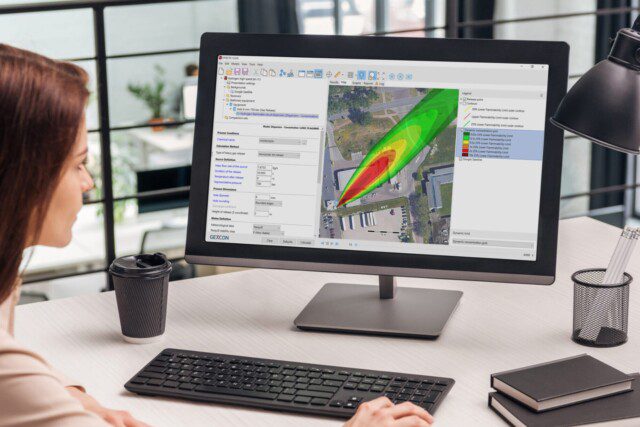
Advanced dispersion modelling to support safe energy transition with EFFECTS
Learn about the latest advancements in EFFECTS software’s dispersion modelling and the practical applications in supporting safe energy transition.
Ammonia hazards
Get an overview of what makes ammonia unique, its dispersion behaviour in different forms, the hazards linked to its properties, and potential LoC events.
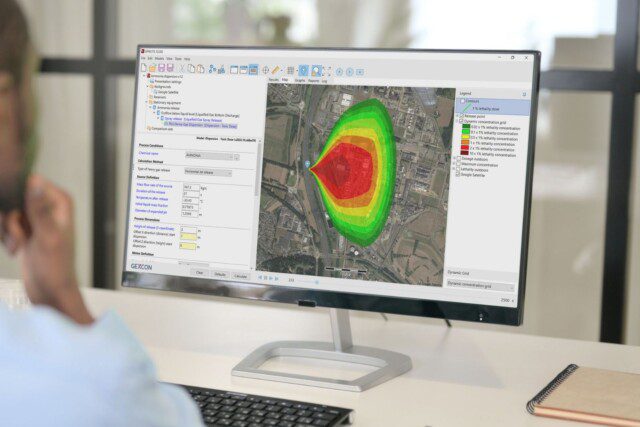
How to simulate ammonia releases
Learn how to simulate ammonia releases using EFFECTS to assess dispersion, toxicity, and support safer design and emergency planning.
How to model toxic dispersions in EFFECTS
Find out how to model the consequences of atmospheric dispersion for an accidental toxic release with EFFECTS consequence modelling software.
Ammonia Risk Assessments – How advanced consequence modelling can improve safety management
Advanced consequence modelling supports ammonia risk assessments and helps improve safety in storage, transport, and use.
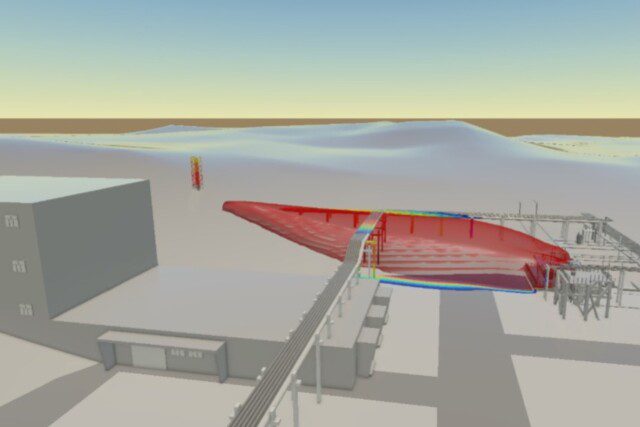
A comparative study: Various modeling approaches for accidental release of ammonia
Find out how different modelling approaches assess ammonia release scenarios and support better risk management decisions.
Stay ahead in process safety and risk management
Get the latest trends in the field of process safety management straight to your inbox, and enhance your skills through knowledge sharing from industry experts.
Subsribe to our newsletter