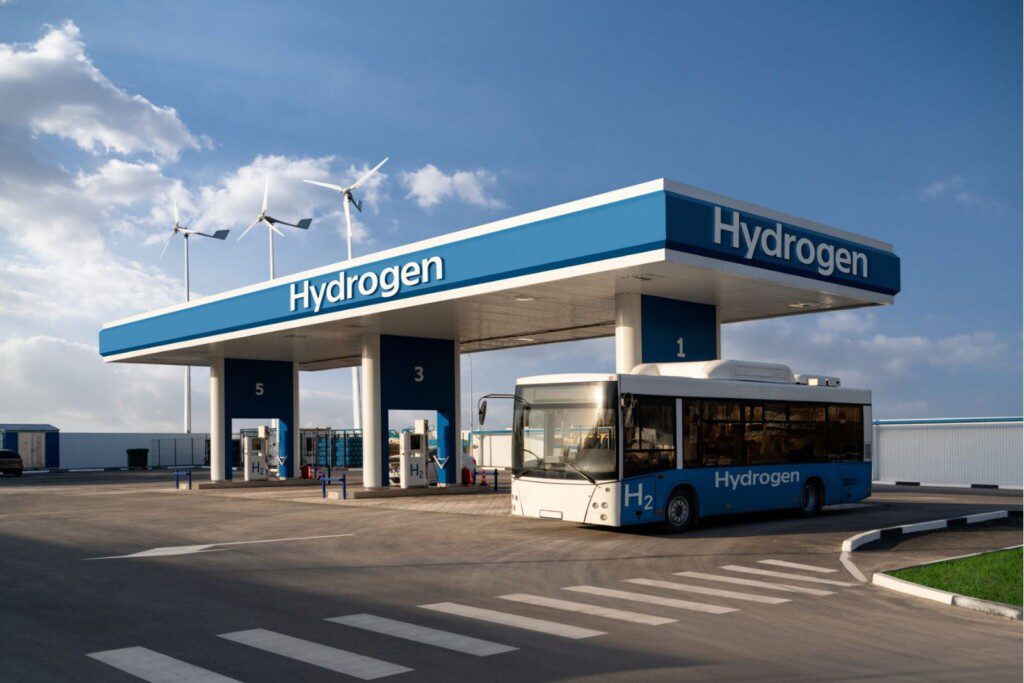
Hydrogen is emerging as a key player in the global energy transition, offering a clean and versatile energy carrier with the potential to decarbonise various sectors. As we shift towards a more sustainable energy landscape, the safe storage of hydrogen cannot be overstated.
Hydrogen storage technologies are crucial for the efficient utilisation and distribution of this valuable resource. However, they also come with inherent risks, including flammability, cryogenic hazards, and high-pressure concerns.
These risks are particularly significant in urban settings, where proximity to dense populations increases the potential impact of these risks on human lives. Therefore, ensuring the safety of hydrogen storage in these areas is critical to protect the community and prevent potentially devastating events.
This article discusses how safety professionals can assess risks associated with hydrogen storage in urban settings using RISKCURVES, a comprehensive Quantitative Risk Assessment (QRA) tool. The blog primarily focuses on calculating Societal Risk, a crucial metric for evaluating risk acceptability, particularly relevant for the risk assessment of densely populated areas.
Risk and safety concerns when storing hydrogen
Hydrogen, while offering significant benefits as a clean energy carrier, poses safety challenges due to its chemical and physical properties. This makes storing hydrogen presents unique challenges that necessitate careful safety measures.
The primary risks associated with hydrogen storage include the following points:
- Ability to ignite easily
- Dangers posed by high-pressure and low-temperature storage conditions
- Potential to penetrate small gaps or porous materials due to its small molecular size
- Possibility of a flammable hydrogen cloud being trapped under rooftops or surrounding structures due to its buoyant nature
- Risk of embrittlement in certain materials, such as metals, leading to cracking or failure of containment systems
Addressing these risks is critical for advancing hydrogen energy systems safely and effectively. Given the complexities of hydrogen properties and storage technologies, comprehensive safety assessments are essential.
These evaluations help identify potential safety hazards and the likelihood of their occurrence for the development of targeted strategies to mitigate them.
Hydrogen storage risk assessment using Societal Risk metric
Understanding the risks and safety considerations associated with hydrogen storage is crucial for implementing effective safety measures. This includes conducting a QRA, which factors in various risk metrics.
For scenarios that include urban settings, Societal Risk is a particularly essential metric, as it represents the yearly cumulative probability that more than 1 person will be killed due to their exposure to an accidental chemical release. Societal risk is typically represented by an fN curve where “f” stands for frequency (per year) and “N” for the number of fatalities (Figure 1).
This metric is vital for enhancing public safety and fostering acceptance of hydrogen technologies as the potential hazards of hydrogen storage can greatly impact community health, safety and the environment.

To efficiently calculate Societal Risk, a risk modelling tool like RISKCURVES is valuable. Not only providing a more accurate calculation, RISKCURVES also feature Societal Risk maps which are only available in this software.
These maps offer a straightforward geographical representation of risk, which can aid in clearer communication between technical and non-technical stakeholders and pinpoint critical areas of concern.
Read more about Societal Risk maps as a clear geographical representation of risk
Learn moreAnalysing Societal Risk of a hydrogen storage technology in urban settings in RISKCURVES
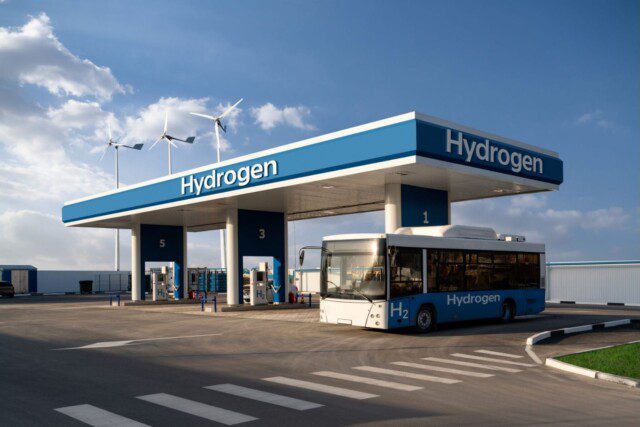
In a previous blog post, we discussed modelling the possible outcomes of hydrogen storage, focusing on refuelling stations and electrolysis processes. Since electrolysis usually happens away from residential areas, this new blog turns its attention to examining the societal dangers linked with storing hydrogen in urban settings, such as at refuelling stations, which could affect nearby populations.
Scenario definition
Similar to traditional filling stations for fossil fuels, hydrogen filling stations comprise key components including delivery installations, storage facilities, and fuel supply facilities equipped with necessary piping and hoses.
In this example, we illustrate potential scenarios that may arise from storing hydrogen at refuelling stations within urban areas.
Scenario 1 presents 350 l cylinders on a tube trailer, storing hydrogen at a pressure of 500 bar. This scenario depicts damage to a valve on one of the cylinders mounted on a tube trailer during hydrogen loading operations which can lead to:
- Ignition of suddenly released gas resulting in a Jet Fire directed towards adjacent cylinders. 1
- Congested flammable cloud formation under the rooftop of the refuelling station and delayed ignition resulting in a Vapour Cloud Explosion. Due to exceptionally low ignition energy of hydrogen, this scenario is less likely to occur than a Jet Fire. However, if the flammable cloud is confined, its high laminar burning velocity would result in a strong blast. 2
Subsequently the high-intensity heat from Jet Fire swiftly damages the fuel reloading dispenser connectors and compromises the structural integrity of another cylinder resulting in explosion and a Fireball.
Scenario 2 showcases a hydrogen leaking from a 300 l storage cylinder hydrogen under 950 bar pressure due to an insufficiently tightened valve, resulting in an explosion that caused a fire in the installation and damage in the surrounding area.
Societal Risk calculation results
Gexcon’s risk modelling tool RISKCURVES was employed to conduct a QRA using Societal Risk as a metric for the aforementioned scenarios.
RISKCURVES presents Societal Risk data in the form of an fN curve graph per scenario or as an aggregate total risk encompassing all scenarios. This facilitates a thorough evaluation of the acceptability of risks arising from simulated scenarios, as depicted in Figure 2.
The guide value (the black line in Figure 2), which indicates the acceptable number of fatalities for different frequencies each year, can be tailored to align with the legislation of the respective country.
In the example as shown in Figure 2, the Societal Risk (fN curve in red) is below the guide value, therefore the risk level is acceptable.

In addition to the graphical depiction of Societal Risk, the risk ranking report provides detailed insights into each scenario’s contribution as a percentage of the total risk. This ranking orders the scenarios based on their respective contributions to the cumulative risk of all included scenarios, which collectively sum up to 100%.
Additionally, the report includes the corresponding risk values for each scenario (Figure 3). This insightful overview systematically arranges scenarios based on their severity, prioritising from the most significant contributor to the least.
In this example, the Vapour Cloud Explosion shows the highest contribution to risk compared to other Loss of Containment events, which indicates it should be given the highest priority when planning for safety measures.

However, it may be advantageous to examine the scenarios individually or according to specific characteristics, allowing for a comparative analysis of various situations from a Societal Risk perspective (Figure 4). By aggregating scenarios into customised sets, they can be effectively compared, offering valuable insights for decision-making processes.
This approach can aid in informed decisions regarding the integration or expansion of a hydrogen refuelling station within urban areas, or the development of urban areas where such stations are already operational.

Additional risk metrics in RISKCURVES for a comprehensive risk assessment
RISKCURVES offers insights beyond just Societal Risk. The software also provides data on IR (Individual Risk), IRPA (Individual Risk Per Annum) and Consequence Risk relative to a defined threshold value.
This information is not just presented through grid displays on a map, enabling stakeholders to determine the need for prevention and mitigation measures based on location-specific risk levels.
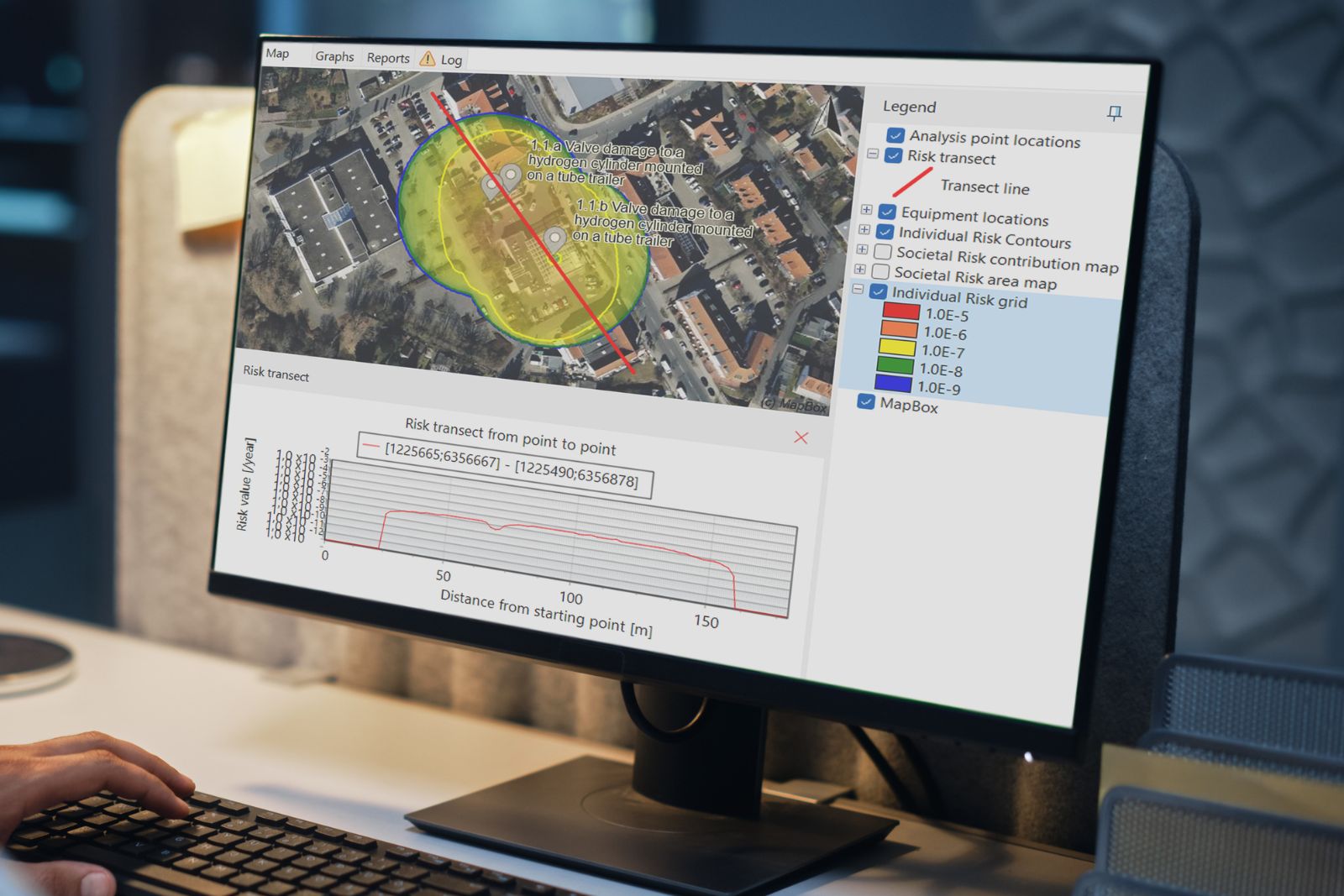
Individual Risk can also be visualised as a Risk Transect, illustrating how Individual Risk changes with distance. This facilitates straightforward comparisons to assess changes resulting from alternations in industrial layout, production rates, safety measures, etc. (refer to Figure 5).

Conclusion
In conclusion, the growing prominence of hydrogen in the global energy transition underscores its potential as a clean and versatile energy carrier. However, ensuring its safe storage is imperative as we navigate towards a more sustainable energy landscape.
Despite the promise of hydrogen storage technologies in facilitating efficient distribution and utilisation, they also pose inherent risks, including hydrogen’s flammability (e.g., wide flammability range, low ignition energy, etc.), high diffusivity, low storage temperatures and high-pressure concerns.
Quantifying Societal Risk associated with hydrogen storage is paramount for informed decision-making. By employing tools like RISKCURVES, we can comprehensively assess the potential risks and their societal implications.
The graphical representations of risk provided by fN curves and risk ranking reports offer valuable insights into the acceptability of risks and aid in prioritising mitigation strategies.
With a nuanced understanding of these risks, stakeholders can make informed decisions to promote the safe integration of hydrogen storage facilities within urban environments, thereby advancing sustainable energy initiatives while prioritising public safety.
References
1. RIVM (2023) Calculation method for calculating the risks associated with the transport of compressed gases and cryogenic gases. Available at: Link
2. NIPV (2023) Hydrogen filling station – Leak in buffer storage gas cloud explosion. Available at: Link
Would you like to see this example in action?
Download our project file to observe the Societal Risk for Hydrogen storage using RISKCURVES.
This project file can be accessed using the RISKCURVES software or its free viewing demo.
Authors

Viktoria Bohacikova
Technical Product Specialist at Gexcon

Sonia Ruiz Pérez
Product Manager at Gexcon
Related insights
Browse additional insights to deepen your understanding and stay informed on related topics.
Liquid hydrogen safety considerations
Essential safety considerations for liquid hydrogen: key hazards, risk controls and best practices for safe handling and storage.
Lessons learnt from hydrogen incidents
Real-world hydrogen incident cases, their key lessons and practical safety improvements for safer hydrogen use.
Hydrogen storage safety in urban settings: Analysing Societal Risk using RISKCURVES
This article primarily focuses on calculating Societal Risk, a crucial metric for evaluating risk acceptability, particularly relevant for the risk assessment of densely populated areas.
Comparison of FLACS simulations with SOTRA tests
This presentation discusses the comparison between FLACS simulations and medium-scale hydrogen dispersion and explosion tests.
Risk analysis for hydrogen refuelling stations
Learn how to analyse potential risk scenarios at hydrogen refuelling stations using RISKCURVES QRA software to streamline your projects.
Risk assessment of hydrogen in nuclear facilities
See how FLACS CFD tool helps simulate hydrogen hazards in nuclear facilities and support safer design through detailed consequence analysis.
Stay ahead in process safety and risk management
Get the latest trends in the field of process safety management straight to your inbox, and enhance your skills through knowledge sharing from industry experts.
Subsribe to our newsletter