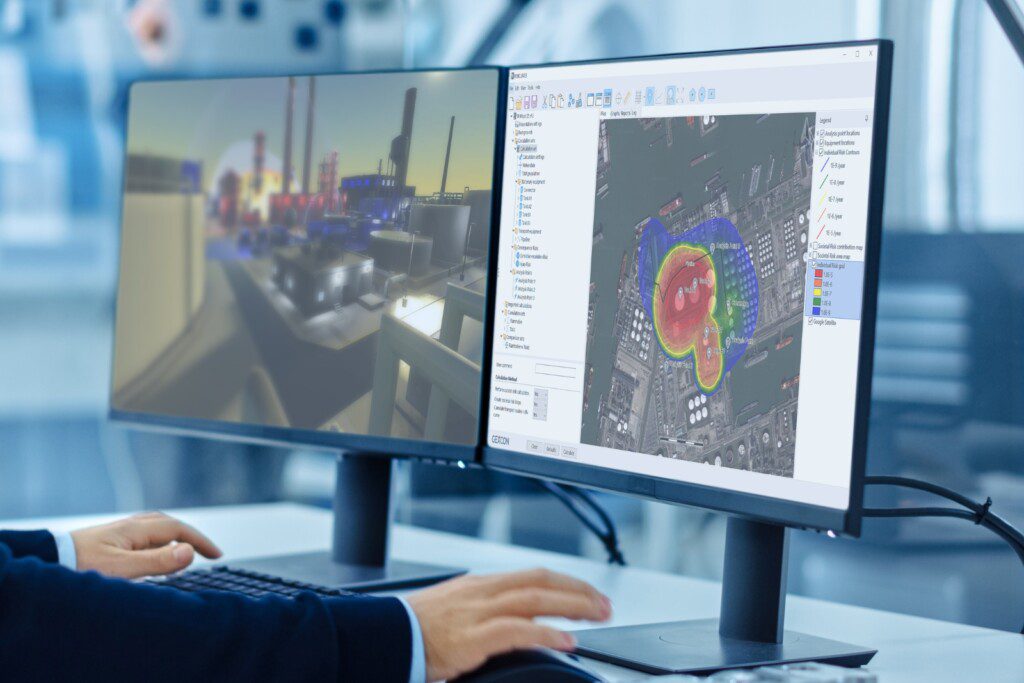
About the webinar
Quantitative Risk Assessment (QRA) has traditionally relied on integral models to estimate consequence and frequency data at scale. These tools provide speed and consistency but can under-represent complex physical behaviour in specific scenarios.
CFD offers higher fidelity but at the cost of time, expertise, and computational resources. Increasingly, the safety community is exploring hybrid approaches — using both model types selectively across a study — to balance efficiency with accuracy.
This webinar presents a structured case study showing how integral models (EFFECTS) and CFD (FLACS) can be combined in a practical QRA workflow. We will walk through the full lifecycle of a study:
- Scenario definition and screening
- Use of EFFECTS for broad consequence estimation
- Application of FLACS to key high-consequence cases
- Integration into risk contouring and decision-making
The session will cover technical and operational considerations, including consistency of inputs, validation strategies, and communication of results to stakeholders. We will also reflect on regulatory expectations and the trade-offs between speed, accuracy, and transparency.
This session is aimed at decision-makers, technical authorities, and risk professionals involved in managing safety in high-hazard industries. It will be of interest to those looking to improve confidence in safety-related decisions and better align modelling depth with business priorities.
What you will learn
- How to combine integral models and CFD effectively in a QRA study to improve both speed and accuracy.
- A structured case study demonstrating how integral models (EFFECTS) and CFD (FLACS) can be combined in a practical QRA workflow, covering the full lifecycle of a study.
- When to apply high-fidelity CFD to selected cases without slowing down the whole assessment.
- Ways to ensure consistent inputs, transparent validation, and clear communication of results.
Meet the speakers

Chris Coffey is an expert in technical and process safety, leading Gexcon’s product management efforts across its software portfolio. With close to 20 years of experience, Chris specialises in using advanced mathematical and computational models to solve complex safety challenges, including ventilation, gas and dust explosions, and hazardous dispersion scenarios.
Chris holds a PhD in Fluid Dynamics from Imperial College London and an honours degree in Mathematics with Theoretical Physics from University College London. He is also a Chartered Mathematician and has an MBA from the Open University. His career spans academia, defence, and industry, where he has applied his expertise to enhance safety in high-hazard sectors.
In his current role, Chris drives product strategy with a focus on addressing critical safety needs, aligning technological innovation with industry requirements, and ensuring operational safety improvements for clients worldwide.
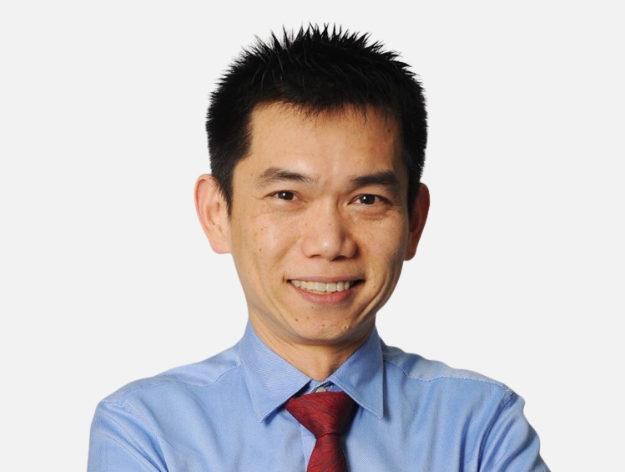
Lee has about 26 years of working experience in consultancy related to risk management, HSE and sustainability. Lee has stationed in various locations in the Asia Pacific region (e.g. China, Singapore, Hong Kong and Malaysia etc.), and managed consultancy business throughout Asia Pacific (including but not limited to Japan, South Korea, Vietnam, Thailand, Brunei, Indonesia, Taiwan and Australia etc.).
Lee is the risk expert in the region; he supports the authorities and energy companies, etc., in Asia Pacific with respect to practical risk solutions and effective risk management. In this process, he always makes use of advanced concepts to achieve better engineering design and operational performance.
Currently, Lee is the General Manager of Gexcon Malaysia cum the Business Development for Asia Pacific. Before that, Lee was the Chief Technology Officer (CTO) of DNV Sustainability Excellence Center (2021) and a global partner in ERM and led the safety consultancy business in China and North Asia (2017-2021). Lee was the Head of Department for Safety & Risk Management Advisory for DNV GL Oil & Gas in China. He was also the founder of DNV’s Safety & Risk Management business in China, and built up the consultancy business (2002-2016).
In 2014-2015, Lee led a team in performing safety management assessment (including Process Safety Management) on four selected refineries in China, and received high recognition from the Chinese National Authority (SAWS) and NOCs in China. From 2009-2012, he was engaged by Singapore governmental agencies as the internal consultant with respect to Process Safety Management. From 2023-2025, Lee become an expert member in the Singapore standard committee, contributing to the development of national Hydrogen technical standards in Singapore.
Download webinar recording
Please fill in the form below to access the webinar recording.
Related insights
Browse additional insights to deepen your understanding and stay informed on related topics.
CO2 risk assessment with RISKCURVES
This final episode explains how RISKCURVES QRA software complements EFFECTS consequence modelling tool in analysing the risk of CO2 transport for CCUS projects.
Modelling CO2 releases in CCUS with EFFECTS
This white paper explores how EFFECTS consequence modelling software supports safety engineers, risk analysts, and project managers in modelling CO2 release scenarios.
Ammonia hazard modelling
Learn the basics of ammonia hazard modelling and how advanced modelling tools can help assess the risks and consequences of ammonia releases.
CO2 hazard modelling with EFFECTS
The fourth episode explains how the EFFECTS consequence modelling software helps address the CO2 hazard modelling challenges.
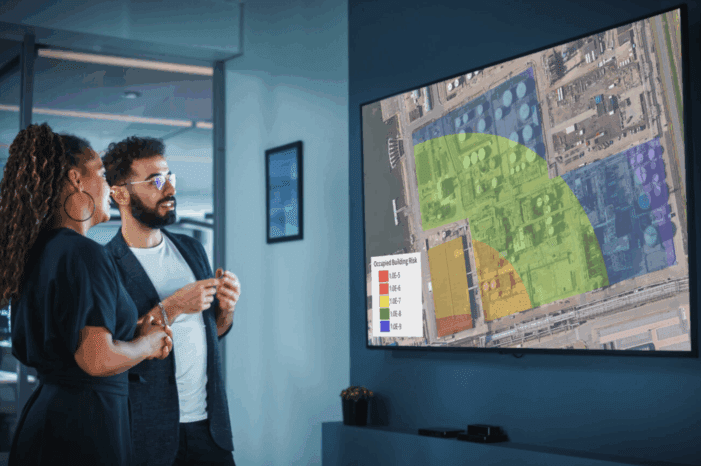
Optimising gas detection layout using CFD
Learn how CFD technology can optimise gas detection layouts to improve safety and achieve cost savings over time

How to improve QRA results with a hybrid approach using CFD and Integral methods
Learn how to apply a QRA hybrid approach using CFD and integral modelling methods to balance accuracy, speed, and transparency in risk assessments.
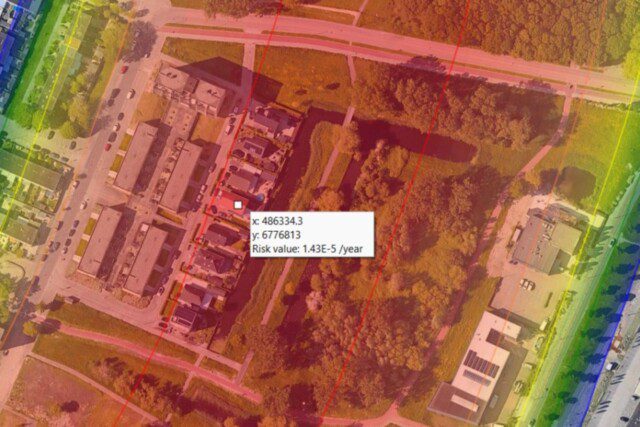
CCS risk assessment: Analysing IRPA and LSIR for pipelines transporting CO2
Analysing risks with RISKCURVES for buried pipelines transporting CO2, focusing on Individual Risk criteria LSIR and IRPA.
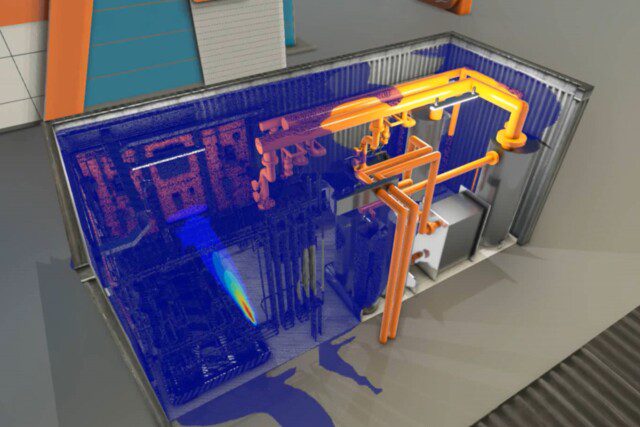

What’s new with FLACS 25.1
This webinar demonstrates how the updates in FLACS 25.1, including the Multiscenario feature, can streamline your assessment workflow and support better decision-making.
Stay ahead in process safety and risk management
Get the latest trends in the field of process safety management straight to your inbox, and enhance your skills through knowledge sharing from industry experts.
Subscribe to our newsletter