Skip to content

Main Navigation

Gexcon
search
  • Solutions
    • By Application
          • Project Stages
            • Feasibility
            • Front-End Engineering Design (FEED) 
            • Construction
            • Operation
            • Modification
            • Decommissioning
          • Areas of Study
            • Process Hazard Analysis (PHA)
            • Risk Evaluation and Quantification
            • Process Safety and Operational Assurance
            • Consequence and Impact Modelling
            • Advanced Analysis and Engineering Support
            • Dust Hazards
            • Incident Investigation
            • Fire and Explosion Testing
          • Hazardous Material
            • Hydrogen
            • Liquefied Natural Gas (LNG)
            • Ammonia
            • Carbon Dioxide (CO₂) / CCUS
            • Battery Energy Storage
            • Combustible Dust
            • Flammable Liquids and Gases
            • Toxic Chemicals
          • Industrial & Facilities
            • Oil and Gas
            • LNG Terminals and Processing Plants
            • Hydrogen Production and Storage
            • CCUS Infrastructure
            • Power and Energy
            • Nuclear
            • Aviation
            • Manufacturing and Chemical Processing
            • Pharmaceuticals and Fine Chemicals
            • Offshore and Marine
            • Transportation and Logistics
    • Software
          • X-Suite Software Solution
          • FLACS
            • Overview
            • Features & Benefits
            • Simulation Modules
            • Use Cases
            • Case Studies
            • Latest Version
            • User Group
            • Customer Support
            • Contact
          • EFFECTS
            • Overview
            • Features & Benefits
            • Use Cases
            • Case Studies
            • Latest Version
            • Customer Support
            • Contact
          • RISKCURVES
            • Overview
            • Features & Benefits
            • Use Cases
            • Case Studies
            • Latest Version
            • Customer Support
            • Contact
          • Shell Software
          • FRED
          • Shepherd
          • PIPA
          • Customer Support
    • Consulting
          • Process Hazard Analysis (PHA)
            • Hazard Identification (HAZID)
            • Hazard and Operability (HAZOP)
            • Control Systems HAZOP (CHAZOP)
            • What-if Analysis
            • Failure Mode and Effects Analysis (FMEA)
            • Fault Tree Analysis (FTA)
          • Risk Evaluation and Quantification
            • BowTie Analysis
            • Layer of Protection Analysis (LOPA)
            • Quantitative Risk Assessment (QRA)
            • Explosion Risk Analysis (ERA)
            • Fire Risk Analysis
            • Emergency and Escape Route Impairment
          • Process Safety and Operational Assurance
            • Pre-Start Up Safety Reviews (PSSR)
            • Hazardous Area Classification (HAC)
            • Facility Siting
            • Regulatory and Industry Standard Compliance Audits
            • Structural Response and Integrity Analysis
            • Emergency Response Planning
            • Safety Training and Competency Development
          • Consequence and Impact Modelling
            • Release of Flammable Gas and Liquids
            • Fire, Smoke, and Heat Loading
            • Explosion and Impact Modelling
            • Toxic Gases, Pollution, and Working Environment
            • Air Quality Impact Assessment
          • Advanced Analysis and Engineering Support
            • Fire and Gas Detector Layout Optimisation
            • HVAC System Design Optimisation
            • Facility Layout Optimisation and Verification
            • Mitigation and Safety Optimisation Analysis
          • COMAH/SEVESO Compliance
          • DSEAR Compliance
          • ATEX Compliance
          • Dust Hazards
    • Incident Investigation
          • Capabilities
            • Incident Site Management
            • Evidence Collection and Inspection
            • In-situ Testing
            • Root Cause Analysis
            • Advanced Incident Reconstruction
            • Expert Witness
          • Expertise
            • Fire Cause and Origin
            • Gas Explosion
            • Dust Explosion
            • Vehicle and Heavy Machinery Fire
            • LNG
            • Hydrogen
            • Carbon Monoxide Exposure
            • Chemical Release and Exposure
            • Runaway Reaction
            • Battery and Energy Storage
            • HVAC System and Appliance Failure
          • Experts
            • Scott G. Davis, Ph.D., P.E., CFEI
            • John Pagliaro, Ph.D., P.E., CFEI
            • Tom DeBold, P.E., IAAI-CFI, CFEI
    • Fire and Explosion Testing
          • Testing Facilities
          • ATEX Product Testing and Compliance Services
          • Gas, Vapour, and Liquid Flammability Testing
          • Passive Fire Protection Equipment and Systems Testing
          • Customised Fire and Explosion Testing
          • Combustible Dust Testing
            • Explosibility Screening Test (Yes/No)
            • Minimum Ignition Energy (MIE) of Dust Cloud Test
            • Minimum Ignition Temperature (MIT) of Dust Cloud Test
            • Minimum Ignition Temperature (MIT) of Dust Layer Test
            • Explosion Severity Test (Pmax, dP/dt, KST)
            • Lower Explosion Limit Test (LEL, MEC)
            • Limiting Oxygen Concentration (LOC)
            • Burning Behaviour
            • Dust / Powder Resistivity Test
            • Hot Storage Test in Wire Baskets (Self-Ignition Temperature)
            • Electrostatic Hazard Tests
            • UN Transportation Tests (UN Class 4)
  • Training
    • Courses
    • Tailored Training
  • Resources
    • All Resources
    • Blog
    • News
    • Case studies
    • White Papers
    • Past Webinars
    • Events
    • Publications
    • eBooks
    • Knowledge Base
  • About
    • Who we are
    • Our History
    • Partnerships
    • Testimonials
    • Our global reach
    • Meet the team
    • QHSE Policy
    • ESG Risk Management
    • Research Projects
    • Careers
  • Get in touch
search

Advanced Analysis and Engineering Support Past Webinars

  • All
  • Blog
  • News
  • Case Studies
  • White Papers
  • Past Webinars
  • All
  • Industries and facilities
    • Aviation
    • CCUS Infrastructure
    • Hydrogen Production & Storage
    • LNG Terminals & Processing Plants
    • Manufacturing & Chemical Processing
    • Nuclear
    • Offshore & Marine
    • Oil & Gas
    • Pharmaceuticals & Fine Chemicals
    • Power & Energy
    • Transportation & Logistics
  • Specialist Domains
    • Advanced Analysis and Engineering Support
    • Consequence and Impact Modelling
    • Dust Hazards
    • EFFECTS
    • Fire & Explosion Testing
    • FLACS
    • Incident Investigation
    • Process Hazard Analysis
    • Process Safety and Operational Assurance
    • Risk Evaluation and Quantification
    • RISKCURVES
    • Shell software
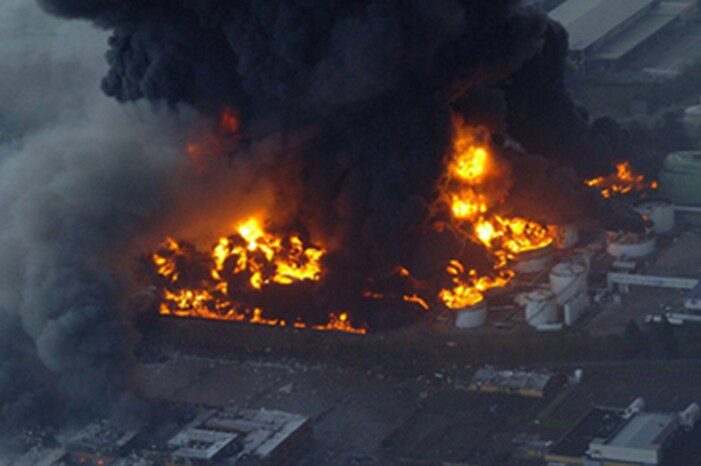
The Buncefield explosion was one of the most intense accidental explosions in recent times, the overpressures generated by this event had never been seen in such circumstances. This event triggered a lengthy investigation into the explosion mechanism and subsequently led to significant advancements in knowledge on the topic. However, many research papers documenting turbulence with small diameters were available prior to Buncefield and therefore, the advancements were perhaps in awareness rather than knowledge. Buncefield highlights the issues of relying solely on past history to define future events and also demonstrates that small changes in layout can have a significant impact on consequences. This webinar session discusses the current techniques applied in the predictive aspects of COMAH and the limitations associated with these widely used methods. We aim to provide a better understanding of when and where advanced modelling techniques should be applied and demonstrate the significance of this, not only in terms of consequence assessment but also with regard to safer facility design and emergency response.
Past Webinar

Buncefield – 15 years on: Advancements in the Predictive Aspects of COMAH

Learn how advanced modelling techniques improve COMAH predictions, facility design, and emergency response in light of the Buncefield event.
Read More
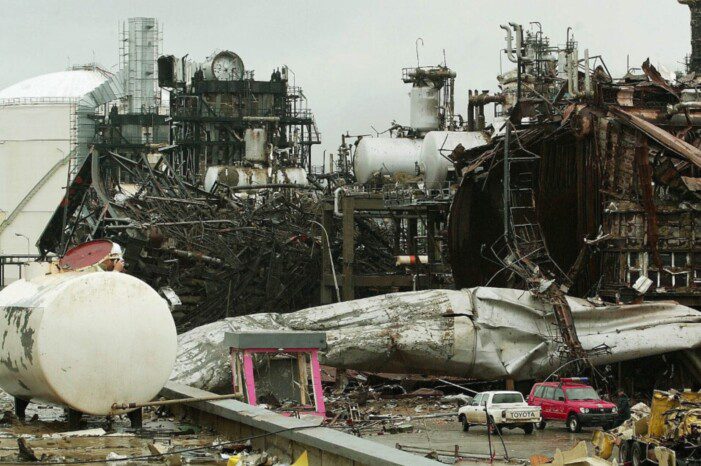
A large vapor cloud explosion (VCE) followed by a fire is one of the most devastating and high consequence events that can occur at LNG facilities. Past incidents have helped us to learn how to better manage safety and this knowledge has partially been crystallized as part of the creation of codes and standards that regulate the design and operation of LNG facilities. However, it is also important to ensure that there is a shared understanding of the root causes of these incidents among engineers and safety professionals so that we can help to prevent future incidents. In this session, Dr Scott Davis, the CEO and Principal Engineer at Gexcon US reviews recent events in the industry, associated statistics, and some key lessons learned. The session focuses on examining case studies for two incidents that have significantly impacted the LNG industry: the massive 2004 explosion at the Skikda LNG Liquefaction Facility and the 1944 Cleveland Disaster.
Past Webinar

Lessons learned from LNG incidents

Learn about the importance of safety in LNG facilities by examining lessons from the 2004 Skikda LNG liquefaction facility explosion and the 1944 Cleveland Disaster.

Read More

Posts navigation

  • «
  • 1
  • 2
Home / Specialist Domains / Advanced Analysis and Engineering Support / Page 2
Gexcon
Connect with us
Europe
  • Norway
  • Germany
  • United Kingdom
  • Netherlands
  • France
  • Sweden
The Americas
  • United States
Asia Pacific
  • Australia
  • China
  • India
  • Indonesia
  • Malaysia
  • Singapore
E-Newsletter
Sign-Up
© 2026 Gexcon AS. All rights reserved.
  • [wcc_preference_button]
  • Terms of Use
  • Legal
  • Disclaimer
  • Privacy Policy
  • Cookie Policy
  • Website by ICG