Welcome to the second episode in our series on “CO2 hazard modelling with EFFECTS and RISKCURVES for CCUS pipeline transportation”.
In this second episode, Sonia Ruiz Pérez, Product Manager of EFFECTS and RISKCURVES, discusses the key safety concerns related to CO2 pipeline transportation.
Watch the second episode below, or read the full script if you prefer to review the content in text form.
Video
Script
Hello, everyone. I’m Sonia Ruiz Pérez, Product Manager of EFFECTS and RISKCURVES, and I’m thrilled to continue exploring this important topic with you.
Today, I would like to welcome you to the second part of our video series, CO2 Hazard Modelling with EFFECTS and RISKCURVES for CCUS Pipeline Transportation.
In the previous video, we discussed why it’s essential to address the safety of CO2 pipeline transportation in CCUS applications.
Today, we will dive deeper into the key safety concerns, starting with carbon dioxide’s fundamental properties and how they influence the risks associated with pipeline transportation.
Let’s start with the properties.
- CO2 is a colourless and odourless gas that is naturally present in the atmosphere, making up about 0.04 percent of the Earth’s atmosphere.
- It is a byproduct of processes like respiration, combustion, and other natural and industrial processes.
- Depending on pressure and temperature, CO2 can exist in four different physical states. First, we have gas at normal atmospheric pressure and temperature, liquid under high pressure, as a supercritical fluid at pressures above 74 bar and temperatures above 31 °C, where it behaves as both gas and liquid. Finally, CO2 can also exist as a solid at very low temperatures, forming what we commonly know as dry ice.
- What makes CO2 unique and also potentially hazardous is its density. It is 1.5 times heavier than air when released in its liquefied or supercritical form. This means CO2 behaves as a heavy gas spreading close to the ground and accumulating in low-lying areas or confined spaces. This behaviour poses significant risks in both the open areas where large releases can form extensive clouds, and enclosed or poorly ventilated environments where accumulation can quickly reach hazardous toxic concentrations.
- In addition to its density, CO2 has some other characteristics that create safety concerns. When dissolved in water, CO2 forms carbonic acid, which can corrode pipelines, valves, and other industrial equipment, increasing the risk of leaks and structural failure over time.
- While CO2 is non-flammable and often used in fire extinguishers, its classification as non-toxic can be misleading. At high concentrations, CO2 displaces oxygen, creating an asphyxiation hazard with symptoms such as dizziness, unconsciousness, and in extreme cases, death.
Now let’s focus on pipeline-specific hazards.
Pipelines transporting CO2 are typically designed to handle this chemical in its dense phase, either as a pressurised liquefied gas or a supercritical fluid at pressures exceeding 100 bar.
While this compression improves transportation efficiency, it also introduces unique hazards.
- First, pipelines transporting highly pressurised CO2 pose a risk to infrastructure due to the potential for ruptures. That is because a rupture can cause a rapid release of pressurised CO2. For buried pipelines, on the other hand, the escaping two-phase flow can displace soil, creating a crater. This soil displacement may expose nearby pipelines to structural damage, increasing the risk of a domino effect with cascading failures.
- CO2 can also pose health hazards. For instance, when CO2 is released, this rapid expansion of dense phase CO2 causes it to cool into a mix of gas with solid dry ice, creating a cold vapour cloud. Exposure to this cloud can lead to frostbite, cold burns, or even lung damage if inhaled. Prolonged exposure to CO2 concentrations above 0.5 percent in volume, which is the OSHA permissible exposure limit, can result in symptoms such as headaches, dizziness, and nausea. At concentrations around 4 percent in volume, CO2 becomes immediately dangerous to life and health, which is a concentration typically known as IDLH concentration.
- CO2 can also present environmental hazards, as CO2 leaks can undermine the environmental benefits of CCUS by introducing risks to ecosystems. High concentrations of CO2 can displace oxygen, creating asphyxiation risks for wildlife. It can dissolve in water forming carbon acid, which can contaminate aquatic ecosystems and absorb into soil harming vegetation and disrupting local ecosystems.
Managing these risks is critical for the safe implementation of CCUS technology.
Understanding these hazards is the first step in mitigating them and ensuring the safety of people, assets, and the environment.
One of the most effective ways to address and reduce these hazards is through hazard modelling.
By simulating different release scenarios, we can predict how CO2 behaves under various conditions and assess the associated risks.
In our next video, I will introduce you to the challenges of modelling CO2 hazards.
For now, thank you very much for watching and I’ll see you in the next video.
About the series
This series explores the safety and modelling challenges of transporting carbon dioxide (CO2) through pipelines in CCUS technology and showcases how safety professionals can use EFFECTS and RISKCURVES software tools to address these challenges.
You can access the available episodes below:
- Part 3 – CO2 hazard modelling challenges
- Part 4 – CO2 hazard modelling with EFFECTS
- Part 5 – CO2 risk assessment with RISKCURVES
Have questions about CO2 safety?
If you have any questions about CO2 safety or would like to learn more about CO2 hazard modelling, feel free to reach out to us via email at info@gexcon.com.
Interested in learning about CO2 hazard modelling?
Watch our webinar to explore the challenges of accurately modelling CO2 releases and see how advanced tools can overcome them.
Related insights
Browse additional insights to deepen your understanding and stay informed on related topics.
CO2 hazard modelling challenges
This third episode discusses the challenges in modelling CO2 releases, including its multiphase nature, the impact of craters when pipelines are buried, dense gas behaviour, and more.
CO2 hazard modelling with EFFECTS
The fourth episode explains how the EFFECTS consequence modelling software helps address the CO2 hazard modelling challenges.

Modelling CO2 releases in CCUS with EFFECTS
This white paper explores how EFFECTS consequence modelling software supports safety engineers, risk analysts, and project managers in modelling CO2 release scenarios.
CO2 risk assessment with RISKCURVES
This final episode explains how RISKCURVES QRA software complements EFFECTS consequence modelling tool in analysing the risk of CO2 transport for CCUS projects.
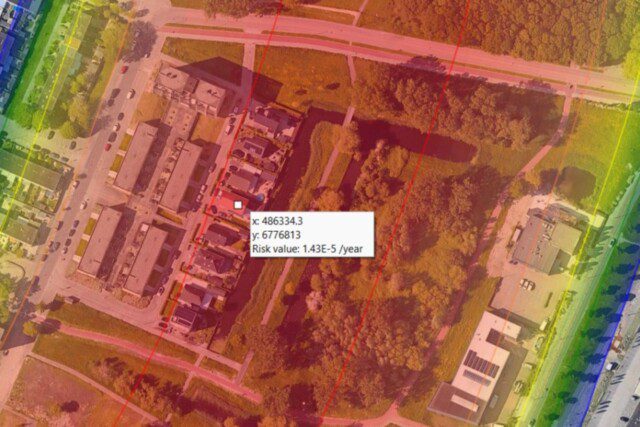
CCS risk assessment: Analysing IRPA and LSIR for pipelines transporting CO2
Analysing risks with RISKCURVES for buried pipelines transporting CO2, focusing on Individual Risk criteria LSIR and IRPA.
CO2 hazard modelling
This webinar discusses CO2 hazard modelling and demonstrates how advanced tools can be used to accurately assess and mitigate CO2 risks.

Hazardous Area Classification in Carbon Capture, Utilisation, and Storage (CCUS)
Learn how hazardous area classification (HAC) zoning and risk assessments support safety in CCUS infrastructure.
CO2 hazards in Carbon Capture, Utilisation, and Storage (CCUS)
An overview of the key safety concerns related to CO2 in CCUS technology, examples of accidents involving large CO2 releases, and safety measures.
Hazards associated with CO2 pipeline transportation
This episode discusses the fundamental properties of CO2 and the hazards associated with CO2 pipeline transportation.
Stay ahead in process safety and risk management
Get the latest trends in the field of process safety management straight to your inbox, and enhance your skills through knowledge sharing from industry experts.
Subsribe to our newsletter