Welcome to the first episode in our series “CO2 hazard modelling with EFFECTS and RISKCURVES for CCUS pipeline transportation”.
The series explores safety and modelling challenges of transporting carbon dioxide (CO2) in carbon capture, utilisation, and storage (CCUS) technology, and showcases how safety professionals can use EFFECTS and RISKCURVES software tools to address these challenges.
In this first episode, Sonia Ruiz Pérez, Product Manager of EFFECTS and RISKCURVES, explains why CO2 transportation safety is critical in CCUS projects.
Watch the first episode below, or read the full script if you prefer to review the content in text form.
Video
Script
Hello, everyone. My name is Sonia Ruiz Peréz, Product Manager of EFFECTS and RISKCURVES. And today, I would like to welcome you to our video series, CO2 Hazard Modelling with EFFECTS and RISKCURVES for CCUS Pipeline Transportation.
In this series, we will explore the critical safety aspects of transporting carbon dioxide within carbon capture, utilisation, and storage technology, also known as CCUS.
Here is what you can look forward to.
First, we will start with why safety is essential in CO2 transportation. Then, we will continue with the unique hazards involved, and move on to the challenges of modelling these hazards, and how Gexcon’s EFFECTS and RISKCURVES software can help address these challenges effectively.
By the end of the series, you will have a clear understanding of how these tools can support safer and more efficient carbon capture, utilisation, and storage projects.
So, let’s dive into today’s topic. Why is it important to focus on the safety of CO2 transportation in CCUS technology?
While CO2 is managed throughout the entire CCUS process, in this series, I want to focus specifically on pipeline transportation because it is a crucial part of the CCUS value chain. Transporting large volumes of CO2 efficiently and safely is critical for the success of these projects. Pipelines, the most commonly used method, offer high efficiency, but they come with significant safety considerations that cannot be ignored.
Here’s why pipeline safety is so important.
First, pipeline ruptures or leaks during transportation can result in sudden and concentrated releases of CO2.
Unlike many hazardous gases, CO2 is colourless, odourless, and also heavier than air. This means it can accumulate in low-lying areas, creating asphyxiation risks for humans and animals.
In underground pipelines used for CCUS, CO2 is transported at high pressures. This makes it behave as a dense gas when released, which is more complex to simulate compared to conventional gases.
Let me give you an example of what could be the consequence of a CO2 pipeline failure accident.
In 2020, a CO2 pipeline rupture in Mississippi led to the evacuation of 200 people and the hospitalisation of 45 people due to CO2 exposure.
This incident highlighted how vital it is to ensure the safety of CO2 transportation to protect nearby communities and the environment.
I hope this video has given you insights into why safety in CO2 transportation deserves special attention.
In our next video, we will delve deeper into the key safety concerns related to CO2 pipeline transportation.
Until then, thank you very much for watching, and I’ll see you next time.
About the series
This series explores the safety and modelling challenges of transporting carbon dioxide (CO2) through pipelines in CCUS technology and showcases how safety professionals can use EFFECTS and RISKCURVES software tools to address these challenges.
You can access the available episodes below:
- Part 3 – CO2 hazard modelling challenges
- Part 4 – CO2 hazard modelling with EFFECTS
- Part 5 – CO2 risk assessment with RISKCURVES
Have questions about CO2 safety?
If you have any questions about CO2 safety or would like to learn more about CO2 hazard modelling, feel free to reach out to us via email at info@gexcon.com.

Interested in learning about CO2 hazard modelling?
Watch our webinar to explore the challenges of accurately modelling CO2 releases and see how advanced tools can overcome them.
Related insights
Browse additional insights to deepen your understanding and stay informed on related topics.
Hazards associated with CO2 pipeline transportation
This episode discusses the fundamental properties of CO2 and the hazards associated with CO2 pipeline transportation.

CO2 hazards in Carbon Capture, Utilisation, and Storage (CCUS)
An overview of the key safety concerns related to CO2 in CCUS technology, examples of accidents involving large CO2 releases, and safety measures.

Hazardous Area Classification in Carbon Capture, Utilisation, and Storage (CCUS)
Learn how hazardous area classification (HAC) zoning and risk assessments support safety in CCUS infrastructure.
CO2 hazard modelling challenges
This third episode discusses the challenges in modelling CO2 releases, including its multiphase nature, the impact of craters when pipelines are buried, dense gas behaviour, and more.
CO2 hazard modelling with EFFECTS
The fourth episode explains how the EFFECTS consequence modelling software helps address the CO2 hazard modelling challenges.

Modelling CO2 releases in CCUS with EFFECTS
This white paper explores how EFFECTS consequence modelling software supports safety engineers, risk analysts, and project managers in modelling CO2 release scenarios.
CO2 risk assessment with RISKCURVES
This final episode explains how RISKCURVES QRA software complements EFFECTS consequence modelling tool in analysing the risk of CO2 transport for CCUS projects.
CCS risk assessment: Analysing IRPA and LSIR for pipelines transporting CO2
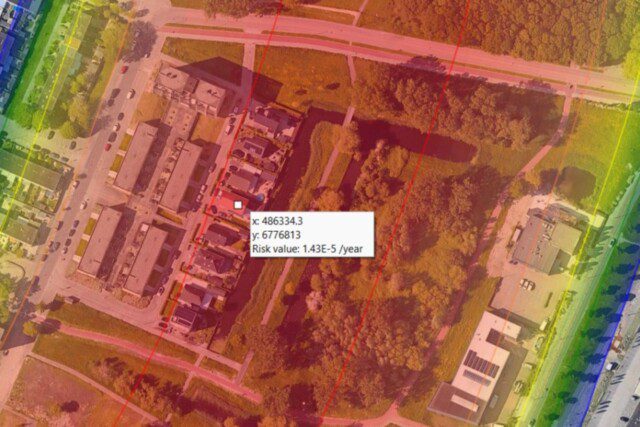
Analysing risks with RISKCURVES for buried pipelines transporting CO2, focusing on Individual Risk criteria LSIR and IRPA.
CO2 hazard modelling
This webinar discusses CO2 hazard modelling and demonstrates how advanced tools can be used to accurately assess and mitigate CO2 risks.
Stay ahead in process safety and risk management
Get the latest trends in the field of process safety management straight to your inbox, and enhance your skills through knowledge sharing from industry experts.
Subsribe to our newsletter